
Kimchi Pork Belly Stir Fry Recipe
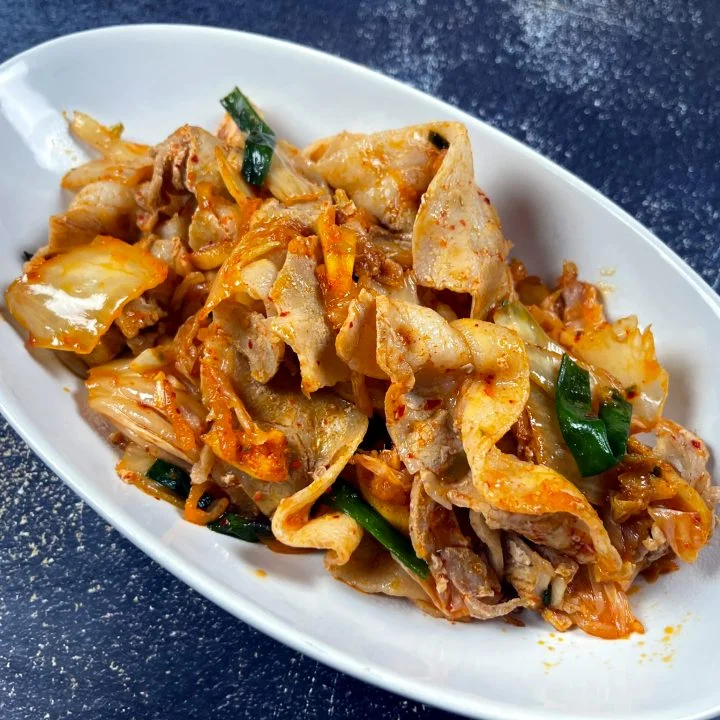
This quick Korean-style stir-fry pairs juicy pork belly with tangy kimchi, garlic, ginger and green onions. It comes together in about 15 minutes and makes a punchy, satisfying meal with steamed rice.
Ingredients
- 227 g (½ lb)pork belly, thinly sliced
- 4 clovesgarlic, roughly chopped
- 7.5 ml (½ tbsp)ginger, thinly sliced
- 360 ml (1½ cups)kimchi
- 15–30 ml (1–2 tbsp), optionalkimchi juice
- 3green onions, cut into 5 cm (2 inch) lengths
- 5 ml (1 tsp)sesame oil
Instructions
- 1
Brown the pork
Add the pork belly to a wok or frying pan without extra oil. Stir-fry until mostly browned; it will release its own fat.
- 2
Add aromatics
Add the garlic and ginger and stir-fry for about 1 minute.
- 3
Mix in kimchi
Add the kimchi and kimchi juice, if using. Stir well so the pork is coated with the seasoning.
- 4
Finish the stir-fry
Add the green onions and sesame oil. Stir-fry until the pork is fully cooked and the flavours have come together.
- 5
Serve hot
Take the pan off the heat and serve the stir-fry hot with rice.
What is kimchi pork belly stir-fry?
This is a quick Korean-style dish built around pork belly and kimchi, the fermented, seasoned cabbage that brings a tangy, savoury kick. The combination draws on familiar Korean flavours, though recipes vary from kitchen to kitchen.
Here, the pork browns in its own fat while kimchi, garlic and ginger provide plenty of flavour without a long cooking time. Green onions and sesame oil finish the dish with freshness and aroma.
Nutrition and macros by portion
The nutrition label shows one serving as written: 248 calories, 15g protein, 17g carbs, 14g fat.
| Portion | Adjustment | kcal | Protein | Carbs | Fat |
|---|---|---|---|---|---|
| Lighter | Less pork belly | 174 kcal | 11g | 12g | 10g |
| This serving | As written | 248 kcal | 15g | 17g | 14g |
| Hungry | Larger portion with rice | 372 kcal | 23g | 26g | 21g |
Pork belly supplies most of the fat and protein, while the kimchi and green onions contribute some carbohydrates; rice served alongside adds more. For a balanced plate, pair a measured portion with plenty of vegetables and rice to suit your appetite.
Why pork belly works
Pork belly has enough fat to brown in the pan without added oil, as the method specifies. Slice it thinly so it cooks quickly and picks up the kimchi’s seasoning.
Choose and prepare the kimchi
Kimchi: Its acidity and seasoning balance the richness of the pork, so taste it before adding any extra seasoning.
Kimchi juice: A little can help coat the ingredients with tangy flavour; leave it out if you prefer a less punchy result.
Keep the aromatics brief
Garlic and ginger need only about a minute in the pan before the kimchi goes in. Stir them with the pork so they flavour the rendered fat without lingering long enough to burn.
Look for doneness and texture
The pork should be fully cooked, with browned edges and no raw-looking areas. The kimchi will soften as it cooks, while the green onions should retain a little shape rather than disappear into the sauce.
Serve it with rice
Steamed rice is the natural partner: it tempers the sharp, savoury kimchi and catches the pan juices. Serve the stir-fry as soon as it is cooked so the pork and onions are at their best.
Recipe notes & tips
- Slice the pork belly thinly so it browns and cooks through quickly.
- Use a wok or a wide frying pan to give the pork room to brown.
- Start without added oil, since the pork belly releases its own fat.
- Taste the kimchi before adding its juice, as the juice adds extra tang and seasoning.
- Have the garlic, ginger and green onions ready before you start cooking, as the stir-fry moves quickly.
Variations
- More heat: Add sliced fresh chilli to the pan with the garlic and ginger.
- Extra vegetables: Stir in sliced mushrooms or cabbage with the kimchi.
- Milder flavour: Leave out the kimchi juice and use a less spicy kimchi.
- Rice bowl: Spoon the stir-fry over steamed rice and serve as a one-bowl meal.
Common mistakes to avoid
- Adding oil first: The pork belly renders its own fat, so begin with a dry pan.
- Crowding the pan: The pork may steam instead of browning; use a wide pan or cook in batches.
- Burning the aromatics: Garlic and ginger cook quickly; stir for about 1 minute before adding the kimchi.
- Overcooking the green onions: Add them near the end so they keep some freshness and texture.
- Serving before the pork is cooked through: Continue stir-frying until the pork is fully cooked.
How to store
Refrigerate leftovers in a sealed container for up to 3 days. Reheat in a frying pan over medium heat until piping hot, or microwave in a covered microwave-safe container, stirring partway through.
Frequently asked questions
Can I make this without a wok?
Yes. A wide frying pan works well; choose one with enough room to brown the pork rather than crowding it.
Do I need to add oil?
No extra oil is needed for the pork belly, which releases its own fat as it cooks.
Is kimchi juice essential?
No, it is optional. Add it for a tangier, more seasoned result, or leave it out for a milder flavour.
What should I serve with it?
Serve it hot with steamed rice, as suggested in the method. Vegetables alongside also make a good accompaniment.
How do I know when the pork is done?
The method calls for the pork to be fully cooked. Check that there are no raw-looking areas, then take the pan off the heat.
Cook it from the original
This recipe comes from ohsnapletseat.com. Their page has the author’s own photos, notes and tips — the best place to cook it from.
Open the recipe on ohsnapletseat.com