
Fish Cake Soup (Odeng Soup)
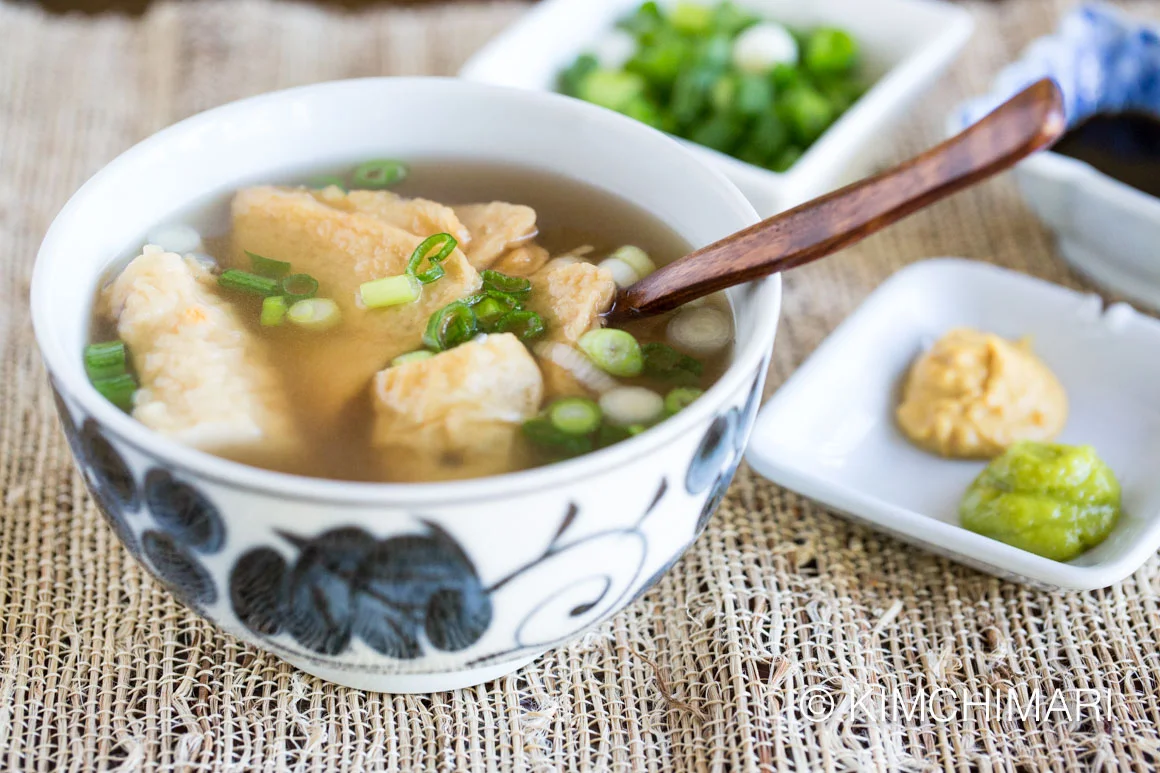
Odeng soup is a comforting Korean fish cake soup built around a clear broth simmered with dried anchovies, kelp and Korean radish. It makes a warming bowl on its own, and the stock can also be used for noodle soups or tteokbokki.
Ingredients
- 1.42 L (6 cups)water
- 28 g (1 oz; a handful)dried anchovies
- 142 g (5 oz)Korean radish (mu)
- 14 g (0.5 oz; one piece about 10 × 15 cm)dried kelp (dashima or kombu)
- ¾ tspsea salt
- 1 tspKorean soup soy sauce (guk ganjang)
- 2 tspcooking sake or mirin
- 1 pack, approximately 567 g (20 oz)fish cake
- 2green onions
- 3 stalkschrysanthemum leaves (ssukat), if available
- To tastesoy sauce, for serving
- To tasteyellow mustard or wasabi, for serving
Instructions
- 1
Prepare the radish
Peel the Korean radish and cut it into large chunks, enough to weigh about 150 g (5–6 oz).
- 2
Build the broth
Put 1.42 L (6 cups) water in a large pot with the cut radish, a handful of dried broth anchovies and one large piece of dried kelp.
- 3
Simmer the stock
Simmer for 30 minutes, then remove the kelp and anchovies. Keep the radish in large pieces or cut it smaller so it can be served with the fish cakes.
- 4
Season the broth
Stir in the mirin, sea salt and Korean soup soy sauce.
- 5
Prepare the greens
Chop the green onions. If using chrysanthemum leaves, rinse them and break or cut them into smaller pieces.
- 6
Cook the fish cakes
Add the fish cakes and simmer for another 10 minutes. Skewered fish cakes called odeng kkochi are one option, but other kinds of fish cake can also be used.
- 7
Serve the soup
Ladle into bowls and garnish with green onions and chrysanthemum leaves. Serve with soy sauce mixed with yellow mustard or wasabi for dipping the fish cakes.
What is odeng soup?
Odeng soup is a Korean broth served with fish cakes, often on skewers. It is associated with Korean street-food stalls, where the hot broth and fish cakes make a simple, warming snack.
This version gets its savoury base from dried anchovies and kelp, with radish adding a gentle sweetness. The fish cakes are simmered in the finished stock so they take on some of its flavour.
Nutrition and macros by portion
The nutrition label shows one serving as written: 128 calories, 8g protein, 9g carbs, 6g fat.
| Portion | Adjustment | kcal | Protein | Carbs | Fat |
|---|---|---|---|---|---|
| Lighter | More radish, fewer fish cakes | 90 kcal | 6g | 6g | 4g |
| This serving | As written | 128 kcal | 8g | 9g | 6g |
| Hungry | Add rice on the side | 192 kcal | 12g | 14g | 9g |
The fish cakes contribute protein and much of the fat, while the radish and small amount of mirin provide some of the carbohydrates. For a more complete plate, serve a bowl with a portion of rice and extra vegetables alongside.
The broth ingredients
Anchovies and kelp: these provide the savoury backbone of the stock. Remove both after simmering so the broth stays clear and the anchovies do not dominate.
Radish: large chunks simmer with the stock ingredients, then can be left whole or cut into smaller serving pieces. Use a sturdy Korean radish if available.
Seasoning the stock
Soup soy sauce: guk ganjang brings a concentrated savoury note, so add the measured amount rather than substituting an equal volume of a thicker, sweeter soy sauce.
Mirin: this rounds out the broth alongside the salt and soup soy sauce. Taste the broth after seasoning and keep its flavour light enough to complement the fish cakes.
Choosing fish cakes
Skewered fish cakes: odeng kkochi work well for serving straight from the pot, but other shapes and types of fish cake can be used. Follow the recipe’s 10-minute simmer so they warm through and absorb broth.
Pack size: the recipe calls for a pack of about 567 g. If your pack differs, arrange the fish cakes so they can sit in the broth without crowding the pot.
The key simmer
Stock first: simmer the radish, anchovies and kelp for 30 minutes before adding the fish cakes. This gives the broth time to develop while keeping the fish cakes from cooking for too long.
Fish cakes second: simmer them for a further 10 minutes after seasoning. Keep the pot at a gentle simmer rather than a hard boil.
Serving the bowls
Greens: scatter chopped green onions over the soup just before serving. Add rinsed chrysanthemum leaves if you have them for a fresh, herbal note.
Dipping sauce: soy sauce mixed with yellow mustard or wasabi is served alongside the soup for dipping the fish cakes. The soup can also be enjoyed with the radish and broth in the same bowl.
Recipe notes & tips
- Keep the broth at a gentle simmer to help it stay clear.
- Remove the kelp and anchovies after 30 minutes, as directed.
- Cut the radish smaller after simmering if you want it easier to eat with a spoon.
- Rinse the chrysanthemum leaves before breaking or cutting them.
- Taste the seasoned broth before adding the fish cakes.
- Serve the dipping sauce separately so everyone can adjust it to taste.
Variations
- Use different fish cakes: swap in another shape or style of fish cake and simmer it in the broth.
- Add noodles: use the stock as a base for a noodle soup.
- Use the stock for tteokbokki: replace some or all of the water in your tteokbokki with this broth for extra savoury flavour.
- Skip the chrysanthemum leaves: finish with green onions if ssukat is unavailable.
- Serve with wasabi: offer it in place of yellow mustard for the dipping sauce.
Common mistakes to avoid
- Boiling the stock hard: keep it at a gentle simmer for a clearer broth.
- Leaving the kelp in too long: remove it after the 30-minute stock simmer, as directed.
- Adding fish cakes too early: wait until the stock is made and seasoned, then simmer them for 10 minutes.
- Using regular soy sauce in the same amount: use Korean soup soy sauce for the recipe’s intended seasoning.
- Crowding the pot: leave room for the fish cakes to sit in the broth, or cook them in batches.
How to store
Refrigerate leftover soup in a covered container within 2 hours and use within 3 days. Reheat gently on the hob until steaming throughout; avoid a prolonged boil, which can make the fish cakes less tender.
Frequently asked questions
Can I use fish cakes that are not skewered?
Yes. The recipe says other kinds of fish cake can be used; add them to the seasoned broth and simmer for 10 minutes.
What can I use instead of Korean soup soy sauce?
Korean soup soy sauce gives this broth its particular savoury seasoning. If you do not have it, another soy sauce can be used, but add it gradually and taste as you go because its saltiness and sweetness may differ.
Do I have to use chrysanthemum leaves?
No. They are optional in the method. The soup can be garnished with green onions alone.
Can I keep the radish in the soup?
Yes. The method suggests leaving it in the broth or cutting it into smaller pieces to serve with the fish cakes.
Can I make the stock ahead?
You can prepare the anchovy, kelp and radish stock ahead, then refrigerate it promptly. Reheat it, season it and simmer the fish cakes for 10 minutes before serving.
What should I serve with odeng soup?
Serve it with soy sauce mixed with yellow mustard or wasabi for dipping the fish cakes. Rice or noodles can also make the meal more substantial.
Cook it from the original
This recipe comes from kimchimari.com. Their page has the author’s own photos, notes and tips — the best place to cook it from.
Open the recipe on kimchimari.com