
Millet Mysore Masala Dosa
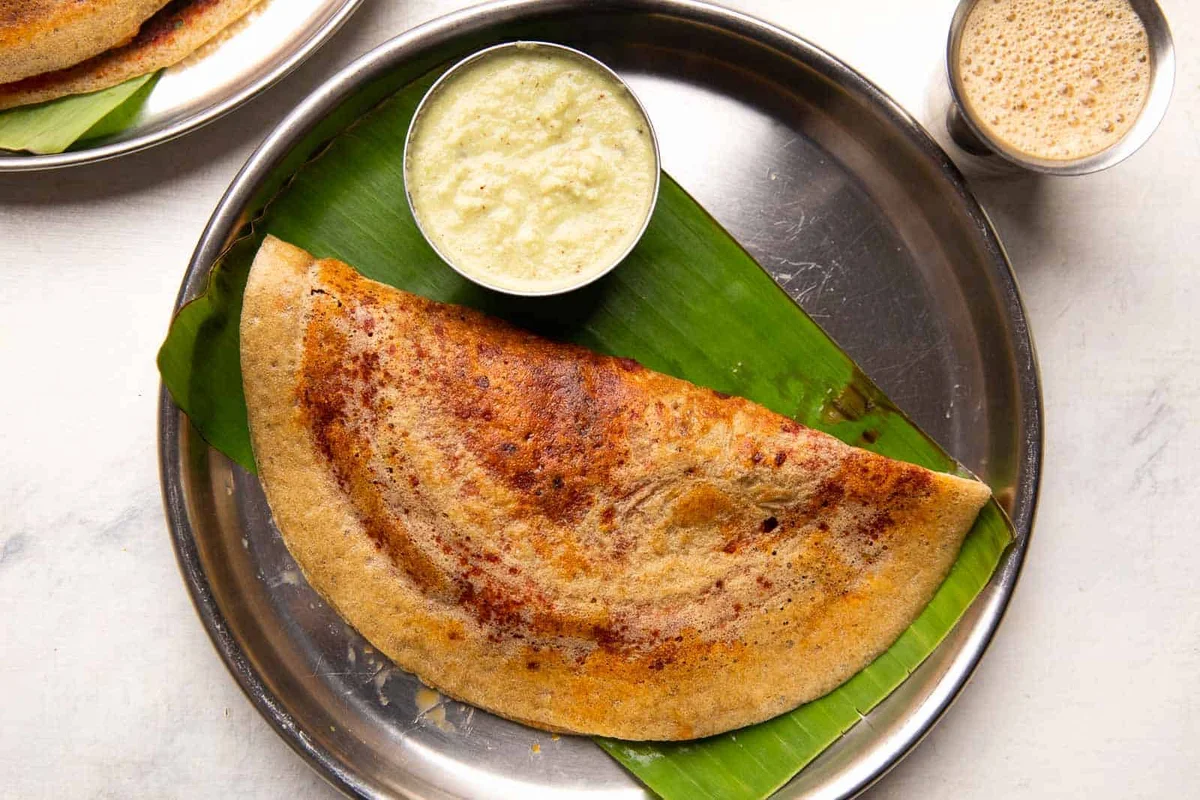
These South Indian dosas are made from a fermented millet, lentil and flattened-rice batter, cooked until crisp and filled with potato masala. A layer of spicy Mysore chutney gives them a savoury, tangy finish.
Ingredients
- 680 g (4 cups)kodo millet or other millets, such as ragi or bajra
- 150 g (¾ cup)urad dal
- 45 g (¼ cup)chana dal
- 1 tablespoonfenugreek seeds
- 60 g (¾ cup)poha or flattened rice, soaked for 30 minutes
- 45 ml (3 tablespoons)ghee, for cooking the dosas
- 1 tablespoonoil
- 2 tablespoonschana dal
- 1 tablespoonurad dal
- 8–10 clovesgarlic
- 2.5 cm (1 inch), roughly choppedginger
- 6–7Kashmiri red chillies
- ½ teaspoonturmeric powder
- 75 g (½ cup), choppedonion
- 2 tablespoonstamarind pulp
- 60 ml (¼ cup)water
- 1 tablespoonoil
- ½ teaspoonmustard seeds
- ½ teaspooncumin seeds
- 2 teaspoonsroasted chana dal
- 1 teaspoonurad dal
- 1 pinchhing
- 1 teaspoon, finely choppedginger
- 2, slit lengthwisegreen chillies
- 1, slicedonion
- ¼ teaspoonturmeric powder
- 1 sprigcurry leaves
- 3, boiled and peeledpotatoes
Instructions
- 1
Soak the grains
For the millet dosa batter, put the millets, urad dal, chana dal and fenugreek seeds in a bowl. Add enough water to cover them, then cover the bowl and soak for 6–8 hours.
- 2
Grind the batter
Drain the soaked ingredients and transfer them to a blender with the poha. Blend until smooth, adding a little water if needed.
- 3
Ferment overnight
Leave the batter to ferment overnight, until bubbles are visible on its surface.
- 4
Heat the pan
Heat a tava or dosa pan. Test it with a splash of water: it should sizzle straight away. If the water evaporates as soon as it lands, the pan is too hot.
- 5
Cook the dosa
Pour a ladleful of batter onto the hot pan and spread it in concentric circles. Add ghee around the edges and in the centre, then cook for 1–2 minutes. Spread Mysore masala chutney over the dosa and add a little more ghee. Put a spoonful of aloo masala in the centre, fold one half of the dosa over it and serve hot with coconut chutney.
- 6
Fry the chutney
For the Mysore masala chutney, heat the oil in a pan. Add the urad dal and chana dal and fry lightly for 15–20 seconds. Add the garlic and ginger and fry until fragrant, then add the chopped onion and cook until soft. Add the red chillies and turmeric powder and cook for 2–3 minutes. Let the mixture cool a little, then transfer it to a blender jar.
- 7
Grind the chutney
Add the tamarind pulp and water to the blender and grind to a coarse paste. Add extra water if needed, keeping the chutney thick enough to spread rather than runny.
- 8
Fry the aromatics
For the aloo masala, heat the oil in a kadai or heavy-based pan over a high heat. Add the mustard and cumin seeds and let them splutter. Add the urad dal and chana dal and cook for 1 minute. Add the green chillies and chopped ginger and fry until the ginger smells fragrant. Stir in the hing and sliced onion, then cook until the onion is translucent.
- 9
Cook the potatoes
Add salt and turmeric and sauté, then add the curry leaves and fry briefly. Stir in the boiled potatoes, crushing them further with the back of a spoon or spatula. Add 1–2 tablespoons of water to loosen anything stuck to the pan and cook the potatoes a little longer. Garnish with coriander leaves if you like and set aside.
What is a Mysore masala dosa?
A Mysore masala dosa is a South Indian dosa with a spiced chutney spread inside and a potato filling. Dosas are made from a fermented batter, traditionally based on rice and lentils, then cooked thinly on a hot griddle.
This version uses millet alongside urad dal, chana dal and poha. The batter ferments overnight, while the red-chilli and tamarind chutney and soft potato masala bring heat, tang and a hearty centre.
Nutrition and macros by portion
The nutrition label shows one serving as written: 554 calories, 16g protein, 113g carbs, 5g fat.
| Portion | Adjustment | kcal | Protein | Carbs | Fat |
|---|---|---|---|---|---|
| Lighter | Use less ghee | 388 kcal | 11g | 79g | 4g |
| This serving | As written | 554 kcal | 16g | 113g | 5g |
| Hungry | Serve an extra dosa | 831 kcal | 24g | 170g | 8g |
The millet, poha and potatoes provide most of the carbohydrates, while the dals contribute protein as well as some carbohydrate. Ghee and the oils supply most of the fat. Serve a dosa with coconut chutney and a portion of vegetables or salad to round out the plate.
Building the millet batter
Soaking first: The millets, dals and fenugreek need 6–8 hours in water before blending. The poha is soaked separately for 30 minutes, then blended with the drained grains.
Smooth texture: Blend until the batter is smooth, adding only enough water to help it move through the blender. A batter that is too loose can be harder to spread into an even dosa.
Why fermentation matters
Visible bubbles: Leave the batter overnight and look for bubbles on the surface as the recipe’s cue that it has fermented. The timing can vary with room conditions, so use that visual sign as well as the overnight rest.
Before cooking: Give the batter a gentle stir to bring it together. Avoid thinning it too much; it needs to spread in circles without running across the pan.
Getting the chutney right
Frying the base: Briefly fry the dals, then cook the garlic and ginger until fragrant before adding the onion. Softened onion and cooked chillies make a cohesive base for grinding.
Coarse and spreadable: Grind the cooled mixture with tamarind pulp and water, aiming for a coarse paste. Add water sparingly so the chutney can be spread over the dosa without soaking it.
Cooking a crisp dosa
Pan temperature: A splash of water should sizzle immediately on the tava. If it vanishes straight away, the pan is too hot; let it cool slightly before adding the batter.
Even spread: Pour a ladleful in the centre and move the ladle in concentric circles. Cook for 1–2 minutes with ghee around the sides and centre, then add the chutney and potato filling before folding.
Making the potato masala
Tempering: Let the mustard and cumin seeds splutter in hot oil, then cook the dals, chillies, ginger and onion in sequence. This gives the potato filling a fragrant, savoury base.
Soft but not soupy: Crush the boiled potatoes in the pan and add 1–2 tablespoons of water to deglaze it. The finished filling should be soft enough to spoon into the dosa, not loose with excess liquid.
Serving the dosas
Serve each dosa hot, while its edges are at their crispest. Coconut chutney is the suggested accompaniment and makes a cool contrast to the chilli-tamarind spread.
Cook the dosas as you are ready to eat them, keeping the batter, chutney and potato masala nearby. This makes it easier to fill and fold each one straight from the pan.
Recipe notes & tips
- Soak the poha for 30 minutes before blending it with the drained grains.
- Check the pan with a splash of water before spreading each dosa.
- Keep the chutney coarse and thick enough to spread.
- Add the ghee around the dosa’s edges and in its centre as it cooks.
- Crush the potatoes in the pan so the filling is easy to spoon onto the dosa.
Variations
- Change the millet: Use ragi or bajra in place of kodo millet, as suggested in the recipe.
- Adjust the heat: Use fewer Kashmiri red chillies in the chutney for a milder spread.
- Thicken the chutney: Add water gradually and stop once the paste is easy to spread.
- Serve with coconut chutney: Add the suggested accompaniment alongside the hot dosas.
- Add coriander: Garnish the potato masala with coriander leaves if you like.
Common mistakes to avoid
- Skipping the soak: Soak the millets and dals for 6–8 hours so they can be blended smoothly.
- Using poha dry: Soak it for 30 minutes before adding it to the blender.
- Rushing fermentation: Leave the batter overnight and check for bubbles on the surface.
- Overheating the tava: If splashed water evaporates immediately, let the pan cool before spreading batter.
- Making the chutney runny: Add water a little at a time and stop when it forms a coarse, spreadable paste.
- Leaving large potato pieces: Crush the potatoes further in the pan for an easier-to-fill dosa.
How to store
Store leftover batter, chutney and potato masala separately in covered containers in the fridge and use within 3 days. Reheat the potato filling in a pan, and cook fresh dosas from the batter; already-cooked dosas are best reheated briefly on a hot pan.
Frequently asked questions
How long does the dosa batter need to ferment?
The recipe calls for an overnight ferment. Look for bubbles on the surface before cooking.
Can I use a different millet?
Yes. The recipe suggests ragi or bajra as alternatives to kodo millet.
How do I know when the pan is hot enough?
Splash a little water onto it. It should sizzle straight away; if it evaporates immediately, the pan is too hot.
How thick should the Mysore chutney be?
It should be a coarse paste that spreads easily over the dosa, not a runny sauce. Add extra water only if needed.
What should I serve with millet Mysore masala dosa?
Serve it hot with coconut chutney, as suggested in the recipe.
Can I prepare the components ahead?
You can prepare the batter, chutney and potato masala separately, then cook and fill the dosas when you are ready to serve.
Cook it from the original
This recipe comes from myfoodstory.com. Their page has the author’s own photos, notes and tips — the best place to cook it from.
Open the recipe on myfoodstory.com