
Mongolian Beef Stir Fry
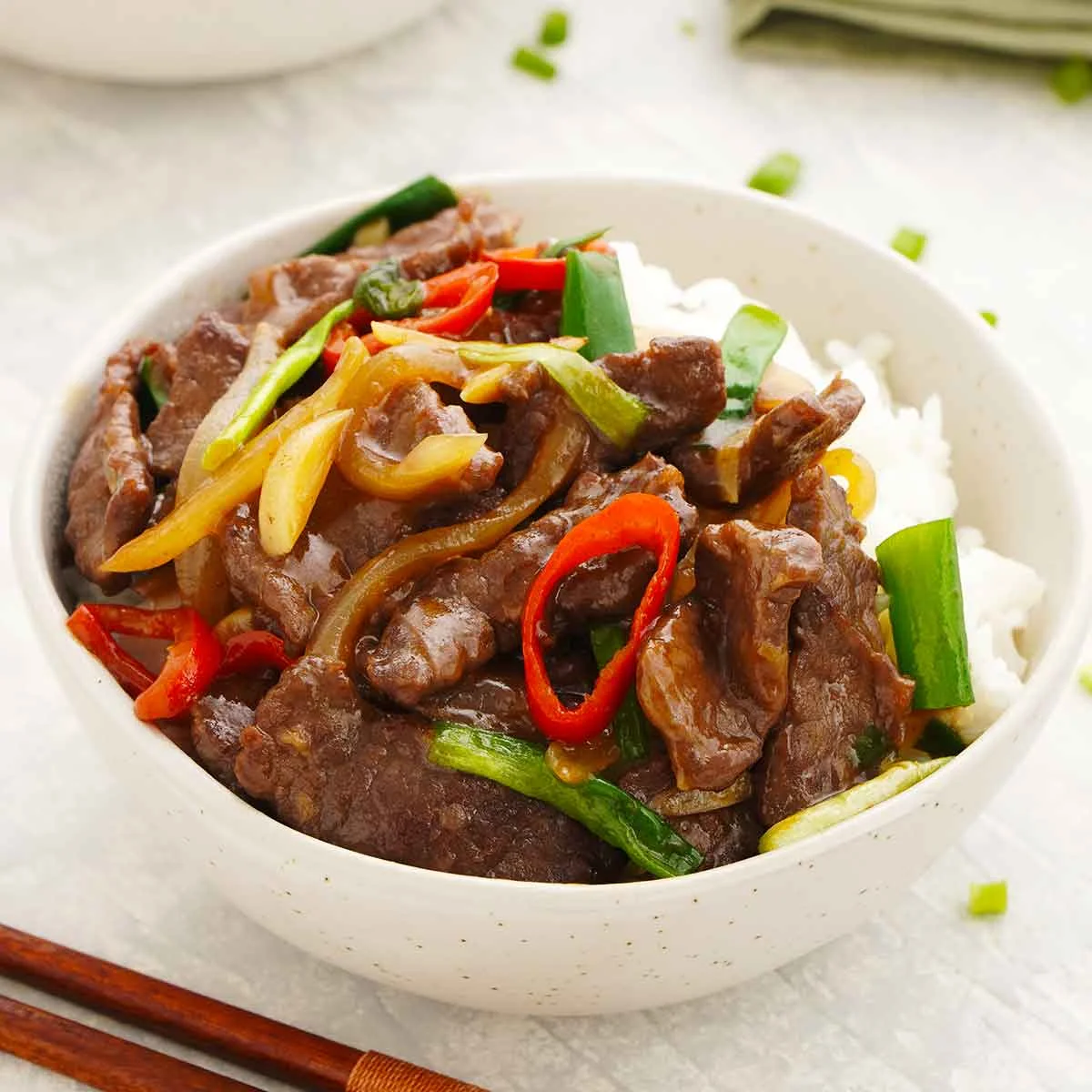
Mongolian beef stir-fry pairs thin slices of steak with spring onions and a glossy sweet-and-savoury sauce. A quick sear keeps the beef tender, making it an easy choice for serving with rice or noodles.
Ingredients
- 250 g (about 8.8 oz)rump or sirloin steak
- 3 clovesgarlic, thinly sliced or chopped
- ½onion, thinly sliced
- 3–4spring onions, cut into 5 cm (2-inch) pieces
- 1chilli pepper, thinly sliced
- 2 tbspvegetable oil or other neutral-flavoured oil
- 1 tbsplight or regular soy sauce
- ¼ tspbicarbonate of soda
- 2 tspcornflour or potato starch
- 1 tsptoasted sesame oil
- ½ tspgrated ginger or ginger paste
- 2 tbsplight or all-purpose soy sauce
- 80 ml (⅓ cup)chicken stock or water
- 2 tbspbrown sugar
- 1 tbsprice vinegar
- ½ tspcornflour or potato starch
Instructions
- 1
Marinate the beef
Slice the steak thinly and mix it with the beef marinade ingredients. Set aside to marinate for 20 minutes.
- 2
Mix the sauce
Whisk the stir-fry sauce ingredients together in a small bowl until the sugar dissolves, then set aside.
- 3
Prepare the vegetables
Thinly slice the garlic, onion and chilli, and cut the spring onions into pieces.
- 4
Heat the pan
Set a pan over medium-high heat and drizzle in 2 tablespoons of oil.
- 5
Sear the beef
Add the marinated beef and spread it out in the pan. Sear for 2–3 minutes, flip and stir-fry for 1 minute more, then remove from the pan and set aside.
- 6
Cook the aromatics
Drizzle a little more oil into the pan if needed. Add the garlic and stir for a few seconds, then add the onion.
- 7
Thicken the sauce
Pour in the sauce mixture and let it boil for a few seconds. Return the cooked beef to the pan, stir well and cook for 1–2 minutes, until the sauce thickens.
- 8
Add spring onions
Add the spring onions and chilli slices. Cook for 1 minute more, mixing them well with the beef and sauce.
- 9
Serve the stir-fry
Serve with steamed rice or stir-fried noodles.
What is Mongolian beef?
Mongolian beef is a sweet-and-savoury beef stir-fry commonly associated with Chinese-American restaurant cooking; despite its name, it is not a traditional Mongolian dish. This version combines thinly sliced steak with soy, brown sugar, ginger and spring onions.
The quick sear and a starch-thickened sauce make it practical for a fast dinner. Serve it with rice or noodles to round out the meal.
Nutrition and macros by portion
The nutrition label shows one serving as written: 252 calories, 5g protein, 22g carbs, 17g fat.
| Portion | Adjustment | kcal | Protein | Carbs | Fat |
|---|---|---|---|---|---|
| Lighter | Use less oil | 176 kcal | 4g | 15g | 12g |
| This serving | As written | 252 kcal | 5g | 22g | 17g |
| Hungry | Add rice or noodles | 378 kcal | 8g | 33g | 26g |
The steak provides most of the protein, while the brown sugar and any rice or noodles served alongside contribute carbohydrates. Oil and sesame oil account for much of the fat in the stir-fry. For a balanced plate, serve a measured portion with vegetables alongside and rice or noodles.
Choosing and slicing the beef
Steak choice: Rump or sirloin suits this quick-cooking method. Slice across the grain into thin pieces so the beef cooks quickly and is easier to bite.
Velveting: The marinade includes bicarbonate of soda and starch, which coat the beef before it hits the hot pan. Mix it evenly with the listed marinade ingredients and allow the stated 20 minutes.
Getting a good sear
Hot pan: Medium-high heat helps the beef brown during its short cooking time. Spread the slices out in the pan as directed rather than piling them into a mound.
Two stages: Sear for 2–3 minutes, flip and stir-fry for another minute, then take the beef out while you cook the aromatics and sauce. This keeps it from simmering in the sauce for the entire cooking period.
Making the sauce glossy
Dissolve first: Whisk the sauce ingredients together until the brown sugar dissolves before adding them to the pan. This distributes the sweet and savoury flavours through the liquid.
Watch the finish: Once the beef is back in the pan, cook for 1–2 minutes, until the sauce thickens. The added starch helps it cling to the meat.
Balancing the aromatics
Garlic and onion: Stir the garlic for only a few seconds before adding the onion, then pour in the sauce. This brief time in the pan helps prevent the garlic from browning too far.
Spring onions and chilli: Add these near the end and cook for 1 minute. They bring freshness and heat while retaining more texture than if cooked from the start.
What to serve alongside
Rice: Steamed rice is a simple base for the savoury, sweet sauce. Spoon the beef and sauce over it so none is left behind in the pan.
Noodles: Stir-fried noodles are the other serving suggestion in the recipe. Keep the accompaniment plain enough to let the beef and sauce remain the focus.
Recipe notes & tips
- Slice the steak thinly across the grain for more tender bites.
- Whisk the sauce until the brown sugar has dissolved before pouring it into the pan.
- Have the vegetables and sauce ready before heating the pan, as the beef cooks quickly.
- Use a little extra oil only if the pan looks dry when you begin cooking the garlic.
- Add the spring onions and chilli at the end to keep some of their texture.
Variations
- Adjust the heat: Use less chilli for a milder stir-fry.
- Choose the starch: Use potato starch instead of cornflour in the marinade and sauce.
- Swap the liquid: Use water instead of chicken stock in the sauce.
- Change the base: Serve with steamed rice or stir-fried noodles.
- Use another steak cut: Choose rump or sirloin, as listed in the recipe.
Common mistakes to avoid
- Thick beef slices: They take longer to cook; slice the steak thinly across the grain.
- Crowded pan: The beef may not sear evenly; spread it out in the pan.
- Skipping the marinade: The beef misses the recipe’s velveting step; mix it with the marinade and set it aside for 20 minutes.
- Burning the garlic: It needs only a few seconds before the onion goes in; keep stirring.
- Overcooking the sauce: It can become too thick; stop once it has thickened after 1–2 minutes with the beef.
How to store
Refrigerate leftovers in a covered container and use within 3 days. Reheat in a pan until piping hot, adding a small splash of water if the sauce has thickened too much.
Frequently asked questions
Can I use water instead of chicken stock?
Yes. The recipe lists water as an alternative for the 80 ml of chicken stock.
Can I use potato starch instead of cornflour?
Yes. The recipe allows either potato starch or cornflour in both the beef marinade and the sauce.
How long should I marinate the beef?
The method specifies 20 minutes. Mix the thinly sliced beef thoroughly with the marinade ingredients before setting it aside.
How do I know when the sauce is ready?
After returning the beef to the pan, cook for 1–2 minutes until the sauce thickens and coats the beef.
What can I serve with Mongolian beef?
Serve it with steamed rice or stir-fried noodles, as suggested in the recipe.
Cook it from the original
This recipe comes from khinskitchen.com. Their page has the author’s own photos, notes and tips — the best place to cook it from.
Open the recipe on khinskitchen.com