
Easy Peanut Sauce
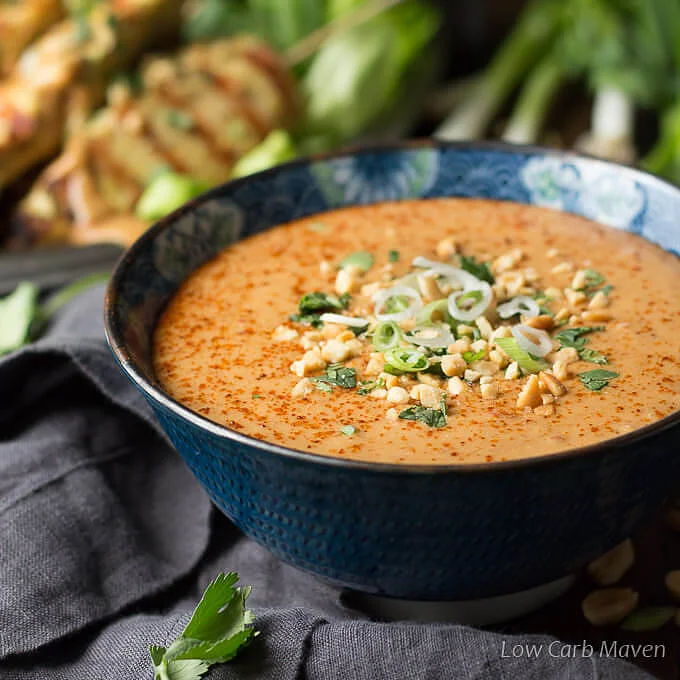
This quick Thai-style peanut sauce combines creamy peanut butter, coconut milk and curry paste for a savoury, gently sweet dip or noodle dressing. Adjust the chilli to suit your taste and serve it with satay or noodles.
Ingredients
- 64 g (1/4 cup)smooth peanut butter (or almond butter)
- 80 ml (1/3 cup)full-fat coconut milk from a can
- 1–2 tsp (5–10 ml)chilli garlic sauce (from the Asian section of the supermarket)
- 12 g (1 tbsp)low-carb brown sugar (or Swerve, white sugar, brown sugar, coconut sugar or honey)
- 1 tsp (5 ml)tamari soy sauce (or coconut aminos)
- 1 tsp (5 ml)coconut oil (or sesame oil or olive oil)
- 1/2 tsp (2.5 ml)Thai red curry paste
Instructions
- 1
Warm the peanut butter
Gently warm the peanut butter in a small microwave-safe bowl. Whisk in the chilli garlic sauce, your chosen sweetener and the tamari.
- 2
Fry the curry paste
Warm the oil in a small pan over a medium heat. Add the Thai red curry paste and cook until very fragrant. Scrape the oil and paste into the bowl with the peanut butter, then whisk to combine.
- 3
Add the coconut milk
Slowly whisk the coconut milk into the peanut butter mixture. Taste and adjust the seasoning; if the flavour needs a lift, add a little more sweetener or a squeeze of lime or lemon juice. You can also add a little fish sauce or salt. Serve at room temperature or slightly warm.
- 4
Serve or refrigerate
This makes just over 120 ml (1/2 cup), or about 2 tablespoons per serving for four servings. Refrigerate for up to 5 days.
What is Thai peanut sauce?
Peanut sauce is a savoury, creamy condiment commonly served with satay in parts of Southeast Asia. This quick version brings together peanut butter, coconut milk and Thai red curry paste for a balance of nuttiness, richness and spice.
Using smooth peanut butter keeps the texture easy to whisk, while chilli garlic sauce lets you tune the heat. It is also useful as a dip or a dressing for noodles.
Nutrition and macros by portion
The nutrition label shows one serving as written: 151 calories, 4g protein, 4g carbs, 13g fat.
| Portion | Adjustment | kcal | Protein | Carbs | Fat |
|---|---|---|---|---|---|
| Lighter | Use a smaller sauce portion | 106 kcal | 3g | 3g | 9g |
| This serving | As written | 151 kcal | 4g | 4g | 13g |
| Hungry | Make a larger batch | 227 kcal | 6g | 6g | 20g |
The recipe's nutrition figures are given per serving: peanut butter and coconut milk contribute much of the fat, while the peanut butter also supplies some protein. The small amount of sweetener and coconut milk contributes carbohydrates. For a more balanced plate, serve a measured portion with satay and vegetables.
Choosing the ingredients
Peanut butter: Smooth peanut butter blends readily into a pourable sauce. Almond butter is offered as an alternative, though it will change the flavour.
Coconut milk: Full-fat canned coconut milk gives the sauce its creamy body. Stir it well before measuring if the contents have separated.
Seasonings: Tamari adds savoury depth, while the sweetener balances the chilli and curry paste. The recipe lists coconut aminos and several sweeteners as substitutions.
Blooming the curry paste
Warm the oil over a medium heat before adding the red curry paste. Cooking the paste until fragrant helps its aroma mingle with the oil.
Keep an eye on the pan and avoid letting the paste scorch. Scrape both the paste and the flavoured oil into the peanut butter mixture.
Getting the texture right
Add the coconut milk gradually while whisking so it incorporates smoothly into the thicker peanut butter base. If the mixture looks uneven at first, keep whisking as you continue to add the milk.
The finished sauce can be served at room temperature or slightly warmed. Taste it before serving and adjust the balance with the suggested sweetener, citrus, fish sauce or salt.
Adjusting the flavour
Chilli: Start with 1 teaspoon of chilli garlic sauce for a milder result, then add more if you prefer extra heat.
Balance: If the sauce does not taste lively enough, the method suggests a little more sweetener or a squeeze of lime or lemon. A little fish sauce or salt is another option for more savoury depth.
Ways to serve it
Satay: Serve the sauce alongside chicken or beef satay as a dip. Its creamy texture also works well spooned over noodles.
Portioning: The recipe makes just over 120 ml, with a little more than 2 tablespoons per serving for four. Serve it at room temperature or slightly warm.
Recipe notes & tips
- Warm the peanut butter gently so it is easier to whisk.
- Use a small pan to warm the oil and curry paste.
- Add the coconut milk gradually while whisking.
- Begin with the lower amount of chilli garlic sauce, then taste before adding more.
- Taste the sauce before serving and adjust its seasoning to your preference.
Variations
- Use almond butter: Swap it for the peanut butter for a different nutty flavour.
- Try coconut aminos: Use them in place of tamari as listed in the recipe.
- Change the oil: Sesame oil or olive oil can replace the coconut oil.
- Choose a sweetener: Use one of the listed alternatives, such as honey or coconut sugar.
- Add citrus: Whisk in a squeeze of lime or lemon if the flavour needs a lift.
Common mistakes to avoid
- Adding coconut milk all at once: Whisk it in gradually to help it blend into the peanut butter.
- Scorching the curry paste: Cook it only until fragrant over a medium heat.
- Making it too spicy: Start with 1 teaspoon of chilli garlic sauce and taste before adding more.
- Skipping the final taste: Check the balance and adjust with the suggested sweetener, citrus, fish sauce or salt.
- Serving it straight from the fridge: Let it come to room temperature or warm it slightly before serving.
How to store
Refrigerate the sauce for up to 5 days. The recipe does not specify a reheating method; serve it at room temperature or warm it slightly before serving.
Frequently asked questions
How spicy is this peanut sauce?
The heat depends on how much chilli garlic sauce you use. Start with 1 teaspoon and increase towards 2 teaspoons to taste.
Can I use almond butter instead?
Yes. The recipe lists almond butter as an alternative to smooth peanut butter; expect a different nutty flavour.
What can I serve with the sauce?
It is suggested for chicken satay, beef satay and noodles. It can be served as a dip or spooned over noodles.
Can I make the sauce ahead?
Yes. Refrigerate it for up to 5 days, then serve it at room temperature or slightly warm.
How much sauce does this recipe make?
It makes just over 120 ml (1/2 cup), enough for four servings of a little more than 2 tablespoons each.
Cook it from the original
This recipe comes from lowcarbmaven.com. Their page has the author’s own photos, notes and tips — the best place to cook it from.
Open the recipe on lowcarbmaven.com