
Sambar Powder
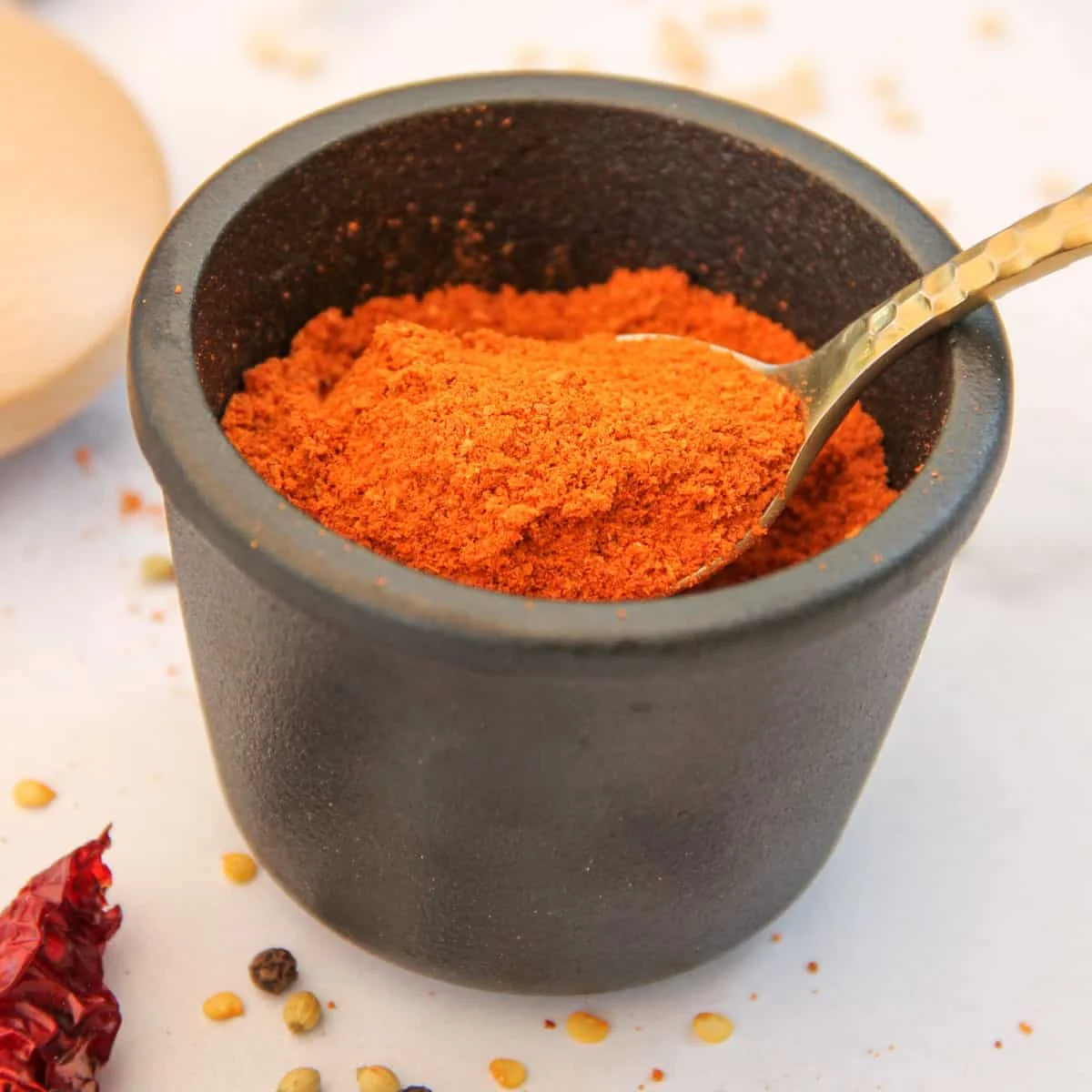
Sambar powder is a South Indian spice blend made by dry-roasting seeds, lentils and dried chillies before grinding them into a fine powder. Make a batch to add its warm, fragrant flavour to sambar and other dishes.
Ingredients
- 30 g (¼ cup)coriander seeds
- 2 teaspoonstoor dal
- 2 teaspoonschana dal
- 2 teaspoonsurad dal
- 1 teaspooncumin seeds
- 1 teaspoonfenugreek seeds
- ½ teaspoonblack peppercorns
- 12 whole (or 6 hot dried red chillies)dried Kashmiri red chillies
Instructions
- 1
Dry-roast the spices
Put all the spices in a pan and dry-roast for 2–3 minutes, until they smell aromatic and feel hot to the touch.
- 2
Cool the spices
Transfer the roasted spices to a bowl and leave them to cool.
- 3
Grind and store
Grind the cooled spices in a spice grinder until fine. Store in an airtight container in a cool, dry place. Makes ¾ cup.
What is sambar powder?
Sambar powder is a South Indian spice blend used to season sambar, a lentil-based dish often cooked with vegetables. Its combination of toasted spices, lentils and chillies gives it a rounded, fragrant flavour.
This version balances coriander and cumin with fenugreek, pepper and dried chillies. Roasting the ingredients before grinding brings out their aroma and helps make a cohesive blend.
Nutrition and macros by portion
The nutrition label shows one serving as written: 31 calories, 2g protein, 6g carbs, 1g fat.
| Portion | Adjustment | kcal | Protein | Carbs | Fat |
|---|---|---|---|---|---|
| Lighter | Use less per serving | 22 kcal | 1g | 4g | 1g |
| This serving | As written | 31 kcal | 2g | 6g | 1g |
| Hungry | Use a larger portion | 47 kcal | 3g | 9g | 2g |
The supplied nutrition per serving is 31 kcal, with 6 g of carbohydrate, 2 g of protein and 1 g of fat. The dals contribute most of the carbohydrate and protein, while the seeds provide some fat; use the powder to season a meal with vegetables and a protein-rich accompaniment for a more complete plate.
Why roast the ingredients?
Dry roasting: Gentle heat releases the spices’ aromas without adding oil. The recipe calls for 2–3 minutes, so keep the ingredients moving and use their fragrance as a cue.
A blend of spices and dals
Coriander and cumin: These seeds provide the blend’s fragrant, savoury base, while fenugreek and black pepper add more pronounced, slightly bitter and peppery notes.
Dals: Toor, chana and urad dal contribute body to the ground mix. Kashmiri chillies are the milder option listed; the alternative hot dried chillies make a hotter blend.
Getting the grind right
Cool first: Let the roasted ingredients cool in a bowl before grinding. Grinding while they are still hot can make the powder clump.
Fine texture: Grind in a spice jar until the mixture is evenly powdered. If your grinder is small, work in batches rather than packing it tightly.
How to use the powder
Start with the amount called for in your sambar recipe, then adjust to taste. The heat level depends largely on whether you use Kashmiri chillies or the hotter alternative.
It can also season lentils or vegetable dishes when you want the characteristic toasted spice flavour. Add it according to the method of the dish you are making.
Keep the flavour fresh
Storage: Keep the finished powder in an airtight container in a cool, dry cupboard. Protect it from moisture and direct heat to help preserve its aroma.
Recipe notes & tips
- Use a dry pan and avoid adding oil.
- Keep the spices moving so the smaller seeds do not scorch.
- Take the pan off the heat as soon as the spices are aromatic and hot to the touch.
- Let the roasted mixture cool fully before grinding.
- Choose the Kashmiri chillies for a milder blend or the hot dried chillies for more heat.
- Label the container with the date you made the powder.
Variations
- Milder chillies: Use the 12 Kashmiri chillies for a gentler heat.
- Hotter blend: Choose 6 hot dried red chillies instead.
- Small batches: Grind only what you need if your spice grinder has limited capacity.
- Coarser texture: Stop grinding slightly earlier for a less fine powder.
- Freshly ground: Make a smaller batch when you want the aroma at its strongest.
Common mistakes to avoid
- Scorching the spices: Roast over moderate heat and remove them once aromatic.
- Uneven roasting: Keep the ingredients moving around the pan.
- Grinding them hot: Let the roasted spices cool before putting them in the grinder.
- Overfilling the grinder: Grind in batches if the mixture does not move freely.
- Using a damp container: Store the powder only in a clean, completely dry airtight container.
How to store
Store the powder in an airtight container in a cool, dry place. Use a dry spoon and keep moisture out; for the freshest aroma, make only as much as you expect to use while it is still fragrant.
Frequently asked questions
How much sambar powder does this recipe make?
It makes ¾ cup, divided into 12 servings in the recipe information.
Can I use hot dried chillies instead of Kashmiri chillies?
Yes. The recipe gives 6 hot dried red chillies as the alternative to 12 whole Kashmiri chillies. The result will be hotter.
Do I need oil to roast the spices?
No. The method is for dry-roasting, so use a dry pan.
How do I know when the spices are roasted?
After 2–3 minutes, they should smell aromatic and feel hot to the touch. Take them off the heat before they scorch.
Can I grind the spices before they cool?
The recipe calls for cooling them in a bowl first. This also helps prevent the ground mixture from clumping.
Where should I store sambar powder?
Keep it in an airtight container in a cool, dry place, away from moisture.
Cook it from the original
This recipe comes from ministryofcurry.com. Their page has the author’s own photos, notes and tips — the best place to cook it from.
Open the recipe on ministryofcurry.com