
How to make Keto Amala with Eggplant.
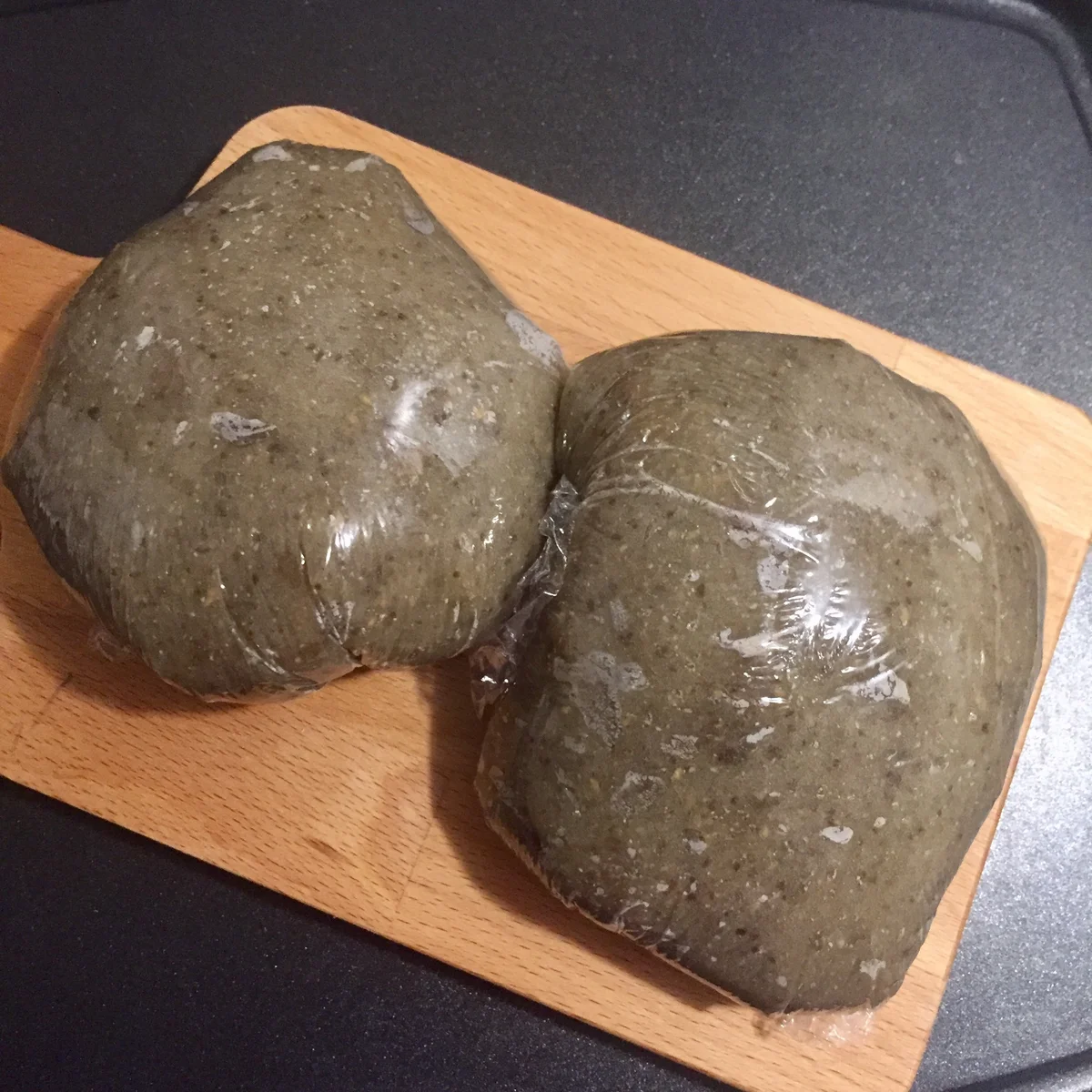
This Nigerian Yoruba-inspired keto amala uses cooked, blended eggplant and psyllium husk to make a soft, mouldable side for soup. It comes together quickly and offers a lower-starch alternative to traditional amala made with yam flour.
Ingredients
- 1 largeeggplant
- 1–2 tbsppsyllium husk powder
- 240 ml (1 cup)water
Instructions
- 1
Boil the water
Pour 240 ml (1 cup) of water into a saucepan and bring it to the boil.
- 2
Cut the eggplant
Wash the eggplant and cut it into large cubes.
- 3
Cook until soft
Add the eggplant cubes to the boiling water and cook for about 5 minutes, or until they are soft and mushy.
- 4
Drain the eggplant
Turn off the heat and pour the eggplant into a colander to drain.
- 5
Blend until smooth
Transfer the drained eggplant to a bowl and blend it until smooth.
- 6
Mix in psyllium
Add the psyllium husk powder and blend it into the eggplant.
- 7
Let it rest
Wrap the mixture in cling film and leave it to rest for about 5 minutes so the psyllium can thicken it.
- 8
Serve with soup
The keto amala is ready to eat with a soup of your choice.
What is eggplant amala?
Amala is a Yoruba dish from Nigeria, traditionally made by mixing yam flour with hot water to form a smooth, pliable dough. This version replaces the flour with cooked eggplant and psyllium husk, making it a keto-style interpretation rather than the traditional preparation.
Eggplant brings moisture and a mild flavour, while psyllium helps bind the blended mixture. Serve it alongside soup, as you would other forms of amala.
Nutrition and macros by portion
The nutrition label shows one serving as written: 70 calories, 3g protein, 17g carbs, 1g fat.
| Portion | Adjustment | kcal | Protein | Carbs | Fat |
|---|---|---|---|---|---|
| Lighter | Use less psyllium | 49 kcal | 2g | 12g | 0g |
| This serving | As written | 70 kcal | 3g | 17g | 1g |
| Hungry | Serve a larger portion | 105 kcal | 4g | 25g | 1g |
The eggplant supplies most of the carbohydrates, fibre and natural sugars, while psyllium adds fibre and helps create the dough-like texture. Both ingredients contribute little fat or protein, so serve a moderate portion with a protein-rich soup and vegetables for a more balanced plate.
Choosing the eggplant
Fresh eggplant: choose one that feels firm and has smooth, glossy skin. A large eggplant gives the recipe its main body, though its exact size can affect how much psyllium the mixture needs.
Even pieces: cut the eggplant into similarly sized large cubes so they soften at roughly the same pace.
Getting the texture right
Cook until soft: the cubes should be mushy enough to blend smoothly after about 5 minutes of boiling. If they still feel firm, cook them a little longer before draining.
Add psyllium gradually: use 1 tablespoon first, then add more if needed, up to 2 tablespoons. Psyllium thickens as it rests, so avoid judging the final texture immediately after blending.
Blending and resting
Drain well: excess cooking water can make the mixture loose and harder to shape. Let the eggplant drain thoroughly before transferring it to the bowl.
Rest briefly: leave the wrapped mixture for about 5 minutes after adding the psyllium. This gives it time to firm up before serving.
Serving with soup
Soup pairing: serve the amala with a Nigerian soup of your choice, such as egusi or okra soup. Keep the portion of soup alongside the amala in mind when balancing the plate.
Serve warm: enjoy it soon after its short rest, when it is soft and easy to scoop or shape.
Timing and preparation
Quick cooking: the eggplant boils for about 5 minutes, followed by about 5 minutes of resting. The recipe lists a total time of 10 minutes, so have the blender and serving bowl ready before you begin.
Simple equipment: you need a saucepan, colander, bowl and blender. Drain the eggplant carefully before blending to help the mixture reach a cohesive consistency.
Recipe notes & tips
- Drain the eggplant thoroughly so the finished mixture is not watery.
- Blend the eggplant while it is still warm to make it easier to smooth out.
- Start with 1 tablespoon of psyllium and add more only if the mixture needs extra firmness.
- Scrape down the bowl while blending so the psyllium is mixed in evenly.
- Keep the mixture wrapped during its 5-minute rest to help it hold together.
Variations
- Add seasoning: blend in a little salt or seasoning to suit the soup you plan to serve.
- Adjust the firmness: use up to 2 tablespoons of psyllium for a firmer texture.
- Pair with egusi: serve alongside egusi soup for a Nigerian-inspired meal.
- Pair with okra: offer it with okra soup for a soft, savoury pairing.
- Make smaller pieces: cut the eggplant into smaller cubes if you want it to soften more evenly.
Common mistakes to avoid
- Under-cooking the eggplant: it may not blend smoothly; cook until the cubes are soft and mushy.
- Leaving excess water: the mixture can turn loose; drain the eggplant well before blending.
- Adding too much psyllium at once: the mixture can become overly firm; begin with 1 tablespoon and assess after blending.
- Skipping the rest: the mixture may not have time to thicken; leave it wrapped for about 5 minutes.
- Using uneven cubes: some pieces may stay firmer than others; cut them to a similar size.
How to store
Store leftovers in an airtight container in the fridge and use within 2–3 days. Reheat gently until warm, adding a small splash of water if the mixture has become too firm.
Frequently asked questions
Can I make this without psyllium husk?
Psyllium is the binder in this recipe, so leaving it out will change the texture and make the mixture less cohesive. The method does not specify a substitute.
How much psyllium should I use?
The recipe calls for 1–2 tablespoons. Start with 1 tablespoon, then add more if the blended mixture needs to be firmer.
How do I know when the eggplant is cooked?
After about 5 minutes of boiling, it should be soft and mushy. If it is still firm, continue cooking until it softens.
Why is my amala too loose?
The eggplant may have retained too much water or may need more psyllium. Drain it well, then add psyllium gradually, up to the recipe's 2-tablespoon maximum.
What should I serve with eggplant amala?
Serve it with a soup of your choice. Egusi and okra soup are two possible pairings.
Cook it from the original
This recipe comes from mydiasporakitchen.com. Their page has the author’s own photos, notes and tips — the best place to cook it from.
Open the recipe on mydiasporakitchen.com