
Serrano Salsa
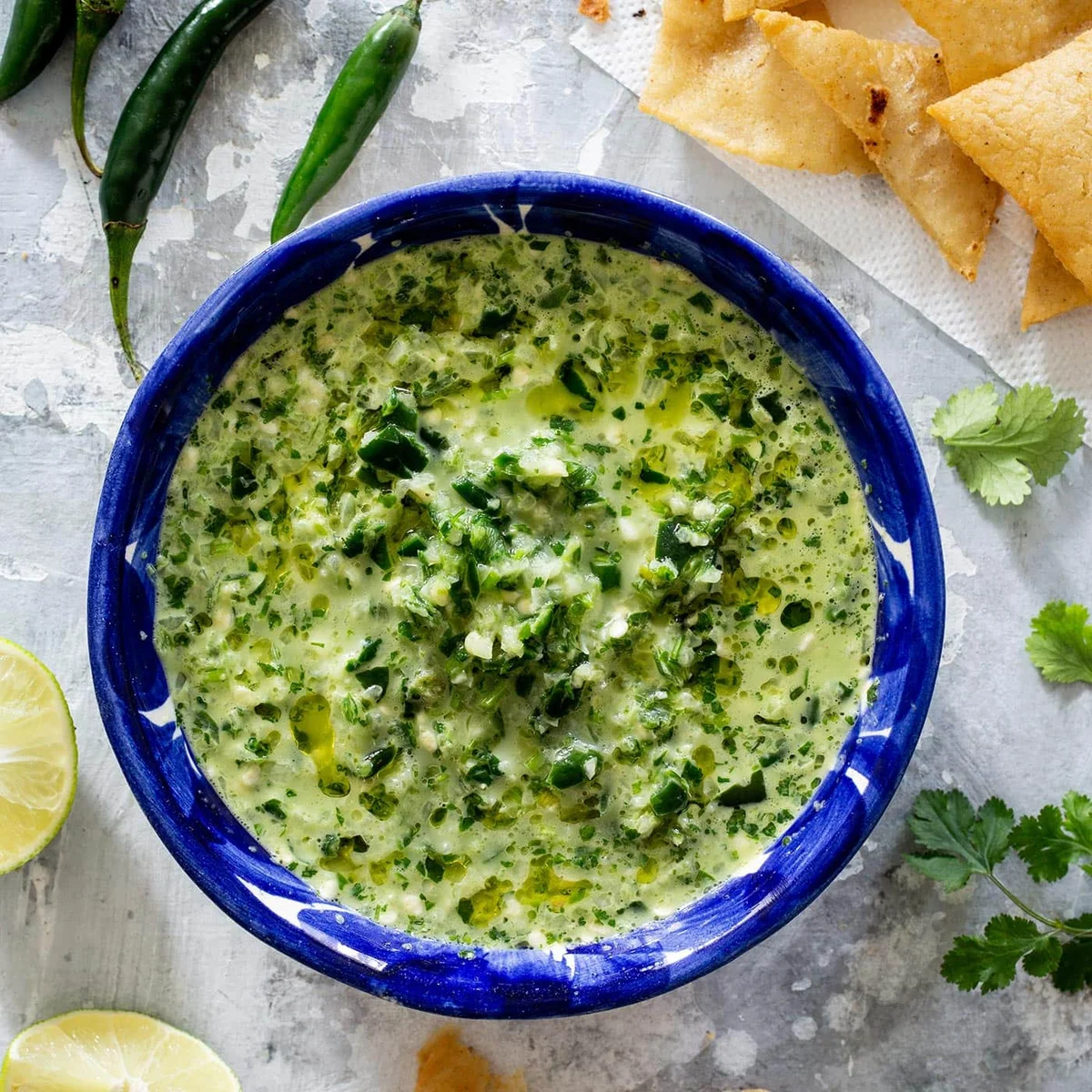
A fresh Mexican-style salsa made with serrano chillies, herbs, lime and olive oil. Blend it in minutes for a spicy, punchy accompaniment to grilled meat, tacos or quesadillas.
Ingredients
- 15serrano chillies (see notes)
- 1 smallonion, cut into chunks
- 1 small bunchfresh coriander, including the stems
- 1 Tbsp, or more to tastelime juice
- 2 clovesgarlic, peeled
- 3 Tbspolive oil
- to tastesalt
- 80 ml (⅓ cup)water
Instructions
- 1
Prepare the chillies
Rinse the serrano chillies under cold water and remove their stems.
- 2
Add the ingredients
Put the chillies, onion, coriander, garlic, olive oil, lime juice and salt into a food processor or blender.
- 3
Blend the salsa
Add 80 ml (⅓ cup) water and blend until it reaches your preferred consistency.
- 4
Adjust the seasoning
Taste and add more salt or lime juice as needed, then transfer the salsa to a bowl or jar.
- 5
Serve or store
Serve with your favourite foods, or keep in the fridge for up to 7 days.
What is serrano salsa?
Serrano salsa is a fresh chilli sauce in the Mexican salsa tradition, where chillies, herbs and other simple ingredients are blended into a condiment for the table. This version pairs the chillies with coriander, onion, garlic and lime for a lively, savoury flavour.
The olive oil gives the salsa a fuller texture, while water lets you adjust how thick or pourable it is. It is quick to make and works as a dip or as a finishing sauce.
Nutrition and macros by portion
The nutrition label shows one serving as written: 55 calories, 0g protein, 2g carbs, 5g fat.
| Portion | Adjustment | kcal | Protein | Carbs | Fat |
|---|---|---|---|---|---|
| Lighter | Use less olive oil | 39 kcal | 0g | 1g | 4g |
| This serving | As written | 55 kcal | 0g | 2g | 5g |
| Hungry | Serve a larger portion | 83 kcal | 1g | 3g | 8g |
The olive oil provides most of the fat, while the chillies, onion and coriander contribute a small amount of carbohydrate; this salsa contains very little protein. Serve it alongside a protein-rich main and vegetables or another filling side to make a more balanced plate.
Choosing the chillies
Serranos: These are the main source of heat and give the salsa its bright, peppery character. Chillies vary in strength, so taste a small piece before blending if you are unsure.
Stems: Remove the stems before blending, but keep the rest of each chilli. For a milder result, use fewer chillies or remove their seeds and inner membranes.
Why keep the coriander stems?
Coriander stems: The recipe uses the whole small bunch, stems included, so there is no need to pick the leaves off. The stems blend into the sauce and contribute a fresh, herbal flavour.
Blending: Cut the onion into chunks as directed so the processor can break it down evenly. Scrape down the sides if ingredients collect above the blades.
Getting the texture right
Water: Start with the stated 80 ml, then blend and check the consistency. The finished salsa can be left slightly textured or blended smoother to suit how you plan to serve it.
Oil: Olive oil adds richness and helps give the blended sauce a cohesive feel. Blend until the oil is incorporated rather than sitting in a separate layer.
Seasoning to taste
Lime: Begin with 1 tablespoon of lime juice and add more a little at a time if you want a sharper finish. The acidity should brighten the chillies without overwhelming the herbs.
Salt: Taste after blending, then adjust the salt. Seasoning is easiest to judge once the ingredients have been fully combined.
Serving ideas
Grilled food: Spoon the salsa alongside grilled meat or vegetables, or offer it at the table so everyone can choose their own amount. Its sharp, fresh flavour also goes well with tacos and quesadillas.
On the side: Serve it in a small bowl as a dip or spoon a little over a finished dish. Because it is spicy, keep it separate when serving people with different heat preferences.
Recipe notes & tips
- Wear gloves if you prefer not to handle hot chillies directly.
- Keep the coriander stems in the mix as the recipe specifies.
- Blend in short bursts if you want more control over the final texture.
- Add extra lime juice gradually, tasting as you go.
- Use a clean spoon each time you take salsa from the storage jar.
Variations
- Milder salsa: Blend fewer serrano chillies for less heat.
- More lime: Add lime juice a little at a time for a sharper finish.
- Chunkier texture: Blend briefly and stop while some pieces remain.
- Smoother texture: Blend for longer, pausing to scrape down the sides.
- Extra herbs: Add more coriander to give the salsa a stronger herbal flavour.
Common mistakes to avoid
- Leaving the stems on: Remove the serrano stems before blending.
- Adding too much lime at once: Start with 1 tablespoon and adjust after tasting.
- Skipping the taste check: Reassess the salt and lime once the salsa is blended.
- Over-blending by preference: Use short bursts and check the texture as you go.
- Storing it uncovered: Transfer the salsa to a bowl or jar and cover it before refrigerating.
How to store
Store the salsa in a covered bowl or jar in the fridge for up to 7 days. Stir it before serving if it separates; it is usually served chilled or at room temperature, so reheating is not necessary.
Frequently asked questions
How spicy is serrano salsa?
It is likely to be quite spicy because the recipe uses 15 serrano chillies. Chilli heat varies, so use fewer or remove the seeds and inner membranes for a milder version.
Can I make it without a food processor?
A blender works too, as the method suggests. If your blender needs more liquid to run, add water gradually and check the texture.
How can I make the salsa smoother?
Blend it for longer, stopping to scrape down the sides if needed. Add water a little at a time if you want a thinner consistency.
Can I prepare it ahead?
Yes. Make it ahead and keep it covered in the fridge for up to 7 days. Stir before serving and adjust the seasoning if needed.
What can I serve it with?
It goes well with grilled meats, tacos and quesadillas. You can also serve it as a dip or spoon it alongside other savoury dishes.
Cook it from the original
This recipe comes from maricruzavalos.com. Their page has the author’s own photos, notes and tips — the best place to cook it from.
Open the recipe on maricruzavalos.com