
Chicken Spring Roll
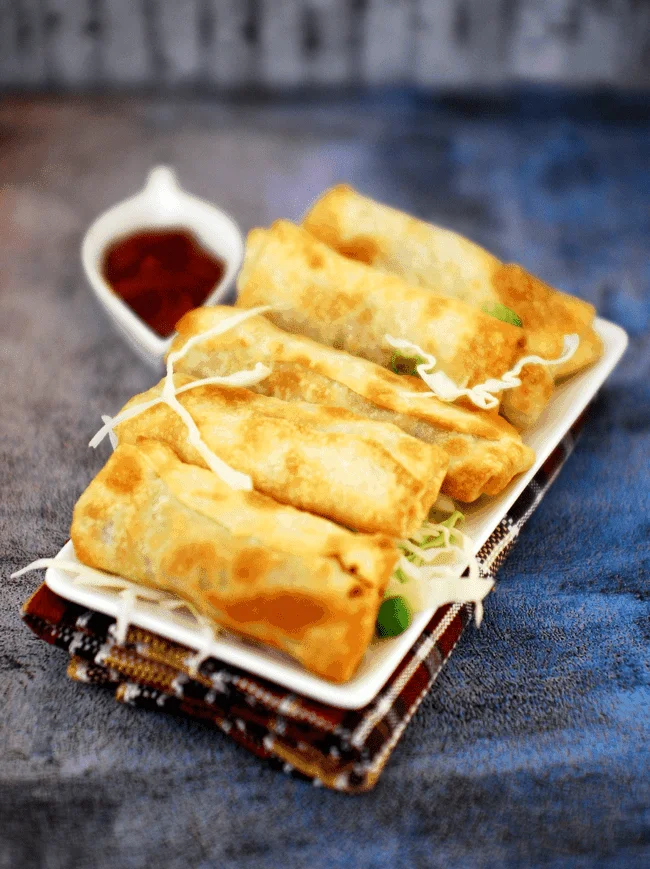
These chicken spring rolls wrap a savoury chicken and vegetable filling in a simple homemade dough, then turn crisp and golden when fried or air-fried. Make them for a snack or serve them as part of a meal with tomato ketchup.
Ingredients
- 125 g (1 cup)plain flour
- 15 ml (3 tsp)oil
- ¾ tsp (about 4.5 g)salt
- 80–120 ml (⅓–½ cup)recently boiled water
- 1 mediumonion, chopped
- 1 tsp eachchopped ginger and garlic
- 2 mediumboneless chicken breasts, sliced
- 1 smallcarrot, sliced
- 150 g (1 cup), measured after slicingcabbage, sliced
- 1 smallcapsicum, sliced
- 2 tbspspring onion, chopped
- 1 tbspsoya sauce
- To tastesalt and pepper
- For cooking and fryingoil (sunflower oil suggested)
- 1–2 tbspplain flour, for sealing paste
- As neededwater, for sealing paste
Instructions
- 1
Make the dough
Mix the wrap ingredients into a soft dough. Cover it with a damp cloth and leave it to rest while you prepare the filling.
- 2
Cook the filling
Heat oil in a deep, wide pan. Add the onion and cook until soft without browning. Stir in the ginger and garlic and cook for 2–3 minutes. Add the sliced chicken, salt and pepper, and cook until the chicken starts to change colour. Add the cabbage, carrot, capsicum and spring onion. Cover and cook until the chicken and vegetables are done. Mix in the soya sauce, taste, and add more salt and pepper if needed.
- 3
Mix sealing paste
Stir 1–2 tbsp flour with water to make a thick paste.
- 4
Divide the dough
Divide the dough into equal-sized balls; the mixture should make around 8–10 medium spring rolls. Roll out each ball.
- 5
Shape the rolls
Spread the thick flour paste along the edges of one side of a rolled-out piece of dough. Place a line of filling near the edge closest to you. Fold that edge over the filling, away from you, then fold the left and right sides over it. Pull the near edge gently away from you and roll it over the filling. Continue rolling and seal the edges.
- 6
Choose a method
The assembled rolls are ready to fry. You can deep-fry them or cook them in an air fryer.
- 7
Deep-fry the rolls
Heat oil in a deep pan over medium-high heat. When hot, lower the heat to low-medium and fry the rolls in batches until golden brown.
- 8
Air-fry the rolls
Preheat the air fryer to 200°C for 4 minutes. Brush oil over the rolls and arrange them in batches in the fryer. Reduce the temperature to 180°C and cook for 5 minutes, then raise it to 200°C for another 5 minutes. Open the fryer and brush on more oil if needed. Flip the rolls and cook at 190°C for 4–5 minutes.
- 9
Serve hot
Serve the rolls hot with tomato ketchup.
What are chicken spring rolls?
Spring rolls are filled parcels found in several Asian cuisines, with wrappers and fillings that vary by region. This version uses a homemade wheat-flour dough around chicken, cabbage and other vegetables.
The filling is cooked before wrapping, while the rolls are fried afterwards for a crisp exterior. Making the wrappers from dough gives this version a hearty, homemade feel.
Nutrition and macros by portion
The nutrition label shows one serving as written: 430 calories, 30g protein, 43g carbs, 14g fat.
| Portion | Adjustment | kcal | Protein | Carbs | Fat |
|---|---|---|---|---|---|
| Lighter | Air-fry with less oil | 301 kcal | 21g | 30g | 10g |
| This serving | As written | 430 kcal | 30g | 43g | 14g |
| Hungry | Serve extra rolls | 645 kcal | 45g | 65g | 21g |
The chicken provides most of the protein, while the flour wrapper and vegetables supply carbohydrates. Oil used for cooking and frying contributes much of the fat, and the amount absorbed can vary with the cooking method. Pair a portion with a generous serving of salad or vegetables to balance the plate.
The filling ingredients
Chicken: Slice the breasts so they cook through in the pan before the filling is wrapped.
Vegetables: Cabbage, carrot, capsicum and spring onion bring varied textures. Slice them evenly so they cook at a similar pace.
Seasoning: Ginger, garlic and soya sauce flavour the filling; taste it before wrapping and adjust the salt and pepper.
Getting the dough right
Water: Add the recently boiled water gradually, since the dough needs only enough to come together softly. The full amount may not be needed.
Rest: Keep the dough covered with a damp cloth as it rests. This helps prevent the surface from drying while you cook the filling.
Rolling: Divide the dough into even balls and roll each piece out so the wrapper is manageable to fold around its filling.
Folding and sealing
Paste: Make the flour-and-water mixture thick enough to cling to the wrapper edges. It acts as a seal when the roll is folded.
Filling: Place it in a line near the edge closest to you, leaving room at the sides to fold them over. Avoid overfilling, which can make the wrapper difficult to close.
Shape: Fold the near edge over the filling, tuck in both sides and roll away from yourself. Seal the edges before frying.
Choosing how to cook them
Deep-frying: Start with the oil over medium-high heat, then turn it down to low-medium once it is hot. Fry in batches until the wrappers are golden brown.
Air-frying: The method uses several temperature changes: 180°C for 5 minutes, then 200°C for 5 minutes, followed by 190°C for 4–5 minutes after flipping. Brush with oil as directed for a browned finish.
Doneness and texture
The chicken and vegetables should be fully cooked in the pan before you wrap them. This means the final cooking stage is focused on browning and crisping the wrapper.
For either cooking method, look for a golden-brown outside. Fry in batches rather than crowding the pan or air fryer, so the rolls have space to cook evenly.
Serving ideas
Serve the rolls hot with tomato ketchup, as suggested. For a more complete plate, add a fresh salad or extra vegetables alongside them.
The recipe makes around 8–10 medium rolls from the dough, so the exact number per serving may vary with how large you shape them.
Recipe notes & tips
- Add the recently boiled water gradually so the dough stays soft rather than sticky.
- Keep the dough covered while you prepare the filling to stop it drying out.
- Slice the chicken and vegetables into pieces of similar thickness for more even cooking.
- Let excess moisture from the filling cook off before wrapping so the dough is easier to seal.
- Use the flour paste along the edges to help keep each roll closed.
- Fry or air-fry in batches to leave space around each roll.
Variations
- Extra vegetables: Increase the cabbage or carrot and use a little less chicken.
- More ginger: Add extra ginger to give the filling a stronger, warmer flavour.
- Chilli heat: Add chopped fresh chilli to the filling while cooking.
- Different dip: Serve with a chilli sauce or another preferred dip instead of ketchup.
- Air-fried finish: Choose the air-fryer method and brush the rolls with oil as directed.
Common mistakes to avoid
- Adding all the water at once: Pour it in gradually so the dough does not become too wet.
- Browning the onion: Cook it only until soft, as the method does not call for browned onion.
- Overfilling the wrappers: Use a narrow line of filling so the sides can fold over and seal.
- Loose edges: Apply the thick flour paste to the wrapper edges before folding them closed.
- Crowding the cooking pan: Fry in batches so the rolls can brown rather than cook unevenly.
- Skipping the air-fryer flip: Turn the rolls for the final 4–5 minutes so the other side cooks too.
How to store
Cool leftover rolls and refrigerate them in an airtight container for up to 3 days. Reheat in an air fryer or oven until hot and crisp; microwaving will soften the wrapper.
Frequently asked questions
How many rolls does this recipe make?
The method estimates around 8–10 medium spring rolls. The exact number depends on the size of the dough balls and how thinly you roll them.
Can I use an air fryer instead of deep-frying?
Yes. Preheat it to 200°C for 4 minutes, then follow the stated cooking sequence: 180°C for 5 minutes, 200°C for 5 minutes, and 190°C for 4–5 minutes after flipping.
How can I tell when the chicken filling is cooked?
Cook it in the pan until the chicken is done and the vegetables are cooked before you assemble the rolls. If unsure, cut through a thicker piece of chicken to check that it is cooked through.
Why is my dough sticky?
It may have taken up more water than needed. Add the water gradually when mixing, and use only enough to form a soft dough.
Can I prepare the filling ahead?
You can cook the filling in advance, then cool and refrigerate it until needed. Bring it out for assembly and avoid wrapping it while it is hot and steamy.
What should I serve with chicken spring rolls?
Tomato ketchup is the suggested accompaniment. A fresh salad or extra vegetables also work well alongside the rolls.
Cook it from the original
This recipe comes from mariasmenu.com. Their page has the author’s own photos, notes and tips — the best place to cook it from.
Open the recipe on mariasmenu.com