
Mashed Butternut Squash
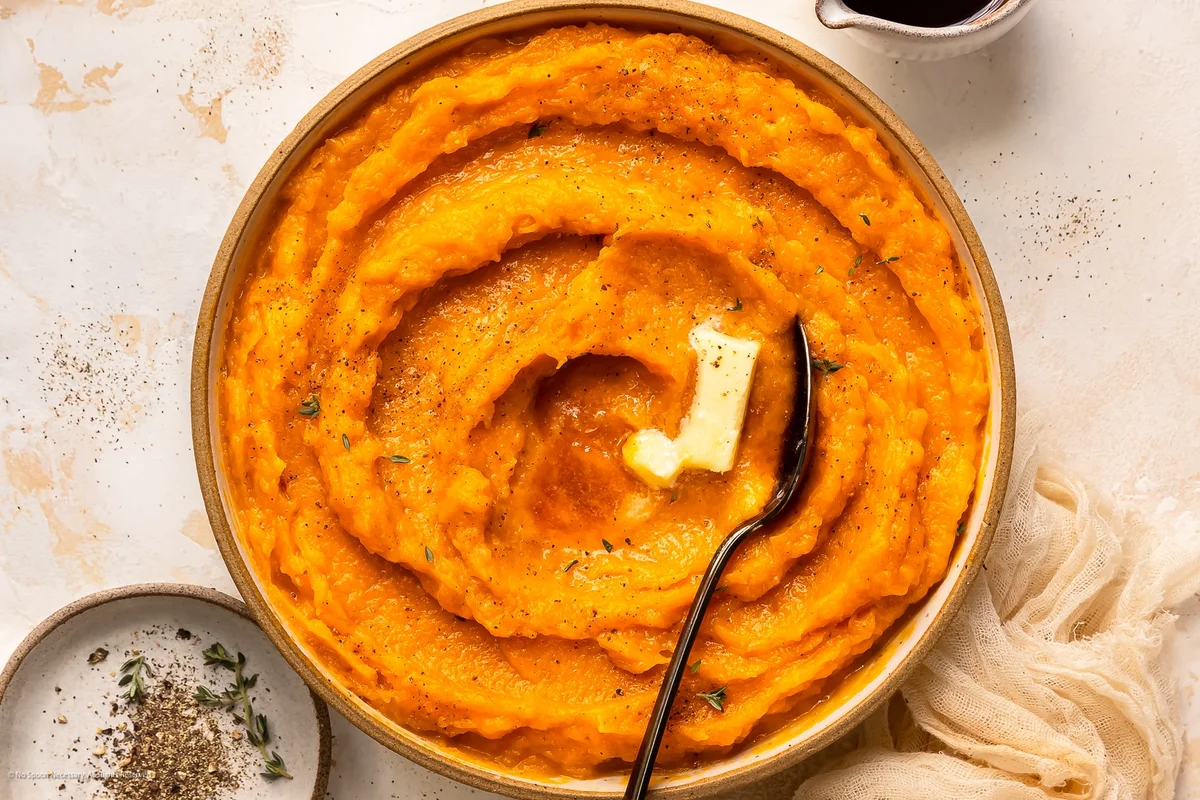
Roasted butternut squash is mashed with butter, brown sugar, maple syrup, cream and warming herbs and spices. It makes a smooth, sweet-and-savoury side for autumn meals and festive dinners.
Ingredients
- 1 large (about 1.36–1.81 kg / 3–4 lb)butternut squash
- 15 ml (1 tbsp)olive oil
- 57 g (¼ cup), meltedbutter
- 50 g (¼ cup), gently packedlight brown sugar
- 15 ml (1 tbsp)pure maple syrup
- ½ heaped tsp eachgarlic powder and dried thyme leaves
- ¼ heaped tspground sage
- a generous pinch eachground cinnamon and nutmeg
- to tastekosher salt and ground black pepper
- 30 ml (2 tbsp), or more to tastedouble cream
- optional, to servepure maple syrup, butter pats and fresh thyme
Instructions
- 1
Heat the oven
Set a rack in the middle of the oven and heat it to 220°C (425°F). Line a baking sheet with parchment paper or foil for easier cleaning.
- 2
Prepare the squash
Set the whole squash on a clean chopping board and carefully cut it in half lengthways, from stem to tip. Scoop out and discard the seeds, then prick the cut sides all over with a fork. Brush or rub the oil over the cut surfaces and season generously with salt and pepper.
- 3
Roast the squash
Place the squash halves cut-side down on the prepared baking sheet. Roast in the heated oven for 40–50 minutes, until very tender when pierced with a fork and caramelised around the edges.
- 4
Cool it briefly
Take the squash out of the oven and set the baking sheet on a wire rack. Turn the halves cut-side up and leave them until they are warm but cool enough to handle; warm squash is easier to mash.
- 5
Scoop and mash
Use a large spoon to scoop the flesh into a large mixing bowl. Mash it with a potato masher or a hand-held mixer on low until creamy.
- 6
Mix in the flavourings
Add the butter, brown sugar, maple syrup, garlic powder, thyme, sage, cinnamon and nutmeg. Season with ½ teaspoon salt and ¼ teaspoon black pepper, then mash or mix on low until combined. Add the cream and mix on low until incorporated. Gradually increase the mixer to medium and beat for about 2 minutes, until smooth and fluffy.
- 7
Adjust the seasoning
Taste the mash and adjust it as needed, adding salt or seasoning for flavour, sugar or maple syrup for sweetness, or cream or butter for richness.
- 8
Serve while warm
Spoon the mash into a serving bowl. If using, drizzle with a little maple syrup and finish with a small pat of butter and a few fresh thyme sprigs. Serve warm.
What is butternut squash mash?
Butternut squash mash is a soft, spoonable side made from cooked winter squash, much like mashed potatoes but naturally sweet and warmly coloured. This version roasts the squash before mashing it, a straightforward approach that suits the squash’s firm flesh.
Butter, brown sugar and maple syrup bring richness and sweetness, while garlic, thyme, sage, cinnamon and nutmeg give the dish a savoury, gently spiced edge. The combination makes it at home alongside a roast or on a festive table.
Nutrition and macros by portion
The nutrition label shows one serving as written: 154 calories, 1g protein, 20g carbs, 9g fat.
| Portion | Adjustment | kcal | Protein | Carbs | Fat |
|---|---|---|---|---|---|
| Lighter | Use less butter and cream | 108 kcal | 1g | 14g | 6g |
| This serving | As written | 154 kcal | 1g | 20g | 9g |
| Hungry | Serve a larger portion | 231 kcal | 2g | 30g | 14g |
The squash and brown sugar provide most of the carbohydrates, while butter, olive oil and cream contribute most of the fat; the dish contains little protein. Pair a portion with a protein-rich main and vegetables for a more balanced plate.
Roast for concentrated flavour
Cut-side down: roasting the halves this way keeps the cut flesh against the hot tray while the skin faces upwards. A lined baking sheet makes any caramelised edges easier to clean up.
Check for tenderness: the squash needs to be very soft before mashing, not merely cooked through. If a fork does not slide into the thickest part easily, give it more time in the oven.
Handle the squash safely
Cut carefully: butternut squash can be firm, so use a stable chopping board and a sharp chef’s knife to split it lengthways. Scoop out the seeds before roasting.
Cool briefly: let the squash sit until you can handle it safely, but mash it while still warm. The flesh is easier to scoop and break down at that stage.
Build a smooth texture
Mash first: break up the warm squash before adding the flavourings so you can see whether any large pieces remain. A potato masher gives a little more texture, while a hand-held mixer makes it smoother.
Add cream last: mix it in on low first, then beat on medium for about 2 minutes. Stop when the mash looks smooth and fluffy, and avoid prolonged mixing.
Balance sweet and savoury
Sweetness: brown sugar and maple syrup complement the squash, but their impact can vary with the squash itself. Taste before adding extra sugar or syrup.
Seasoning: garlic, thyme and sage counterbalance the sweet ingredients, while cinnamon and nutmeg add warmth. Adjust the salt, pepper and other seasonings to your preference at the end.
Plan the timing
Roasting takes 40–50 minutes, so start with the squash and prepare other parts of the meal while it cooks. Begin checking for tenderness towards the earlier end of that range.
The mash is best served warm after mixing. If it is ready before the rest of dinner, keep it warm and stir it before serving.
What to serve alongside it
This sweet-and-savoury mash works well beside roast poultry, pork or a meat-free main with hearty grains or beans. Its soft texture also pairs neatly with crisp roasted vegetables.
For serving, the recipe suggests a little extra maple syrup, a pat of butter and fresh thyme. Keep the toppings optional if the rest of the meal is already rich.
Recipe notes & tips
- Use a sharp knife and a stable board when halving the squash.
- Prick the cut sides all over with a fork before roasting.
- Roast until the thickest part is very tender before scooping.
- Mash the squash while it is still warm for easier mixing.
- Add extra maple syrup or cream gradually, tasting as you go.
- Serve straight after mixing for the fluffiest texture.
Variations
- More savoury: reduce the brown sugar and maple syrup to let the herbs and garlic stand out.
- Extra maple: add a little more syrup after tasting for a sweeter finish.
- More spice: increase the cinnamon or nutmeg slightly to suit your taste.
- Chunkier texture: mash by hand and stop before the squash is completely smooth.
- Dairy-free option: use a plant-based butter and cream alternative in place of the dairy ingredients.
Common mistakes to avoid
- Rushing the roast: the mash can turn lumpy if the squash is not very tender; roast until a fork passes easily through the thickest part.
- Overcooling the squash: cold flesh is harder to mash; scoop and mash it while it is still warm enough to handle.
- Adding all the cream at once: the texture can become looser than intended; mix it in gradually.
- Overmixing: prolonged beating can make the mash less appealing; stop once it is smooth and fluffy.
- Over-sweetening: squash sweetness varies; taste before adding extra sugar or maple syrup.
How to store
Cool leftovers and refrigerate them in a covered container for up to 3–4 days. Reheat gently in a saucepan over low heat or in the microwave, stirring occasionally; add a small splash of cream if needed to loosen the mash. Freeze in a sealed container for up to 3 months and thaw in the fridge before reheating.
Frequently asked questions
Can I make the mash ahead?
Yes. Prepare it, cool it and store it covered in the fridge for up to 3–4 days. Reheat gently, stirring well before serving.
How do I know when the squash is roasted enough?
The flesh should be very tender when pierced with a fork, and the edges should be caramelised. If the centre is still firm, return it to the oven and check again.
Can I mash it without a hand-held mixer?
Yes. Use a potato masher and work until the squash reaches the texture you prefer. It may be less fluffy than when beaten with a mixer.
Can I use a different type of squash?
Another winter squash with a similar firm, sweet flesh can work, though its flavour and cooking time may differ. Check for tenderness rather than relying only on the stated roasting time.
Can I freeze butternut squash mash?
Yes. Freeze it in a sealed container for up to 3 months. Thaw it in the fridge and reheat gently, stirring to bring the texture back together.
How can I adjust the sweetness?
Taste the squash mixture before adding extra sugar or maple syrup. Add either gradually, since the squash may already be quite sweet.
Cook it from the original
This recipe comes from nospoonnecessary.com. Their page has the author’s own photos, notes and tips — the best place to cook it from.
Open the recipe on nospoonnecessary.com