
Mango Sago
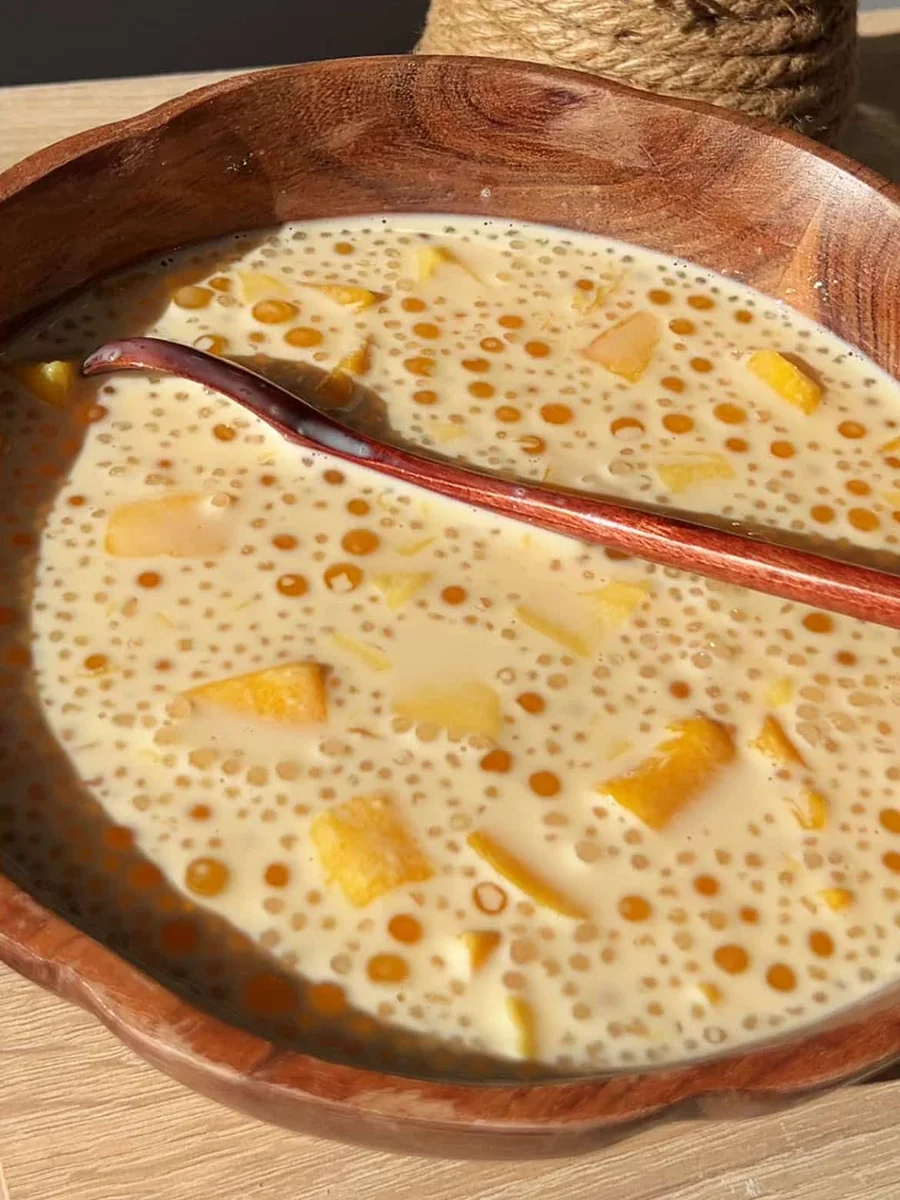
Mango sago is a chilled dessert combining chewy sago pearls, mango jelly, fresh mango and popping boba in a sweet milk mixture. This version adds tiny pumpkin-shaped mochi for an extra-soft, chewy bite.
Ingredients
- 65 g (⅓ cup)sago
- 710 ml (3 cups)water
- 150 gpumpkin purée
- 30 ggranulated sugar
- 130 gglutinous rice flour
- 2.5 ml (½ tsp)ground cinnamon (optional)
- 128 g (4.5 oz)mango pudding mix
- 475 ml (2 cups)milk
- 240 ml (1 cup)water
- 240 ml (1 cup)mango popping boba
- 1 largemango, peeled and cubed
- 120 ml (½ cup), or to tastesweetened condensed milk
- 355 ml (1½ cups)evaporated milk, or unsweetened coconut milk
Instructions
- 1
Cook the sago
Bring 710 ml (3 cups) of water to a full boil in a medium pot over high heat. Lower the heat to medium-low, add the sago and stir with a whisk or spoon for 1 minute to keep it from sticking.
- 2
Check the pearls
Cover the pot and simmer over medium-low heat for 10 minutes, until the sago turns transparent. If a white dot remains in the centre of each pearl, turn off the heat, cover the pot and leave the sago in the hot water for another 5 minutes.
- 3
Cool the sago
Put 1 cup of ice cubes and 1 cup of cold water in a large bowl. Drain the sago into the iced water; once cool, drain it again and transfer it to another bowl.
- 4
Heat the milk
Pour 475 ml (2 cups) of milk and 240 ml (1 cup) of water into a medium saucepan. Heat over medium, stirring constantly, until the mixture reaches a full boil, then take it off the heat.
- 5
Set the jelly
Immediately add the mango pudding mix to the saucepan and stir until it is completely dissolved. Pour the mixture into a shallow container and let it cool to room temperature. Cover and refrigerate for at least 2 hours, until fully set, then cut the jelly into small cubes.
- 6
Mix the mochi
Add the pumpkin purée, glutinous rice flour, sugar and cinnamon, if using, to a large bowl. Knead with clean hands until you have a smooth dough.
- 7
Shape the pumpkins
Pinch off portions of dough of about 2.5 g each and roll them between your palms into small balls. Continue until all the dough is used. Press three crossing lines into the top of each ball with floss to make a pumpkin pattern. If you like, colour a small piece of dough green and use it to make a stem for each one.
- 8
Boil the mochi
Bring a pot of water to the boil and cook the mini mochi over medium heat for about 10 minutes, or until they float. Transfer them with a slotted spoon to a large bowl of ice water. When cool, drain and place them in another bowl.
- 9
Mix the milks
In a bowl, stir together the sweetened condensed milk and evaporated milk.
- 10
Assemble the dessert
Put the popping boba, mini pumpkin mochi, mango jelly, mango chunks and cooked sago in a large bowl. Pour the sweetened milk mixture over the ingredients. Add ice cubes if you want to serve the mango sago especially chilled.
What is mango sago?
Mango sago is a chilled Asian dessert built around small, chewy sago pearls and ripe mango. Versions vary, but mango, a creamy liquid and tapioca-style pearls are common elements.
This version layers in mango jelly and popping boba, then adds small pumpkin-shaped mochi made with pumpkin purée and glutinous rice flour. The different textures make each spoonful varied, while the milk mixture brings the ingredients together.
Nutrition and macros by portion
The nutrition label shows one serving as written: 585 calories, 0g protein, 0g carbs, 0g fat.
| Portion | Adjustment | kcal | Protein | Carbs | Fat |
|---|---|---|---|---|---|
| Lighter | Less condensed milk | 410 kcal | 0g | 0g | 0g |
| This serving | As written | 585 kcal | 0g | 0g | 0g |
| Hungry | Larger dessert portion | 878 kcal | 0g | 0g | 0g |
The main carbohydrate sources are the sago, glutinous rice flour, sugar, mango, pudding mix and sweetened condensed milk. The milk, evaporated milk and condensed milk contribute most of the fat, while the recipe has no meaningful protein figure supplied here. A small serving alongside a meal, or with a less-sweet drink, can help balance the richness.
Getting the sago right
Gentle cooking: Stir the pearls as they go into boiling water, then simmer them covered. If the centres still have white dots after 10 minutes, resting them in the hot water for 5 more minutes gives them extra time to turn transparent.
Cooling: The ice-water bath stops the cooking and cools the pearls quickly. Drain them well afterwards so excess water does not dilute the finished dessert.
Making the pumpkin mochi
Smooth dough: Knead the pumpkin purée, flour, sugar and optional cinnamon until the mixture is even. The small portions take time to roll, but keeping them similar in size helps them cook at the same pace.
Shaping: The crossing lines are decorative and can be pressed in with floss before cooking. The green stem is optional; the mochi will still work without it.
Why the jelly needs to chill
Set time: Stir the pudding mix into the hot milk and water until no lumps remain, then pour it into a shallow container. It needs at least 2 hours in the fridge to become firm enough to cut into cubes.
Plan ahead: The jelly can set while you prepare the sago and mochi. Wait until it is fully chilled before cutting, as warm or soft jelly is more likely to lose its shape.
Balancing the textures
Chewy elements: Sago and mochi bring a soft, springy texture, while popping boba gives little bursts of mango flavour. Drain both the sago and the cooked mochi after their ice baths before adding them to the bowl.
Fresh fruit: Use a ripe mango and cut it into bite-sized cubes so it is easy to scoop alongside the pearls and jelly. Add the components gently to keep the jelly cubes intact.
Serving and timing
Chill the components: The jelly requires at least 2 hours to set, so start it well before serving. The recipe takes 50 minutes overall, with the jelly’s refrigeration time needing to be accounted for in the schedule.
Serve cold: Combine the ingredients and milk mixture shortly before serving for the best contrast in textures. Add ice cubes to the bowl if you prefer it extra cold, and serve in small dessert bowls or glasses.
Recipe notes & tips
- Keep the sago moving for the first minute to reduce sticking on the bottom of the pot.
- Check the centres of the sago pearls before draining; give them the extra 5-minute covered rest if they still have white dots.
- Use a shallow container for the pudding mixture so the jelly is easier to cut into cubes.
- Keep the mochi portions close to 2.5 g so they cook evenly.
- Drain the sago and mochi thoroughly after cooling them in ice water.
- Taste the milk mixture before pouring it over the fruit and adjust the condensed milk to suit your preference.
Variations
- Use coconut milk: Replace the evaporated milk with unsweetened coconut milk as suggested in the ingredients.
- Skip the cinnamon: Leave it out for a more straightforward pumpkin-and-mango flavour.
- Omit the stems: Leave off the optional green dough details to make the mochi simpler to shape.
- Adjust the sweetness: Start with less condensed milk and add more to taste.
- Add extra mango: Use more fresh mango in place of some of the jelly or popping boba.
Common mistakes to avoid
- Adding sago before the water boils: Bring the water to a full boil first so the pearls begin cooking properly.
- Skipping the sago stir: Stir for the first minute to help prevent the pearls sticking together or to the pot.
- Draining sago with white centres: Cover it in the hot water for another 5 minutes before cooling.
- Cutting unset jelly: Refrigerate it for at least 2 hours and wait until it is firm before cubing.
- Making uneven mochi: Keep each piece near 2.5 g so the balls finish cooking at around the same time.
- Leaving water on the pearls: Drain the sago and mochi well after their ice baths to avoid watering down the dessert.
How to store
Store assembled mango sago covered in the refrigerator and eat within 1–2 days; the pearls and mochi may firm up as they sit. Keep the jelly and cooked components separate from the milk mixture if preparing ahead, and stir together just before serving. This dessert is best served cold rather than reheated.
Frequently asked questions
Can I make the mango jelly ahead?
Yes. Make it in advance and refrigerate it, covered, until fully set; it needs at least 2 hours before it can be cut into cubes.
How do I know when the sago is cooked?
The pearls should look transparent. If white dots remain in the centres after 10 minutes of simmering, turn off the heat and leave the covered pot for another 5 minutes.
Can I use coconut milk instead of evaporated milk?
Yes. The recipe lists unsweetened coconut milk as an alternative to evaporated milk.
Do I have to make pumpkin-shaped mochi?
No. You can roll the dough into small balls without pressing in the pumpkin lines or adding green stems.
Can I use frozen mango?
Fresh mango is specified for this recipe. If using frozen mango, thaw and drain it first so extra liquid does not dilute the milk mixture.
When should I add the ice cubes?
Add them to the assembled dessert if you want it especially chilled. The sago and mochi are cooled separately in ice water before assembly.
Cook it from the original
This recipe comes from msshiandmrhe.com. Their page has the author’s own photos, notes and tips — the best place to cook it from.
Open the recipe on msshiandmrhe.com