
Cashew Sweet and Sour Pork
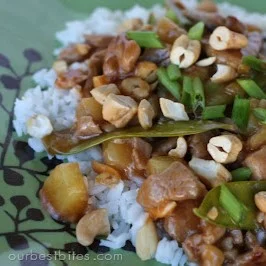
This quick sweet and sour pork stir-fry combines tender pork, crisp snow peas and pineapple in a tangy, glossy sauce, finished with cashews. It is a handy weeknight choice when you want a full-flavoured meal made with familiar ingredients.
Ingredients
- 454 g (1 pound)pork tenderloin or boneless pork chops, thinly sliced
- 15 ml (1 tablespoon)cooking sherry or apple juice
- 15 ml (1 tablespoon), dividedcornflour
- 15 ml (1 tablespoon)cornflour
- 80 ml (⅓ cup)water
- 50 g (¼ cup)sugar
- 60 ml (¼ cup)cider vinegar
- 45 ml (3 tablespoons)soy sauce
- 45 ml (3 tablespoons)ketchup
- 15 ml (1 tablespoon)oil
- 45 g (⅓ cup)chopped cashews
- 25 g (¼ cup)green onions
- 10 ml (2 teaspoons)fresh ginger, minced or grated
- 10 ml (2 teaspoons)fresh garlic, minced or pressed
- 170–227 g (6–8 ounces)snow peas, trimmed
- 1 can, 227 g (8 ounces), drainedpineapple chunks
Instructions
- 1
Slice the pork
For very thin slices, partially freeze the pork first. When it is semi-frozen or mostly frozen, slice it with a sharp knife or use a food processor fitted with a slicing blade.
- 2
Coat the pork
Mix 15 ml (1 tablespoon) of the cornflour with the sherry and pork. Toss to coat and set aside.
- 3
Mix the sauce
Whisk the remaining 15 ml (1 tablespoon) of cornflour with the water, sugar, vinegar, soy sauce and ketchup until smooth, with no lumps. Set aside.
- 4
Trim the peas
Trim the snow peas if needed. Small, tender peas can be left as they are; for larger ones, snap off the ends and pull away the tough side string.
- 5
Prepare to cook
If serving the pork with rice, start cooking it so it is ready at the same time. Set all the stir-fry ingredients beside the cooker before you begin.
- 6
Stir-fry the pork
Heat 15–30 ml (1–2 tablespoons) of canola oil in a large frying pan or wok over medium-high heat. Add the pork and stir-fry for 3 minutes. Add the green onions, ginger and garlic, then stir-fry for 1 minute.
- 7
Add vegetables
Add the snow peas and pineapple and stir-fry for a further 3 minutes.
- 8
Finish the sauce
Whisk the sauce again and pour it into the pan. Bring it to the boil and cook for 1 minute, stirring frequently.
- 9
Add the cashews
Stir in the cashews and serve over hot rice. Add extra cashews and green onions as a garnish if desired.
What is sweet and sour pork?
Sweet and sour pork is a stir-fried dish built around the contrast of a tangy sauce and a touch of sweetness. Versions vary across Asian cuisines and home kitchens, so this recipe is best understood as a quick, pantry-friendly take rather than a single traditional formula.
Here, pineapple adds fruity sweetness, while cider vinegar and ketchup give the sauce its sharp, savoury edge. Cashews bring a crunchy finish to the tender pork and crisp vegetables.
Nutrition and macros by portion
The nutrition label shows one serving as written: 377 calories, 29g protein, 38g carbs, 12g fat.
| Portion | Adjustment | kcal | Protein | Carbs | Fat |
|---|---|---|---|---|---|
| Lighter | Use less oil and cashews | 264 kcal | 20g | 27g | 8g |
| This serving | As written | 377 kcal | 29g | 38g | 12g |
| Hungry | Serve with extra rice | 566 kcal | 44g | 57g | 18g |
The pork provides most of the protein, while the sugar, pineapple and rice served alongside contribute much of the carbohydrate. Oil and cashews supply much of the fat, with cashews also adding some protein. For a balanced plate, serve a moderate portion with rice and add extra vegetables if you have them.
Thin pork cooks quickly
Slicing the pork thinly helps it cook through in a short stir-fry. Partially freezing it first firms the meat, making it easier to cut into even slices.
Cornflour and sherry or apple juice coat the pork before it goes into the pan. Keep the slices separate as much as possible so they can brown and cook evenly.
A smooth, glossy sauce
Cornflour thickens the water, sugar, vinegar, soy sauce and ketchup into a coating sauce. Whisk it thoroughly before adding it to the pan so no dry clumps remain.
Give the mixture another whisk just before pouring, as the cornflour can settle. Once it boils, stir frequently during the minute of cooking so the sauce thickens evenly.
Keep the stir-fry moving
Stir-frying happens quickly, so trim the peas, drain the pineapple and measure the sauce ingredients before heating the pan. This lets you add each ingredient without pausing while the pork cooks.
A large frying pan or wok gives the ingredients room to move. If the pan is crowded, stir in batches rather than piling everything in at once.
Look for these doneness cues
After the pork's 3-minute stir-fry and the following minute with the aromatics, the pieces should be nearly cooked through. The later cooking with the peas, pineapple and boiling sauce finishes the dish.
The snow peas should be hot and bright but still have some bite after their 3 minutes in the pan. The sauce should look thick enough to cling to the pork and vegetables.
Serve it straight away
This stir-fry is best served as soon as the sauce has thickened, while the peas retain their crispness and the cashews stay crunchy. Spoon it over hot rice to make a complete meal.
Scatter over extra green onions or cashews if you like. Have the rice ready before you start stir-frying, as the final stages take only a few minutes.
Recipe notes & tips
- Partially freeze the pork before slicing if you want thinner, more even pieces.
- Measure and arrange the stir-fry ingredients beside the cooker before heating the pan.
- Whisk the cornflour into the sauce until completely smooth.
- Drain the pineapple well so excess liquid does not thin the sauce.
- Stir the sauce frequently as it boils to help it thicken evenly.
Variations
- Use apple juice: Swap it for the sherry to keep the pork marinade alcohol-free.
- Add extra vegetables: Include more snow peas or other quick-cooking vegetables alongside the listed ingredients.
- Change the nuts: Replace the cashews with another chopped nut if preferred.
- Adjust the tang: Add a little less cider vinegar for a milder-tasting sauce.
- Serve with noodles: Spoon the finished stir-fry over hot noodles instead of rice.
Common mistakes to avoid
- Skipping the second whisk: Cornflour can settle, so whisk the sauce again just before adding it.
- Crowding the pan: The ingredients may steam rather than stir-fry; cook in batches if needed.
- Starting without prep: The cooking moves quickly, so trim and measure everything first.
- Leaving tough strings on the peas: Snap off the ends of larger pods and pull away the side string.
- Cooking the sauce without stirring: Stir frequently during its 1-minute boil to prevent uneven thickening.
How to store
Refrigerate leftovers in an airtight container for up to 3 days. Reheat in a pan over medium heat, stirring until hot throughout; add a small splash of water if the sauce has thickened too much.
Frequently asked questions
Can I use pork chops instead of tenderloin?
Yes. Use boneless pork chops and slice them thinly, as directed.
Can I use apple juice instead of sherry?
Yes, the recipe lists apple juice as an alternative for coating the pork.
Do I need to trim every snow pea?
Very small, tender pods may not need trimming. Snap the ends off larger pods and pull away any tough side strings.
How do I stop the sauce from going lumpy?
Whisk the cornflour thoroughly with the liquid ingredients before cooking. Whisk again just before pouring it into the pan.
Can I prepare the ingredients ahead?
You can trim the peas, drain the pineapple and mix the sauce in advance. Keep the prepared ingredients ready beside the cooker so the stir-fry can move quickly.
What should I serve with this pork?
The method suggests serving it over hot rice. Start the rice before stir-frying so both are ready together.
Cook it from the original
This recipe comes from ourbestbites.com. Their page has the author’s own photos, notes and tips — the best place to cook it from.
Open the recipe on ourbestbites.com