
Fried Chicken Breast
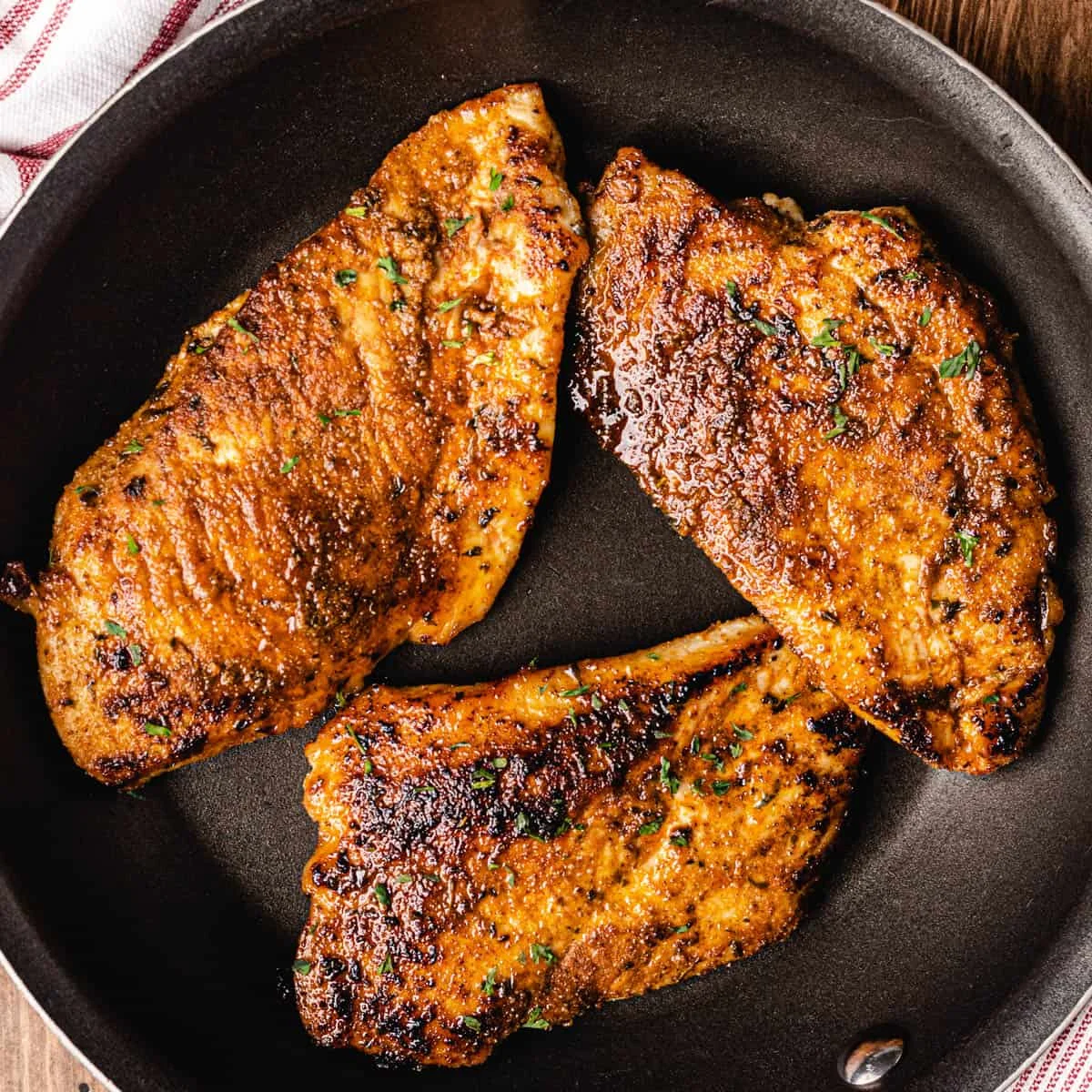
Pan-fried chicken breast is a quick, simply seasoned main with a browned exterior and juicy centre. It takes about 15 minutes and pairs easily with vegetables, rice or potatoes.
Ingredients
- 3boneless chicken breasts
- 15 ml (1 tbsp)olive oil
- 15 ml (1 tbsp), meltedbutter
- 30 ml (2 tbsp)chicken seasoning
Instructions
- 1
Dry the chicken
Wash the chicken breasts, then pat them dry with paper towels.
- 2
Slice thick breasts
If the breasts are thick, put them on a plastic cutting board and slice each lengthways into two equal pieces.
- 3
Season the pieces
Coat the chicken pieces generously with the chicken seasoning.
- 4
Heat the fats
Add the melted butter and olive oil to a large frying pan.
- 5
Arrange the chicken
Once the pan is hot, lay the chicken in a single layer.
- 6
Brown the first side
Cook over medium-high heat for about 5 minutes, with the lid partially covering the pan.
- 7
Brown the second side
Carefully turn the chicken and cook for another 5 minutes with the lid covering the pan.
What is fried chicken breast?
This is a straightforward pan-fried chicken dish: boneless breasts are coated in chicken seasoning and cooked in butter and olive oil. The recipe is labelled African, though it does not specify a particular country or regional tradition.
Its appeal is its short cooking time and compact ingredient list. Cutting thicker breasts into thinner pieces helps them cook more evenly in the pan.
Nutrition and macros by portion
The nutrition label shows one serving as written: 273 calories, 24g protein, 1g carbs, 20g fat.
| Portion | Adjustment | kcal | Protein | Carbs | Fat |
|---|---|---|---|---|---|
| Lighter | Use less butter | 191 kcal | 17g | 1g | 14g |
| This serving | As written | 273 kcal | 24g | 1g | 20g |
| Hungry | Add a larger side | 410 kcal | 36g | 2g | 30g |
The chicken provides most of the protein, while the olive oil and butter contribute most of the fat. The chicken seasoning contributes the small amount of carbohydrate, and a vegetable side can add fibre to the plate; pair the chicken with vegetables and a measured portion of rice or potatoes for a balanced meal.
Choosing and preparing the chicken
Breast size: Try to use pieces of similar thickness so they finish cooking at roughly the same time. Slice thicker breasts lengthways as directed to make thinner pieces.
Dry surface: Patting the chicken dry helps it brown in the pan rather than releasing excess moisture. Handle raw chicken carefully and clean hands and surfaces afterwards.
Getting the seasoning right
Chicken seasoning: The blend supplies most of the dish’s seasoning, and different mixes can vary in salt and spice. Coat the pieces generously, as the recipe directs, and check the seasoning label before adding anything extra.
Even coating: Separate the pieces before seasoning so the blend reaches both sides. This also makes it easier to arrange them in one layer in the pan.
Managing the pan
Hot fats: Add the butter and oil to a large pan and wait until heated before laying in the chicken. The oil and butter together provide the cooking fat for browning.
Single layer: Leave space around the pieces where possible; crowded chicken can release moisture and brown less effectively. If the pan is too small, cook in batches rather than stacking the meat.
Timing and doneness
First side: Cook for about 5 minutes over medium-high heat with the lid partially covering the pan. The recipe gives this as an approximate timing, so thinner pieces may need less time.
Second side: Turn the chicken gently and cook for a further 5 minutes with the lid on. Check the thickest part is fully cooked before serving; the stated 15-minute total includes preparation as well as cooking.
What to serve alongside
Vegetables: Serve with green vegetables or a crisp salad for freshness alongside the rich, seasoned chicken. Choose sides that can be prepared while the chicken cooks.
Starchy sides: Rice, potatoes or bread make the meal more substantial and work well with the pan juices. Keep the side simple so the seasoned chicken remains the focus.
Recipe notes & tips
- Choose chicken breasts of similar thickness so they cook at a similar rate.
- Pat the chicken dry before seasoning for better browning.
- Preheat the pan before adding the chicken.
- Arrange the pieces in one layer rather than crowding the pan.
- Turn the chicken carefully to keep the seasoned coating in place.
- Check the thickest piece for doneness before serving.
Variations
- Add black pepper: Mix it with the chicken seasoning for extra warmth.
- Use a different seasoning blend: Choose a blend you enjoy and check whether it already contains salt.
- Add garlic: Stir garlic into the butter and oil shortly before adding the chicken.
- Serve with greens: Pair the chicken with leafy vegetables or green beans.
- Make it more substantial: Add rice or potatoes alongside the chicken.
Common mistakes to avoid
- Crowding the pan: The chicken can steam instead of brown; cook in batches if needed.
- Uneven pieces: Thick areas may take longer to cook; slice thick breasts lengthways as directed.
- Cold pan: The chicken may not brown well; let the butter and oil heat before adding it.
- Guessing doneness by time alone: Piece size varies; check the thickest part before serving.
- Leaving the chicken uncovered throughout: Follow the method’s partial cover for the first side and covered pan for the second.
How to store
Refrigerate leftover chicken in a covered container within 2 hours and use within 3–4 days. Reheat until piping hot throughout, using a frying pan or microwave; add a small splash of water if reheating in a pan to help prevent it drying out.
Frequently asked questions
Can I use chicken thighs instead?
Yes, boneless thighs can be used, but their thickness and cooking time may differ from breast. Check that the thickest part is fully cooked before serving.
Do I need to slice every breast?
No. The method only calls for slicing thicker breasts lengthways into two equal halves. Smaller, thinner pieces can be cooked whole.
How do I know when the chicken is cooked?
Check the thickest part of a piece; it should be fully cooked through. A food thermometer can help confirm doneness.
Can I make this without butter?
You can cook it with olive oil alone, though the flavour will be less buttery. Keep the pan hot enough to brown the chicken without scorching the fat.
What can I serve with it?
Green vegetables or salad make a fresh side, while rice or potatoes make the meal more filling.
Cook it from the original
This recipe comes from lowcarbafrica.com. Their page has the author’s own photos, notes and tips — the best place to cook it from.
Open the recipe on lowcarbafrica.com