
Seriously Amazing Cheddar Mashed Potatoes
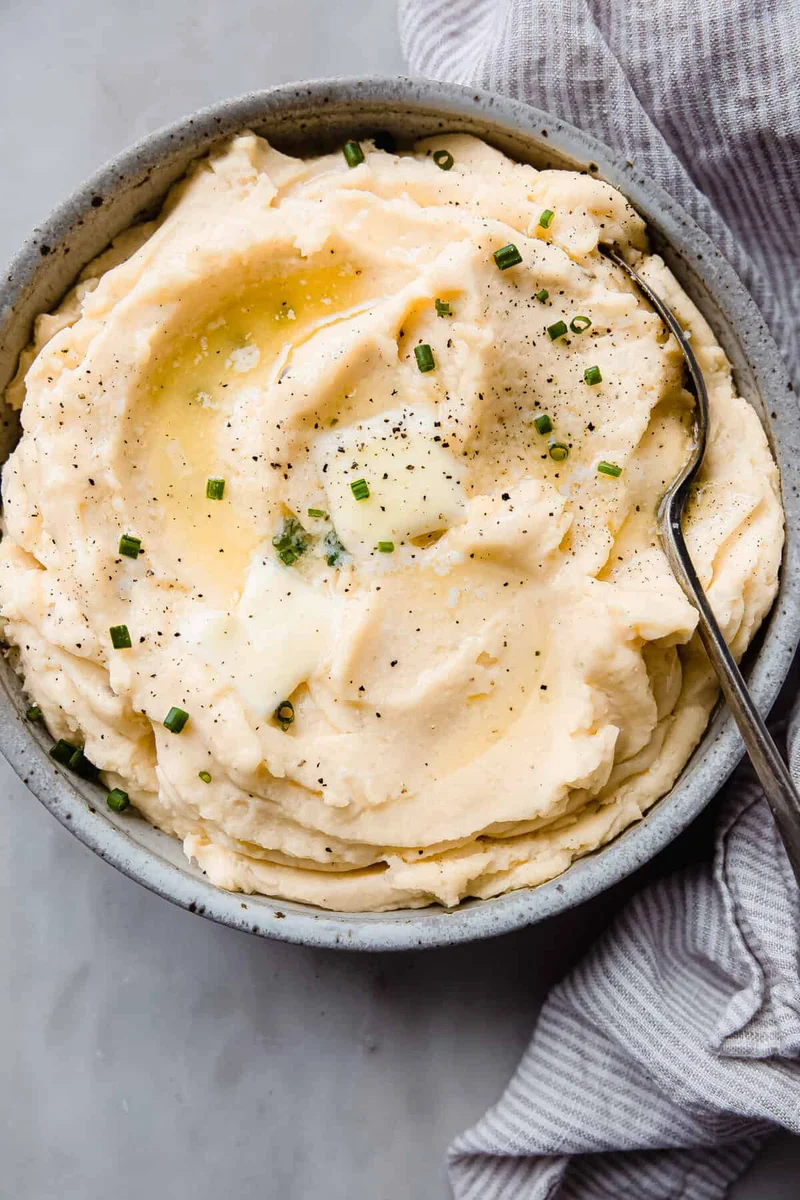
Creamy mashed potatoes are enriched with garlic, sour cream, butter and plenty of cheddar, then finished with fresh chives. They make a cosy side for a holiday table or an ordinary weeknight dinner.
Ingredients
- 907 gred potatoes (or Yukon Gold or Russet potatoes), peeled and cut into 5 cm pieces
- 1–4whole garlic cloves, peeled
- To tastesalt and pepper
- 57 gbutter, cubed
- 120 ml (½ cup)sour cream
- 170 g (1½ cups)cheddar cheese, mild, sharp, white or another variety
- 120–240 ml (½–1 cup)half-and-half or milk, at room temperature
- 3 tablespoonschives, chopped
Instructions
- 1
Boil the potatoes
Put the peeled potatoes in a large Dutch oven and add cold water to cover them by about 5 cm. Add 1 tablespoon of salt and the peeled garlic cloves. Bring to a boil over high heat, then lower the heat to maintain a gentle simmer without letting the pot boil over. Cook for 15–20 minutes, until a fork goes through the potatoes very easily.
- 2
Mash and combine
Drain the potatoes and garlic, but do not rinse them. Press them through a ricer back into the Dutch oven, or return them to the pot and mash. Add the cubed butter and stir until it melts into the potatoes. Add the sour cream and cheddar, then mix with a rubber spatula.
- 3
Adjust the texture
Stir in 80 ml (⅓ cup) of half-and-half. Add a few tablespoons at a time until the potatoes reach your preferred consistency; the original recipe notes that up to 160 ml (⅔ cup) may be needed. If the cheese is not melting, set the pot over the lowest heat briefly to warm it enough to combine. Taste and adjust with salt and white pepper as desired. Transfer to a serving dish and sprinkle with the chopped chives.
What are cheddar mashed potatoes?
Mashed potatoes are a familiar comfort-food side with roots in European potato cooking traditions. This version folds cheddar, sour cream and garlic into the mash for a richer, tangier result, with chopped chives for a fresh finish.
The combination works because the potatoes provide a soft base for the savoury cheese, while sour cream adds a little acidity. Using warm dairy and melting the butter into the potatoes helps keep the mash cohesive.
Nutrition and macros by portion
The nutrition label shows one serving as written: 380 calories, 11g protein, 28g carbs, 26g fat.
| Portion | Adjustment | kcal | Protein | Carbs | Fat |
|---|---|---|---|---|---|
| Lighter | Use less butter and cheddar | 266 kcal | 8g | 20g | 18g |
| This serving | As written | 380 kcal | 11g | 28g | 26g |
| Hungry | Serve a larger scoop | 570 kcal | 17g | 42g | 39g |
The potatoes supply most of the carbohydrates, while the butter, cheddar, sour cream and half-and-half contribute much of the fat. Cheddar and sour cream also add some protein. Serve a moderate scoop with a generous portion of vegetables and a lean protein source for a more balanced plate.
Choosing the potatoes
Red potatoes: these hold their shape well when boiled and make a mash with some body. Yukon Golds are another creamy option, while Russets tend to produce a fluffier texture.
Even pieces: cut the potatoes into roughly 5 cm chunks so they cook at a similar pace. Start them in cold water, which gives the outside and centre time to soften together.
Getting a smooth mash
Drain well: let excess water run off, but do not rinse the potatoes. Rinsing can cool them and wash away surface starch that helps the mash come together.
Ricer or masher: a ricer makes a fine, even texture, while a masher leaves more variation. Avoid overworking the potatoes, especially if using a masher, to help prevent a gluey finish.
Melting in the cheese
Butter first: stir it into the hot potatoes so it melts before adding the sour cream and cheddar. This helps distribute the richness throughout the mash.
Gentle heat: the residual heat may be enough to melt the cheese. If it remains unmelted, use the lowest hob setting briefly and stir; too much heat can make the mixture less smooth.
Choosing the consistency
Add gradually: begin with 80 ml (⅓ cup) of half-and-half, then stir in more a few tablespoons at a time. The amount needed depends on the potatoes and how thick you like the mash.
Room-temperature dairy: half-and-half or milk at room temperature blends more readily into the potatoes. Stop adding it when the mash is creamy but still holds its shape.
Serving the mash
Chives: scatter them over the potatoes just before serving for a mild onion flavour and a fresh contrast to the cheddar.
A good match: serve alongside roast chicken, a Sunday roast or a vegetable main. Add green vegetables to the plate for colour and a lighter contrast to the rich mash.
Recipe notes & tips
- Salt the cooking water so the potatoes are seasoned from the start.
- Keep the simmer gentle to cook the potatoes through without breaking them apart.
- Grate the cheddar finely so it can melt into the warm potatoes more easily.
- Use a ricer for a smoother result or a masher for a more rustic texture.
- Add the half-and-half gradually, since the potatoes may need less than the full amount.
- Taste before serving and adjust the salt and white pepper to your liking.
Variations
- Use white cheddar: swap in white cheddar for a different colour while keeping the cheesy flavour.
- Choose sharp cheddar: use a sharper variety for a more pronounced cheese flavour.
- Add extra garlic: use up to four cloves for a stronger garlic note.
- Switch the dairy: use room-temperature milk instead of half-and-half for a less rich texture.
- Finish with herbs: add a little extra chopped chive over each serving.
Common mistakes to avoid
- Starting with boiling water: add the potatoes to cold water so they cook more evenly.
- Rinsing after draining: leave the potatoes unrinsed to keep their warmth and surface starch.
- Adding all the dairy at once: stir it in gradually so the mash does not become too loose.
- Using high heat to melt cheese: warm the pot only on its lowest setting if needed.
- Overworking the potatoes: mash just until they reach the texture you want to avoid a gluey result.
How to store
Refrigerate leftovers in a covered container for up to 3 days. Reheat gently in a saucepan over low heat, stirring and adding a splash of milk if needed, or microwave in short intervals until hot throughout.
Frequently asked questions
Can I make these mashed potatoes ahead?
They are best freshly made, but you can prepare them ahead and refrigerate them for up to 3 days. Reheat gently and stir in a splash of milk if they have thickened.
Do I need a potato ricer?
No. A masher works well and gives a slightly more rustic texture. The recipe includes both options.
Which potatoes work best?
Red, Yukon Gold and Russet potatoes are all listed options. Yukon Golds tend to give a creamy mash, while Russets make it fluffier.
Can I use milk instead of half-and-half?
Yes. Use room-temperature milk and add it gradually until the mash reaches your preferred consistency.
How do I stop the mash becoming too runny?
Add the half-and-half a few tablespoons at a time and stop as soon as the potatoes are creamy. The amount needed can vary.
Can I use pre-grated cheddar?
Yes, though freshly grated cheddar may melt more smoothly. If the cheese needs help melting, briefly warm the pot over the lowest heat and stir.
Cook it from the original
This recipe comes from littlespicejar.com. Their page has the author’s own photos, notes and tips — the best place to cook it from.
Open the recipe on littlespicejar.com