
Chettinad Kari-Kozhi Kurma / Chicken Korma
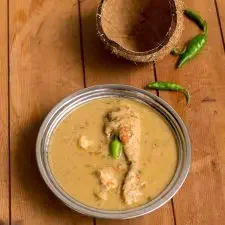
Chettinad chicken kurma is a fragrant Tamil Nadu curry built around chicken and a freshly ground coconut masala. Toasting the coconut and spices before blending gives the sauce its deep aroma, and it pairs well with idli, dosai, aappam or chapati.
Ingredients
- 2 tablespoons (30 ml)peanut oil
- 100 gfreshly shredded coconut (about half a large coconut)
- 2 teaspoonsfennel seeds
- 1 teaspoonpoppy seeds
- 2 teaspoonsroasted Bengal gram dal
- 12green chillies
- 5cashew nuts
- 1 inchginger
- 10 clovesgarlic
- 2 teaspoonspeanut oil
- 2 small piecescinnamon
- 1bay leaf
- 2onions, finely chopped
- 3tomatoes, finely chopped
- 1½ teaspoonssalt
- 5–6 sprigscoriander leaves
- 500 gbone-in chicken
Instructions
- 1
Toast the masala
Heat 2 tablespoons of peanut oil in a heavy pan. Add the coconut, fennel seeds, poppy seeds, roasted Bengal gram dal, green chillies, cashew nuts, ginger and garlic together. Fry until the coconut is browned and the mixture smells fragrant, then take it off the heat and leave it to cool.
- 2
Blend the paste
Grind the cooled mixture to a smooth paste in a blender, adding up to 2 cups of water as needed. Set the paste aside.
- 3
Soften the onions
Heat 2 teaspoons of peanut oil in a pan. Add the bay leaf and cinnamon, followed by the onions, and fry until the onions are soft.
- 4
Add chicken and masala
Add the chicken and fry for 2 minutes. Stir in the tomatoes, ground masala and salt, then pour in 1 cup of boiling water.
- 5
Simmer the kurma
Cover the pan and cook over a low flame for 30 minutes, stirring every 5 minutes to prevent the bottom from scorching. Turn off the heat and garnish with chopped coriander leaves.
- 6
Serve the kurma
Serve with idli, dosai, aappam or chapati.
What is Chettinad chicken kurma?
Kurma is a gently simmered curry with a thick, aromatic sauce; this version takes its character from Chettinad cooking in Tamil Nadu. It is made with chicken and a coconut-based masala ground fresh for the pot.
Toasting the masala ingredients before blending builds a rounded flavour and gives the finished sauce its distinctive richness. The recipe keeps the chicken bone-in, which suits a slow, covered simmer.
Nutrition and macros by portion
The nutrition label shows one serving as written: 400 calories, 25g protein, 12g carbs, 30g fat.
| Portion | Adjustment | kcal | Protein | Carbs | Fat |
|---|---|---|---|---|---|
| Lighter | Use less coconut and oil | 280 kcal | 18g | 8g | 21g |
| This serving | As written | 400 kcal | 25g | 12g | 30g |
| Hungry | Serve with extra chapati | 600 kcal | 38g | 18g | 45g |
The chicken supplies most of the protein, while the coconut and peanut oil contribute much of the fat. Carbohydrates come mainly from the coconut, onions, tomatoes and ground masala ingredients; serve with idli, dosai, aappam or chapati for a more substantial plate, or add vegetables alongside.
Building the coconut masala
Coconut: Fry it with the spices and aromatics until browned and fragrant, rather than merely warmed. Let the mixture cool before blending so it forms a smooth paste.
Fennel and poppy seeds: These bring fragrance and body to the sauce, while roasted Bengal gram dal and cashew nuts help make the paste substantial.
Getting the chilli level right
Green chillies: The recipe uses 12, so the result can be quite hot depending on their size and variety. If you prefer a milder curry, remove their seeds or reduce the number before grinding.
Keeping the sauce smooth
Blending: Add the water gradually, using up to 2 cups to help the mixture turn into a smooth paste. A thoroughly blended masala gives the kurma a more even texture.
Simmering: Keep the heat low once the chicken and masala are in the pan. Stir every 5 minutes as directed, taking care to scrape the bottom so the coconut paste does not catch.
Checking the chicken
Timing: The covered simmer is 30 minutes, but pieces can differ in size. Check that the chicken is cooked through before serving; the meat should no longer look raw at the bone and should be tender.
Sauce: The finished kurma should be thick enough to coat the chicken. If it tightens too much during cooking, stir carefully and adjust with a little water.
What to serve with kurma
Soft idli and aappam are especially good at soaking up the coconut sauce, while dosai or chapati make a heartier accompaniment. Add the chopped coriander just before serving for a fresh contrast.
Recipe notes & tips
- Use a heavy pan for toasting the masala so the coconut browns evenly.
- Stir the coconut mixture while frying and take it off the heat as soon as it is browned and fragrant.
- Cool the toasted ingredients before blending for a smoother paste.
- Add the water to the blender gradually, stopping once the paste is smooth.
- Keep the curry at a low simmer and stir every 5 minutes to prevent sticking.
- Chop the coriander leaves shortly before using them as the garnish.
Variations
- Milder chillies: Remove the seeds or use fewer green chillies to soften the heat.
- Smoother sauce: Blend the masala thoroughly and add its water a little at a time.
- Boneless chicken: Use boneless pieces, checking them earlier as they may cook faster.
- Extra coriander: Add more chopped coriander at the end for a fresher finish.
- More sauce: Add a little extra water during cooking, then simmer until the consistency suits your meal.
Common mistakes to avoid
- Under-toasting the coconut: The masala can taste flat; fry until browned and fragrant.
- Blending while hot: The paste may be awkward to handle; let the toasted mixture cool first.
- Adding all the water at once: The masala may turn too thin; add water gradually while blending.
- Cooking over high heat: Coconut paste can scorch; keep the covered simmer low.
- Skipping the stirring: The bottom can catch; stir every 5 minutes as the recipe directs.
How to store
Refrigerate leftover kurma in a covered container and use within 2 days. Reheat gently in a pan until steaming hot throughout, adding a splash of water if the sauce has thickened.
Frequently asked questions
How hot is this chicken kurma?
It uses 12 green chillies, so the heat will depend on their size and variety. For a milder result, remove the seeds or use fewer chillies.
Can I make the masala paste ahead?
Yes. Toast, cool and blend the masala ahead, then refrigerate it in a covered container and use it when you cook the kurma.
Can I use boneless chicken?
Yes, although boneless chicken may cook faster than bone-in pieces. Check it before the 30-minute simmer is complete.
How do I know when the chicken is cooked?
Check that the meat is cooked through at the bone and tender. If it needs more time, continue simmering gently and check again.
What can I serve with chicken kurma?
The recipe suggests idli, dosai, aappam or chapati. Each works well for scooping up the coconut sauce.
Cook it from the original
This recipe comes from kannammacooks.com. Their page has the author’s own photos, notes and tips — the best place to cook it from.
Open the recipe on kannammacooks.com