
Gajar Ka Halwa | Carrot Halwa Recipe
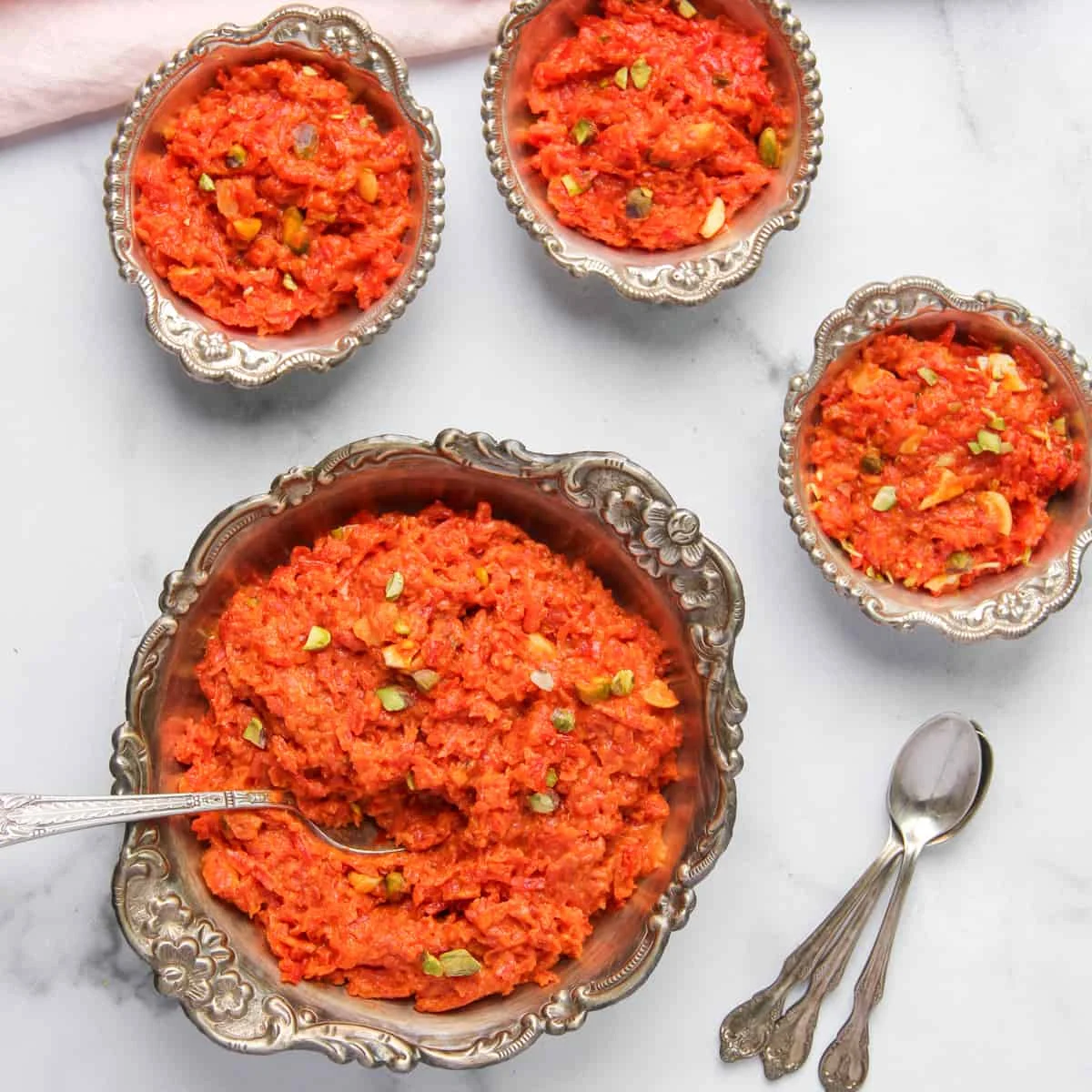
Gajar ka halwa is a traditional Indian carrot dessert made by slowly cooking grated carrots with milk, sugar, ghee and cardamom. It is a lovely make-ahead sweet for sharing, served warm or chilled.
Ingredients
- 907 g (2 lb)carrots (8 to 10 medium)
- 946 ml (4 cups)whole milk
- 200 g (1 cup)sugar
- 56 g (4 tablespoons), dividedghee
- 1 teaspoonground cardamom
- 2 tablespoonschopped cashews
- 2 tablespoonschopped pistachios
Instructions
- 1
Prepare the carrots
Rinse and dry the carrots, then peel them and trim both ends. Grate them by hand or in a food processor.
- 2
Cook the carrots
Melt half the ghee in a heavy-based pan over medium heat. Add the grated carrots and cook for 5 minutes, until their colour turns brighter orange; this helps release some of their excess moisture.
- 3
Reduce the milk
Stir in the milk and cook over medium heat, stirring frequently. As milk solids form around the sides of the pan, scrape them back in and mix them through the carrots. Continue until about 90% of the milk has evaporated, stirring often and preventing the mixture from sticking to the base; this can take 50 minutes to an hour.
- 4
Finish the halwa
Add the sugar, remaining ghee, cardamom and half of the chopped nuts, then mix well. Once the sugar melts, the mixture will loosen; cook for another 5 to 10 minutes, until it thickens and most of the remaining milk evaporates. Turn off the heat, top with the remaining nuts and serve warm or cold.
What is gajar ka halwa?
Gajar ka halwa, also called carrot halwa, is a classic Indian sweet made by simmering grated carrots with milk and sugar until rich and tender. The recipe’s exact history is not specified here, but it is a familiar dessert across Indian cooking.
Slowly reducing the milk gives this version its soft, concentrated texture, while ghee, cardamom and nuts add richness and fragrance.
Nutrition and macros by portion
The nutrition label shows one serving as written: 254 calories, 5g protein, 35g carbs, 12g fat.
| Portion | Adjustment | kcal | Protein | Carbs | Fat |
|---|---|---|---|---|---|
| Lighter | Smaller dessert portion | 178 kcal | 4g | 25g | 8g |
| This serving | As written | 254 kcal | 5g | 35g | 12g |
| Hungry | Larger halwa portion | 381 kcal | 8g | 53g | 18g |
The carrots and sugar supply most of the carbohydrates, while milk contributes protein and some fat; ghee and nuts add further fat, with the nuts also providing a little protein. Balance a serving with fresh fruit or enjoy it after a meal that includes vegetables and a savoury protein source.
Why grate the carrots?
Fine grating: Smaller shreds soften more evenly as they cook in the milk, and make the finished halwa easy to scoop. A hand grater or food processor both work.
Fresh carrots: Choose firm carrots and trim away their ends before grating. Drying them after rinsing keeps extra water from entering the pan.
The slow reduction
Steady heat: Let the carrots cook in the milk over medium heat, stirring frequently rather than turning up the heat to rush the process. A heavy-based pan helps distribute the heat.
Scrape the sides: Milk solids can collect around the edge as the liquid reduces. Scrape them back into the mixture so they become part of the halwa.
How to judge the texture
Before adding sugar: Cook until roughly 90% of the milk has evaporated; the method allows 50 minutes to an hour for this stage. The mixture should look much less milky but still be moist.
After adding sugar: Expect the halwa to loosen as the sugar melts. Cook for a further 5 to 10 minutes, stopping when it thickens and most of the remaining milk has evaporated.
Ghee, cardamom and nuts
Divided ghee: The first half helps cook the carrots before the milk goes in; the rest is stirred in with the sugar. This order spreads the ghee through the cooking stages.
Finishing touches: Cardamom brings a warm aroma, while cashews and pistachios add contrast. Keeping half the nuts for the topping gives them a more distinct presence.
Serving and timing
Serve it warm shortly after cooking or chill it for a firmer, cooler dessert. The recipe makes 10 servings and takes about 70 minutes in total, with most of the cooking time spent reducing the milk.
A small bowl of halwa works well after a meal, or serve it alongside unsweetened tea. Because it is rich and sweet, fresh fruit can also make a refreshing accompaniment.
Recipe notes & tips
- Use a heavy-based pan to help the milk reduce without scorching at the bottom.
- Stir and scrape the sides frequently as the milk thickens.
- Grate the carrots shortly before cooking so they are ready to add to the pan.
- Measure out the ghee and divide it before you begin.
- Reserve half the chopped nuts for the final garnish.
Variations
- Extra cardamom: Add a little more ground cardamom for a more pronounced aroma.
- Nut choice: Use extra cashews or pistachios if you prefer one over the other.
- Raisin addition: Stir in a small handful of raisins with the nuts for extra sweetness.
- Chilled serving: Refrigerate the finished halwa and serve it cold for a firmer texture.
Common mistakes to avoid
- Rushing the reduction: High heat can catch the milk at the bottom; keep the pan at medium heat and stir often.
- Leaving the sides untouched: Milk solids can build up on the pan; scrape them back into the carrots as they form.
- Adding sugar too early: Follow the method and wait until most of the milk has evaporated before adding it.
- Stopping too soon: After the sugar melts, cook for another 5 to 10 minutes so the mixture thickens again.
- Overcooking after the sugar: Keep an eye on the pan during the final stage and turn off the heat once most of the remaining milk has evaporated.
How to store
Cool the halwa, cover it and refrigerate for up to 3 days. Reheat gently in a pan, stirring until warmed through; add a small splash of milk if it has become too firm.
Frequently asked questions
Can I make gajar ka halwa ahead?
Yes. Cook it fully, cool it and keep it covered in the fridge, then reheat gently or serve it chilled.
Can I serve it cold?
Yes, the method says it can be enjoyed warm or cold. Chilling makes the texture firmer.
How do I know when the milk has reduced enough?
Before adding sugar, the recipe calls for about 90% of the milk to have evaporated. The mixture should no longer look very milky, though it will still be moist.
Why does the halwa become watery after adding sugar?
The sugar melts into the mixture and briefly loosens it. Continue cooking for the stated 5 to 10 minutes until it thickens again.
Can I grate the carrots in a food processor?
Yes. The recipe allows either a hand grater or a food processor.
How many servings does this make?
The recipe makes 10 servings.
Cook it from the original
This recipe comes from ministryofcurry.com. Their page has the author’s own photos, notes and tips — the best place to cook it from.
Open the recipe on ministryofcurry.com