
Instant Pot Sauerbraten Recipe (German Pot Roast)
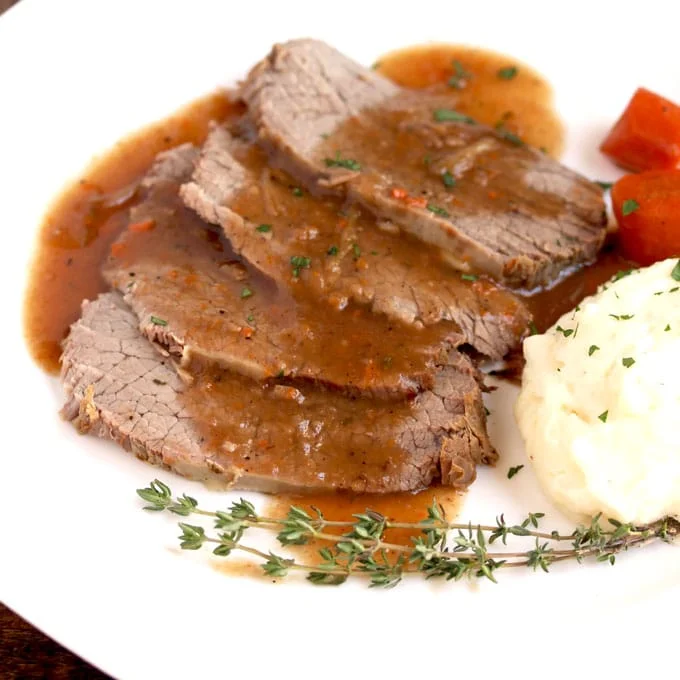
This pressure-cooker sauerbraten is a German-style pot roast with a tangy red wine and vinegar sauce, finished with crushed gingersnaps. It brings the dish’s characteristic sweet-sour flavour to the table without a days-long marinade.
Ingredients
- 3thyme sprigs
- 1 tablespoon (15 ml)pickling spices
- 2bay leaves
- 1.36–1.81 kg (3–4 lb)eye of round or chuck roast (see notes)
- to tastesalt and ground black pepper
- 3 tablespoons (45 ml), dividedolive oil
- 1 largeonion, sliced
- 2carrots, peeled and cut into 2.5 cm (1-inch) chunks
- 2celery ribs, cut into 2.5 cm (1-inch) chunks
- 8 clovesgarlic, minced
- 120 ml (½ cup)red wine
- 120 ml (½ cup)red wine vinegar
- 240 ml (1 cup)beef broth
- ½ teaspoonchicken or beef bouillon granules
- ¼ teaspoonsalt
- ¼ teaspoonground black pepper
- 120 ml (½ cup), about 10 cookiesgingersnap cookie crumbs
Instructions
- 1
Make spice bag
Put the pickling spices, thyme sprigs and bay leaves into a cheesecloth bag.
- 2
Season the beef
Season the roast generously with salt and ground black pepper.
- 3
Brown the roast
Set the pressure cooker to sauté and heat 2 tablespoons of the oil. Add the beef and brown it on all sides for about 5 minutes, until golden. Transfer it to a plate.
- 4
Cook the vegetables
Add the remaining oil to the pot. Add the onion, carrots and celery and cook for 3–4 minutes, stirring often. Add the garlic and cook for 1 minute more.
- 5
Deglaze the pot
Pour in the wine and vinegar. Scrape the bottom of the pot with a wooden spoon to loosen the browned bits, then cook for about 2 minutes.
- 6
Add the broth
Stir in the beef broth, bouillon, ¼ teaspoon salt, ¼ teaspoon ground black pepper and the spice bag.
- 7
Pressure-cook beef
Press the keep warm/cancel button. Return the roast and any collected juices to the pot, close the lid, select meat/stew and set the timer for 55 minutes.
- 8
Release pressure
When the cooking cycle ends, let the pressure release naturally for 10 minutes, then use a quick release.
- 9
Rest the roast
Carefully unlock and remove the lid. Transfer the roast to a cutting board and cover it with aluminium foil. Let it rest for about 5–10 minutes.
- 10
Thicken the sauce
Remove the spice bag and stir the gingersnap crumbs into the cooking liquid.
- 11
Blend the vegetables
Use an immersion blender to blend most of the vegetables into the sauce, leaving some carrot and onion pieces if you like. For a smoother sauce, blend for longer. Set the pressure cooker to sauté for 5 minutes while you slice the meat.
- 12
Slice the roast
Slice the rested meat thinly.
- 13
Season the sauce
Press the cancel/warm function and taste the sauce. Adjust the seasoning to your taste.
- 14
Coat and serve
Return the sliced meat to the pot and spoon the sauce over it so every slice is coated. Serve, or keep warm in the pressure cooker until ready.
What is sauerbraten?
Sauerbraten is a German pot roast traditionally marinated in a tangy mixture before being slowly cooked. Its name reflects that sour note, often balanced with sweetness in the finished sauce.
This version uses a pressure cooker instead of a long marinade. Red wine, vinegar and aromatics create the savoury, sharp base, while gingersnap crumbs thicken and round out the sauce.
Nutrition and macros by portion
The nutrition label shows one serving as written: 430 calories, 47g protein, 11g carbs, 19g fat.
| Portion | Adjustment | kcal | Protein | Carbs | Fat |
|---|---|---|---|---|---|
| Lighter | More vegetables, less beef | 301 kcal | 33g | 8g | 13g |
| This serving | As written | 430 kcal | 47g | 11g | 19g |
| Hungry | Larger roast portion | 645 kcal | 71g | 17g | 29g |
The beef supplies most of the protein, while the roast and olive oil contribute much of the fat. The vegetables, wine and gingersnap crumbs provide carbohydrates; serve with a green vegetable and choose a modest portion of potatoes or dumplings to balance the plate.
Choosing the beef
Cut: The recipe allows either eye of round or chuck. The roast is cooked whole and sliced thinly after resting.
Seasoning: Salt and pepper go on the meat before browning, while the measured salt and pepper are added later to the cooking liquid. Taste the finished sauce before adjusting it.
Building the flavour
Spices: Keeping the pickling spices, thyme and bay leaves together in a cheesecloth bag makes them easy to remove before blending.
Browning: A golden exterior and the browned bits left in the pot contribute flavour to the sauce. Scrape the bottom thoroughly when adding the wine and vinegar.
Balancing the sauce
Tang: Red wine and red wine vinegar form the sharp, savoury base associated with sauerbraten. Deglazing also lifts browned residue from the pot into the liquid.
Body: Gingersnap crumbs are stirred in after pressure cooking, then the vegetables are partly blended. Keep some pieces for a more rustic sauce, or blend longer for a smoother finish.
Pressure and resting
Timing: The specified pressure-cooking time is 55 minutes, followed by a 10-minute natural release and a quick release. Allow the cooker to finish its pressure cycle before opening it.
Resting: Give the roast 5–10 minutes under foil before slicing. Thin slices are easier to coat evenly with the sauce.
Serving the roast
Accompaniments: Serve with potatoes, dumplings or noodles to catch the sauce. A green vegetable or a crisp salad can add freshness alongside the rich, tangy gravy.
At the table: Return the slices to the pot and spoon sauce over them as directed, or keep the coated meat warm there until serving.
Recipe notes & tips
- Pat the roast dry before seasoning to help it brown in the hot oil.
- Brown the meat on all sides before adding the vegetables.
- Scrape the pot well when deglazing so browned bits do not remain stuck to the base.
- Remove the spice bag before blending the vegetables into the sauce.
- Slice the roast thinly after its covered rest and coat the slices with sauce.
- Taste the sauce after blending and adjust its seasoning before serving.
Variations
- Chuck roast: Use chuck instead of eye of round, as the recipe lists either cut.
- Smoother sauce: Blend the vegetables for longer until the sauce reaches your preferred texture.
- Chunkier sauce: Blend briefly and leave more carrot and onion pieces intact.
- Milder tang: Use less sauce on each serving if you prefer a less pronounced vinegar flavour.
- Extra herbs: Serve with additional fresh thyme leaves for an aromatic finish.
Common mistakes to avoid
- Skipping the browning: The roast misses the golden exterior; brown it on all sides before setting it aside.
- Leaving browned bits behind: They can stick to the pot; scrape the base as the wine and vinegar are added.
- Opening too soon: The pressure cycle is not complete; wait for the 10-minute natural release before quick-releasing.
- Blending the spice bag: It is meant to be removed first; take it out before using the immersion blender.
- Slicing immediately: The meat has no resting time; cover it with foil for 5–10 minutes before slicing.
- Over-blending: The sauce loses its vegetable pieces; blend briefly if you want to retain chunks.
How to store
Refrigerate cooled beef and sauce in an airtight container for up to 3 days. Reheat gently in a covered pan or in the pressure cooker on a suitable warm setting, stirring the sauce and ensuring the meat is hot throughout.
Frequently asked questions
Can I use eye of round or chuck?
Yes. The recipe lists both cuts as options; follow the same browning and pressure-cooking method.
Do I need to marinate the beef overnight?
No. This pressure-cooker version is designed to skip the traditional days-long marinade and uses wine, vinegar and spices in the cooking liquid instead.
Can I make the sauce completely smooth?
Yes. After removing the spice bag and adding the gingersnap crumbs, blend the vegetables for longer with an immersion blender.
Why add gingersnap crumbs?
They thicken the sauce and bring a gently sweet, spiced note that balances its wine-and-vinegar tang.
When should I slice the roast?
After the pressure release, rest it under foil for about 5–10 minutes, then slice it thinly.
What can I serve with sauerbraten?
Potatoes, dumplings or noodles work well with the sauce. Add a green vegetable or salad for a fresh contrast.
Cook it from the original
This recipe comes from lemonblossoms.com. Their page has the author’s own photos, notes and tips — the best place to cook it from.
Open the recipe on lemonblossoms.com