
Instant Khatta Meetha Hing Ka Achar
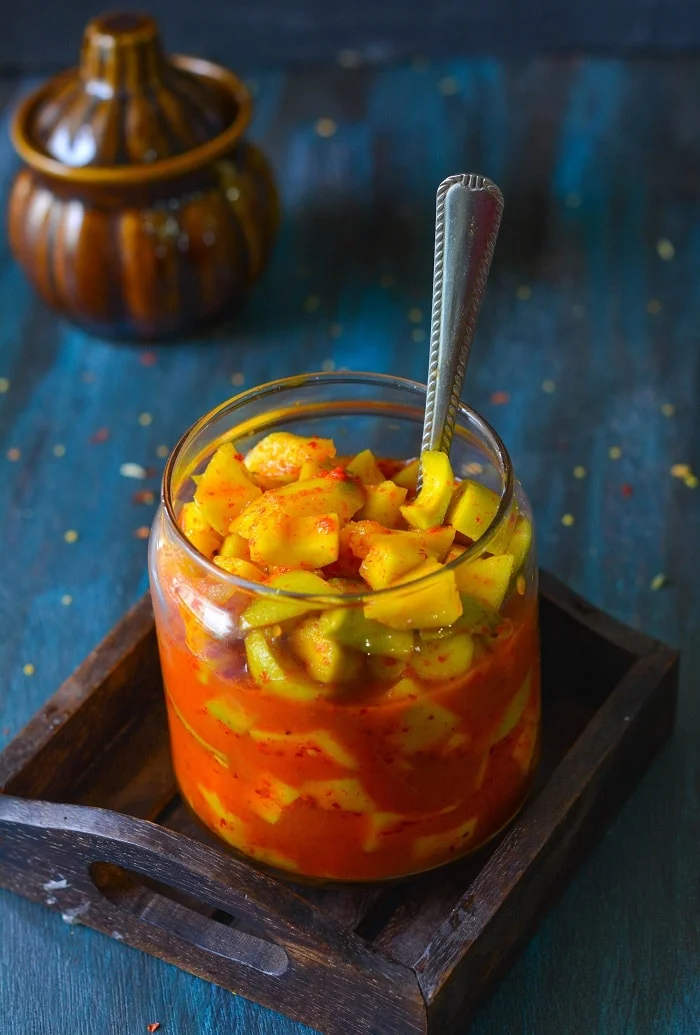
This Uttar Pradesh-style instant pickle combines raw mango with salt, chilli, asafoetida, mustard oil and sugar for a tangy, sweet and savoury relish. It needs little active preparation and makes a punchy accompaniment to everyday meals and snacks.
Ingredients
- 3 (600 g)raw mangoes
- 1½ tbspsalt
- 1 tspred chilli powder
- 1 tspKashmiri chilli powder
- ½ tspturmeric
- ⅙ tsppure asafoetida (hing)
- 1 tbspmustard oil
- 3 tbspsugar
Instructions
- 1
Wash the mangoes
Wash the raw mangoes and wipe them dry.
- 2
Chop the fruit
Peel the mangoes, then cut them into small, bite-sized pieces.
- 3
Rest with salt
Add the salt and turmeric and mix. Cover with a lid and leave to rest for 3–4 hours.
- 4
Mix the pickle
Add the remaining spices, oil and sugar, then mix thoroughly. Transfer the mixture to a sterilised glass bottle.
- 5
Choose the hing
Use good-quality pure asafoetida for this pickle. If using powdered hing mixed with rice flour, add ½–¾ tsp; the recipe uses pure hing.
- 6
Leave at room temperature
Keep the bottle at room temperature for a day, then refrigerate it.
- 7
Store chilled
The pickle keeps well in the refrigerator for a couple of months.
- 8
Serve as desired
Serve with rice, roti, poori, fried snacks or mathri, or mix it into wrap and sandwich fillings.
What is khatta meetha hing ka achar?
Achar is the Hindi word for pickle, and khatta meetha describes the sour-and-sweet flavour at the heart of this version. Raw mango pickles are made in many parts of India, with regional variations in seasoning and preparation; this one is associated with Uttar Pradesh cuisine.
Here, tart mango is paired with sugar, chilli and hing, or asafoetida, for a sharp, savoury-sweet relish. The short preparation skips extended sun-drying, while a brief salted rest helps season the fruit before the other ingredients go in.
Nutrition and macros by portion
The nutrition label shows one serving as written: 651 calories, 6g protein, 132g carbs, 17g fat.
| Portion | Adjustment | kcal | Protein | Carbs | Fat |
|---|---|---|---|---|---|
| Lighter | Use less sugar | 456 kcal | 4g | 92g | 12g |
| This serving | As written | 651 kcal | 6g | 132g | 17g |
| Hungry | Larger pickle serving | 977 kcal | 9g | 198g | 26g |
The raw mango and sugar provide most of the carbohydrates, while mustard oil supplies the fat; mango contributes a small amount of protein. Serve a little pickle alongside a meal with a substantial protein source and vegetables, rather than treating it as the main part of the plate.
Why raw mango matters
Firm fruit: Choose unripe mangoes that feel solid and have a clean, tart smell. Their acidity balances the sugar, and firm flesh holds its shape after chopping.
Even pieces: Cut the peeled mango into similarly sized bites so the salt and spices coat them consistently. Smaller pieces are also easier to tuck into a sandwich or wrap.
The salted rest
Salt and turmeric: Mix these through the mango before adding the remaining ingredients. The recipe calls for a covered rest of 3–4 hours; this gives the seasoning time to reach the fruit.
Keep covered: Use a clean lid or cover while the mango rests. Don’t shorten the stated resting time if you want the seasoning to settle into the pieces.
Getting the hing right
Pure hing: The recipe specifies ⅙ tsp of pure asafoetida, which can be potent, so measure it carefully. Its distinctive savoury aroma gives this pickle its name and character.
Powdered blend: If your hing is a powdered product mixed with rice flour, the recipe advises ½–¾ tsp instead. Check the label, as the type of hing changes how much is needed.
Balancing sweet, sour and heat
Sugar and mango: Sugar softens the mango’s tartness, while the two chilli powders bring warmth and colour. Mix thoroughly so the sugar and spices are distributed rather than left in patches.
Mustard oil: A tablespoon adds a pungent note that suits the sharp fruit and spices. Make sure it is mixed through the pickle before bottling.
Bottling and storing
Clean jar: Transfer the mixture to a sterilised glass bottle, using clean utensils. A well-fitting lid helps protect the pickle in the fridge.
Room-temperature rest: Leave it at room temperature for one day, then refrigerate. The recipe says it keeps for a couple of months chilled; use a clean spoon each time you serve it.
How to serve it
With meals: Spoon a little alongside rice, roti or poori, or serve it with fried snacks and mathri. Its sweet-sour bite works especially well beside mild, filling foods.
In a filling: Chop or scoop the mango and stir it into a wrap or sandwich filling. Add a modest amount first, since the pickle is strongly seasoned.
Recipe notes & tips
- Dry the mangoes well after washing so excess water does not dilute the mixture.
- Cut the mango into small, even pieces for a more consistent coating.
- Measure pure hing carefully, as the recipe uses a small amount.
- Mix the salt and turmeric thoroughly through the mango before covering it.
- Use a sterilised glass bottle and clean utensils when filling and serving.
- Refrigerate the pickle after its one-day rest at room temperature.
Variations
- Gentler heat: Reduce the red chilli powder while keeping the other seasonings as written.
- More sweetness: Add a little extra sugar if you prefer a sweeter pickle.
- Chunkier pieces: Cut the mango into slightly larger bites for more texture.
- Wrap filling: Chop the mango pieces and mix a small amount into a sandwich or wrap filling.
- Different hing: Use ½–¾ tsp of powdered hing mixed with rice flour instead of the stated quantity of pure hing.
Common mistakes to avoid
- Damp mango: Wipe the fruit dry after washing so excess water does not thin the pickle.
- Uneven chopping: Cut similar-sized pieces so they take up the seasoning evenly.
- Skipping the rest: Leave the salted mango covered for the full 3–4 hours before adding the remaining ingredients.
- Too much pure hing: Measure the ⅙ tsp carefully, as pure hing is potent.
- Unclean bottle: Sterilise the glass bottle and use clean utensils to help keep the pickle in good condition.
- Leaving it out: After one day at room temperature, move the bottle to the refrigerator.
How to store
Keep the pickle in a sterilised, sealed glass bottle in the refrigerator after its one-day rest at room temperature; the recipe says it keeps for a couple of months. Use a clean, dry spoon when serving. This pickle is served as a condiment, so it does not need reheating.
Frequently asked questions
How long should the mango rest with salt and turmeric?
Cover it and leave it for 3–4 hours, as stated in the recipe. Add the remaining spices, oil and sugar afterwards.
Can I use powdered hing instead of pure hing?
Yes. If it is powdered hing mixed with rice flour, the recipe advises ½–¾ tsp rather than ⅙ tsp of pure hing.
How long does this instant pickle keep?
The recipe says it keeps for a couple of months in the refrigerator. Store it sealed and use clean utensils when serving.
Does the pickle need to sit before it is refrigerated?
Yes. Keep it at room temperature for one day after bottling, then refrigerate it.
What can I serve with hing ka achar?
Serve it with rice, roti, poori, fried snacks or mathri. It can also be mixed into wrap or sandwich fillings.
Do I cook the mangoes?
No cooking step is given. The mango is peeled and chopped, rested with salt and turmeric, then mixed with the other ingredients.
Cook it from the original
This recipe comes from maayeka.com. Their page has the author’s own photos, notes and tips — the best place to cook it from.
Open the recipe on maayeka.com