
Yassa Fish
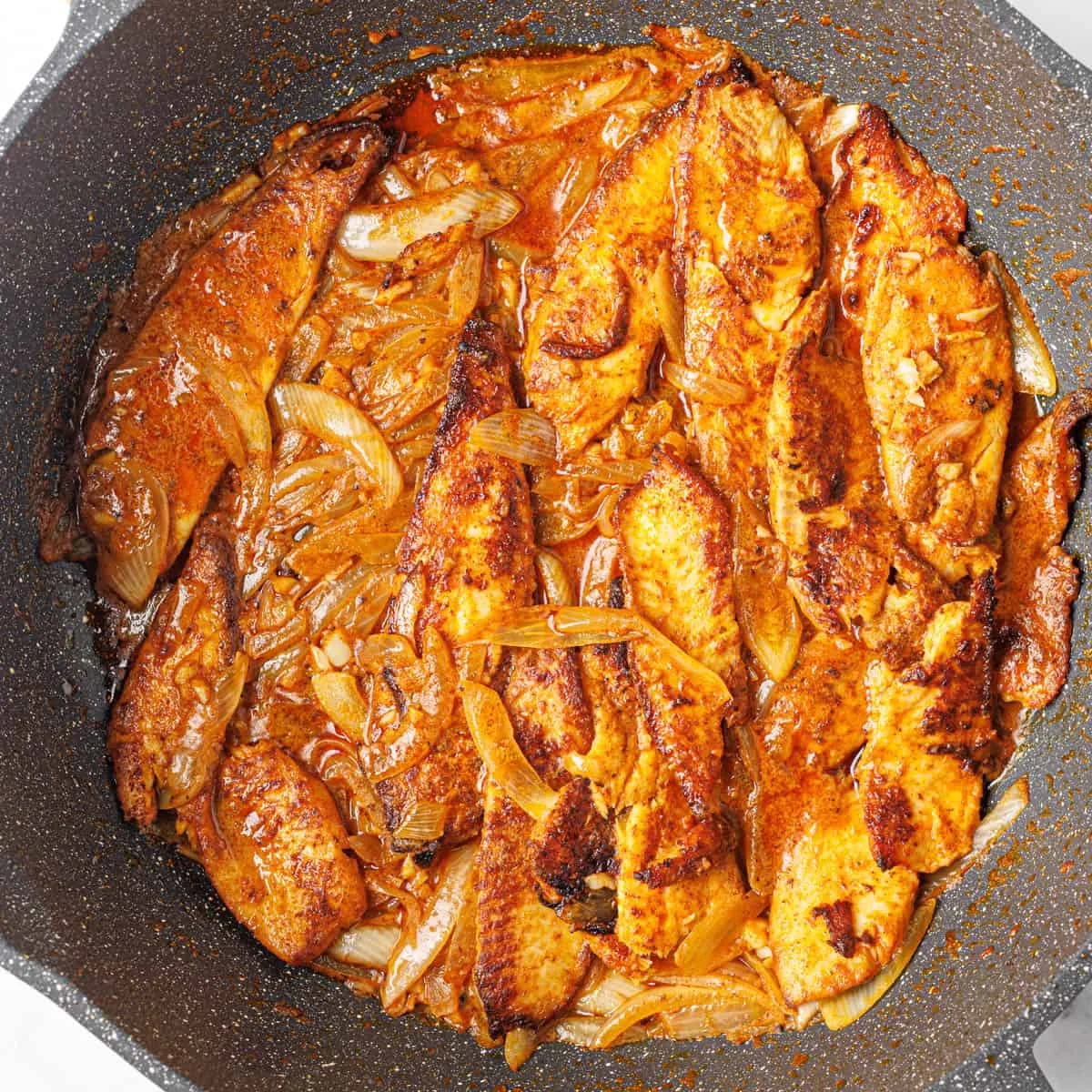
Yassa fish pairs white fish with onions, lemon, mustard and warm spices in a bright, savoury sauce. Marinating the fish first builds flavour, while a quick pan-fry gives it colour before it simmers with the onions.
Ingredients
- 4 fillets (about 680 g)white fish
- 60 ml (¼ cup)olive oil
- 2 large, thinly slicedonions
- 3 cloves, mincedgarlic
- 30 ml (2 tablespoons)Dijon mustard
- 60 ml (¼ cup)lemon juice
- 1 teaspoonsmoked paprika
- ½ teaspooncayenne pepper
- 1 teaspoonbouillon powder
- ½ teaspoon, or to tastesalt
- 120 ml (½ cup), plus extra if neededwater
Instructions
- 1
Mix marinade
In a large bowl, combine the garlic, onions, lemon juice, Dijon mustard, smoked paprika, cayenne pepper, bouillon powder and salt.
- 2
Coat the fish
Add the white fish and gently mix so it is coated in the marinade.
- 3
Marinate fish
Cover the bowl and refrigerate for 1 hour.
- 4
Separate fish
Take the fish out of the marinade and scrape off the onions, keeping the onions and marinade for later.
- 5
Heat the oil
Heat the olive oil in a skillet or large Dutch oven over medium-high heat.
- 6
Fry the fish
Add the fish to the hot oil and fry for 4–5 minutes on each side, until crisp. Turn it gently to help keep the fillets intact.
- 7
Set fish aside
Carefully lift the fish from the pan and set it aside. Add the onions and pour in the remaining marinade.
- 8
Cook the onions
Cook the onions over low to medium-low heat for about 5 minutes, until sweet and caramelised.
- 9
Add the water
Pour in 120 ml water and scrape the browned bits from the bottom of the pan.
- 10
Simmer the sauce
Bring the mixture to a boil over medium heat, then let it simmer for about 5 minutes.
- 11
Check the seasoning
Taste the sauce and adjust the salt if needed.
- 12
Return the fish
Add the fried fish back to the pan with the onions.
- 13
Finish simmering
Simmer gently over low heat for 5–10 minutes so the flavours meld.
- 14
Adjust the sauce
If needed, add a little more water to the sauce.
What is yassa fish?
Yassa is associated with West African cooking, particularly the Senegambian region, and is known for its tangy onion-based sauce. Versions can use different proteins; here, white fish takes the place of the more familiar chicken.
Lemon, mustard and spices give the marinade its lively flavour, while slowly cooked onions soften into a savoury, sweet-tasting base.
Nutrition and macros by portion
The nutrition label shows one serving as written: 303 calories, 35g protein, 4g carbs, 17g fat.
| Portion | Adjustment | kcal | Protein | Carbs | Fat |
|---|---|---|---|---|---|
| Lighter | Use less olive oil | 212 kcal | 25g | 3g | 12g |
| This serving | As written | 303 kcal | 35g | 4g | 17g |
| Hungry | Add rice alongside | 455 kcal | 53g | 6g | 26g |
The fish supplies most of the protein, while the olive oil is the main source of fat. The small amount of carbohydrate comes mainly from the onions and seasonings; serve with a measured portion of rice or potatoes and vegetables to make a more balanced plate.
The marinade and fish
White fish: Choose sturdy fillets that can be turned and lifted without easily breaking. The recipe gives about 680 g in total.
Marinade: Lemon juice, Dijon mustard, garlic, paprika and cayenne season the fish and the onions. Keep the marinade after taking out the fish, as it becomes part of the pan sauce.
Frying without breaking the fillets
Hot oil: Let the oil heat over medium-high before adding the fish so the surface can crisp rather than linger in a cool pan.
Gentle turning: Fry each side for 4–5 minutes, then turn carefully. The fish is delicate, so a broad spatula and a patient hand help keep the fillets whole.
Building the onion sauce
Softening: After the fish comes out, cook the onions with the reserved marinade over low to medium-low heat for about 5 minutes. Stir as needed so the onions soften and caramelise without scorching.
Deglazing: Add 120 ml water and scrape up the browned bits. Bring the mixture to a boil over medium heat, then simmer for about 5 minutes before returning the fish.
When the fish is done
The fish first cooks for 4–5 minutes on each side, then simmers with the sauce for a further 5–10 minutes over low heat. The centre should be opaque and separate into flakes easily.
Keep the final simmer gentle: vigorous bubbling can break the fillets apart. Add a little water if the sauce becomes thicker than you want.
What to serve with it
Rice is a straightforward accompaniment, especially for soaking up the lemony onion sauce. You could also serve the fish with couscous or boiled potatoes.
A simple green vegetable or crisp salad adds freshness alongside the rich, soft onions. Serve the fish carefully, spooning plenty of sauce over each portion.
Recipe notes & tips
- Slice the onions evenly so they soften at a similar rate.
- Use a bowl large enough to coat the fish without crushing the fillets.
- Keep the reserved marinade separate from the fish until it goes into the pan with the onions.
- Use a wide spatula when turning the fish.
- Taste the sauce before adding more salt, as the bouillon powder is already seasoned.
- Add extra water a little at a time if the sauce needs loosening.
Variations
- Milder spice: Reduce or omit the cayenne for a gentler sauce.
- More lemon: Add a little extra lemon juice to the sauce to sharpen its tang.
- Fresh herbs: Finish with chopped parsley for a fresh note.
- Different white fish: Use another firm white fish, keeping the fillets a similar thickness.
- Extra vegetables: Serve with a side of steamed greens for a more substantial plate.
Common mistakes to avoid
- Crowded pan: The fish may not brown evenly; fry in batches if the fillets do not fit with room around them.
- Turning too soon: The fish can break before its surface firms; let it fry for the stated 4–5 minutes before turning gently.
- High heat for onions: They can scorch before softening; keep the heat low to medium-low.
- Discarding the marinade: It contributes flavour to the sauce; reserve it when removing the fish.
- Over-salting: Bouillon powder adds seasoning too; taste the finished sauce before adjusting.
- Hard simmer: The fillets may fall apart; keep the final simmer low and gentle.
How to store
Refrigerate leftovers in a covered container within 2 hours and eat within 2 days. Reheat gently in a covered pan over low heat until piping hot, adding a splash of water if the sauce has thickened.
Frequently asked questions
Can I use frozen fish?
Yes, thaw it fully and pat it dry before marinating. Excess surface water can dilute the marinade and make frying less effective.
Can I marinate the fish for longer?
The method specifies 1 hour in the fridge. Because the marinade contains lemon juice, avoid extending the time substantially, as the acid can change the fish's texture.
How can I tell when the fish is cooked?
The flesh should be opaque and flake easily at the thickest point. Keep the final simmer gentle to avoid breaking it up.
What can I use instead of Dijon mustard?
A smooth, mild mustard can work, though the flavour may differ. Use a similar amount so the marinade remains balanced.
Can I make the sauce less spicy?
Yes. Reduce the cayenne pepper or leave it out, then taste the sauce before serving.
What should I serve with yassa fish?
Rice, couscous or boiled potatoes all go well with the onion sauce. A green vegetable or salad makes a fresh side.
Cook it from the original
This recipe comes from lowcarbafrica.com. Their page has the author’s own photos, notes and tips — the best place to cook it from.
Open the recipe on lowcarbafrica.com