
Basic Muffin Recipe: Comparing Butter and Oil
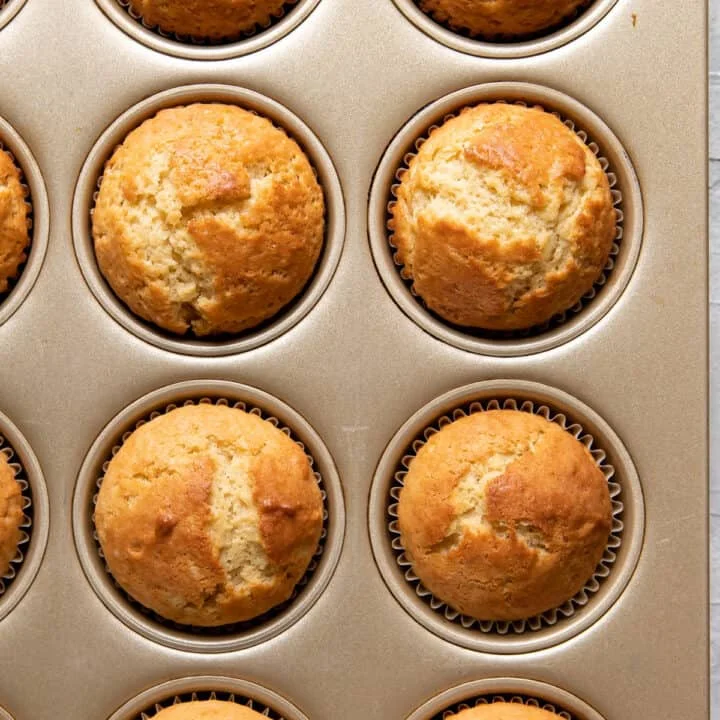
These basic American-style vanilla muffins use a simple batter to compare the effects of melted butter and oil. Make the batch with either fat and serve the muffins for breakfast, a snack or alongside a cup of tea.
Ingredients
- 113 g melted butter (or 82 g oil)butter or oil
- 150 gcane sugar
- 5 mlvanilla extract
- 2eggs
- 120 mlbuttermilk
- 240 gplain flour
- ¾ tspkosher salt
- ½ tspbicarbonate of soda
- 1 tspbaking powder
Instructions
- 1
Preheat the oven
Heat the oven to 200°C.
- 2
Mix wet ingredients
In a large bowl, whisk together the melted butter or oil, sugar, vanilla extract, eggs and buttermilk.
- 3
Sift dry ingredients
Set a sieve over the bowl of wet ingredients and sift in the flour, salt, bicarbonate of soda and baking powder.
- 4
Combine the batter
Stir just until the ingredients are combined.
- 5
Fill the tin
Line a muffin tin with paper cases and add 3–4 tablespoons of batter to each.
- 6
Bake the muffins
Bake for 5 minutes, then lower the oven temperature to 180°C and bake for a further 13–15 minutes, or until a skewer comes out clean.
- 7
Remove from oven
Take the muffins out of the oven.
- 8
Cool and serve
Leave the muffins to cool, then serve.
What are basic vanilla muffins?
Muffins are individual quick breads, popular in the United States and commonly made with a leavened batter rather than yeast. This plain vanilla version is a useful starting point for comparing two common baking fats.
Butter brings a dairy flavour, while oil offers a neutral alternative. The recipe keeps the other ingredients and method consistent so the fat is the main difference between the two batches.
Nutrition and macros by portion
The nutrition label shows one serving as written: 209 calories, 4g protein, 29g carbs, 9g fat.
| Portion | Adjustment | kcal | Protein | Carbs | Fat |
|---|---|---|---|---|---|
| Lighter | Serve with fresh fruit | 146 kcal | 3g | 20g | 6g |
| This serving | As written | 209 kcal | 4g | 29g | 9g |
| Hungry | Add another muffin | 314 kcal | 6g | 44g | 14g |
The flour and sugar provide most of the carbohydrate, while the butter or oil supplies much of the fat. Eggs and buttermilk contribute protein, alongside smaller amounts from the flour. Pair a muffin with plain yoghurt or fruit to add variety and make a more balanced plate.
Choosing butter or oil
Butter: Melt it before mixing so it blends evenly with the sugar and other wet ingredients. Let it cool slightly first so it is warm rather than piping hot when it meets the eggs.
Oil: Use the stated 82 g in place of the butter. Its liquid consistency makes it straightforward to whisk into the wet ingredients.
Mixing without overworking
Dry ingredients: Sifting the flour, salt and raising agents into the wet mixture helps distribute them through the batter.
Final stir: Stop as soon as no dry flour is visible. A few small lumps are preferable to prolonged mixing, which can make muffins less tender.
Filling the muffin cases
Even portions: Add 3–4 tablespoons of batter to each lined cup, aiming for similar amounts so the muffins bake at roughly the same rate.
Room to rise: Avoid filling the cases beyond the recipe's stated amount. The raising agents and initial high oven temperature help the batter puff as it bakes.
Getting the bake right
Two temperatures: The muffins begin at 200°C for 5 minutes, then finish at 180°C for 13–15 minutes. Keep the oven door shut during baking as much as possible.
Doneness: Insert a skewer into a muffin near the centre of the tin. It should come out clean; if batter clings to it, continue baking briefly and check again.
Serving and comparing
Cool the muffins before eating so the crumb has time to set. They are ready to serve plain, or alongside fruit and yoghurt for a more substantial breakfast.
For a fair butter-versus-oil comparison, make note of which fat went into each batch and taste them once both have cooled. Keep the portion size and baking conditions as similar as possible.
Recipe notes & tips
- Use room-temperature eggs and buttermilk to help the wet ingredients combine smoothly.
- Measure the oil by weight if making the oil version, using 82 g as specified.
- Use paper cases so the muffins are easy to lift out of the tin.
- Divide the batter evenly to help all 12 muffins finish baking at a similar time.
- Let the melted butter cool slightly before whisking it with the eggs.
Variations
- Add blueberries: Fold a handful into the batter gently after combining the wet and dry ingredients.
- Add citrus: Stir finely grated lemon zest into the wet ingredients for a fresh flavour.
- Add chocolate chips: Fold them through the batter just before filling the cases.
- Add cinnamon: Mix a little ground cinnamon with the dry ingredients for a warm spice note.
Common mistakes to avoid
- Hot melted butter: Let it cool slightly before mixing so it does not heat the eggs.
- Overmixing: Stir only until the flour disappears to avoid a tougher crumb.
- Uneven filling: Measure similar amounts into each case so the muffins bake evenly.
- Skipping the temperature change: Lower the oven to 180°C after the first 5 minutes as directed.
- Removing them too soon: Check with a skewer and bake for a little longer if wet batter remains.
How to store
Once completely cool, store the muffins in an airtight container at room temperature and eat within 2–3 days. Warm briefly in the oven or microwave before serving.
Frequently asked questions
Can I use oil instead of butter?
Yes. Use 82 g oil in place of the 113 g melted butter, as listed in the ingredients.
Why does the recipe start at a higher oven temperature?
The method begins at 200°C for 5 minutes, then reduces to 180°C for the rest of the bake. Follow both temperatures and timings for the recipe's intended baking sequence.
How do I know when the muffins are done?
Insert a skewer into a muffin; it should come out clean. If it has wet batter on it, bake a little longer and check again.
Can I mix the batter ahead of time?
It is best to bake the batter soon after mixing, once the raising agents have been combined with the wet ingredients.
How many muffins does this recipe make?
The recipe serves 12, with the batter divided between 12 muffin cases.
Can I freeze the muffins?
Yes. Freeze fully cooled muffins in a sealed, freezer-safe container, then thaw before serving.
Cook it from the original
This recipe comes from moderncrumb.com. Their page has the author’s own photos, notes and tips — the best place to cook it from.
Open the recipe on moderncrumb.com