
Goat’s cheese and red onion tarts
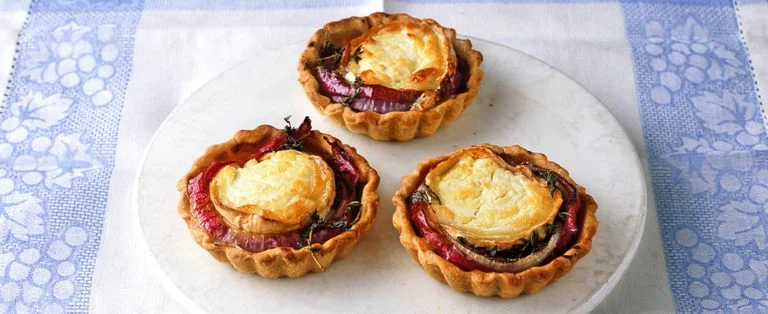
These individual savoury tarts pair sweet, balsamic-glazed red onion with two styles of goat’s cheese in crisp shortcrust pastry. They make a special vegetarian centrepiece or an elegant lunch, and the pastry cases can be prepared ahead.
Ingredients
- 500 gblock of shortcrust pastry
- 2 very largered onions
- a littleolive oil
- 1 tbspbalsamic vinegar
- ½ tbspthyme leaves, chopped
- 6 slicesgoat’s cheese from a small log
- 3, halvedEnglish goat’s cheeses with a bloomy rind
Instructions
- 1
Bake the pastry
Heat the oven to 200°C (180°C fan/ gas mark 6). Line six tart tins, about 10 cm across, with pastry and prick the bases. Cover with parchment and baking beans, then bake for 10 minutes or until the pastry starts to brown. Remove the parchment and beans, then bake for a further 5 minutes, until the pastry is crisp, dry and cooked.
- 2
Cook the onions
Meanwhile, cut the red onions into thick slices; you need six substantial slices. Heat a little oil in a large frying pan, using two pans or cooking in two batches if needed. Fry the slices carefully without breaking them, turning once, until they begin to soften, about 15 minutes in total. Add the balsamic vinegar and thyme and let them bubble together.
- 3
Fill the tarts
Put one onion slice into each tart case. Place a slice of goat’s cheese on top, towards one side so it sits off-centre.
- 4
Bake and serve
Bake until the goat’s cheese starts to bubble and brown slightly. Drizzle with a little olive oil before serving.
What are goat’s cheese and red onion tarts?
These are individual savoury tarts: crisp pastry cases filled with softened red onion and topped with goat’s cheese. Tarts have a long history across European cooking, with versions ranging from simple household bakes to more dressed-up dishes.
This version relies on the contrast between sweet onion, tangy balsamic and creamy cheese. Using both log goat’s cheese and bloomy-rind English goat’s cheese gives each tart a mix of soft, melting topping and a more substantial cheese finish.
Nutrition and macros by portion
The nutrition label shows one serving as written: 147 calories, 7g protein, 5g carbs, 11g fat.
| Portion | Adjustment | kcal | Protein | Carbs | Fat |
|---|---|---|---|---|---|
| Lighter | Smaller tart portions | 103 kcal | 5g | 3g | 8g |
| This serving | As written | 147 kcal | 7g | 5g | 11g |
| Hungry | Add a larger salad | 221 kcal | 10g | 7g | 17g |
The pastry supplies most of the carbohydrates and some of the fat, while olive oil and the cheeses contribute much of the fat. Goat’s cheese provides most of the protein. Serve a tart with salad or vegetables to add freshness and balance the plate.
Get crisp pastry cases
Blind baking: lining the pastry with parchment and baking beans helps the bases cook before the moist toppings go in. Prick the pastry first, and remove the beans and parchment after the initial bake so the bases can dry and crisp.
Check the edges: the pastry should begin to colour during the first bake, then look dry and cooked after the second. The recipe does not specify how long the filled tarts need in the oven, so use the cheese’s bubbling and light browning as your cue.
Keep the onion slices intact
Thick slices: cut six broad rounds from the onions so each tart gets a distinct layer. Handle them gently in the pan; turning them carefully helps them stay together.
Cook in batches: the onions need room in the pan, and overcrowding makes them harder to turn without breaking. Once softened, the balsamic and thyme briefly bubble with them, coating the slices with flavour.
Balance the two cheeses
Log cheese: slices from a small log sit neatly over the onion and soften as the tarts bake. Put each slice off-centre, as directed, rather than trying to cover the whole tart.
Bloomy rind: the halved English goat’s cheeses add a different texture and a more pronounced finish. Keep the cheese portions ready while assembling, since the pastry cases are hot from their first bake.
Serve them while warm
The tarts are ready when the cheese begins to bubble and picks up a little colour. A final drizzle of olive oil adds a glossy finish; serve them warm so the pastry stays crisp and the cheese is soft.
A sharp green salad or simply dressed leaves make a fresh counterpoint to the rich pastry and cheese. For a more substantial meal, add a bowl of soup or extra vegetables.
Recipe notes & tips
- Use tart tins close to 10 cm across so the pastry and filling proportions stay in line with the recipe.
- Chill the pastry briefly if it becomes soft and difficult to line the tins with.
- Cut the onions into thick, even slices so they cook at a similar pace.
- Use two pans or cook in batches if the onion slices do not fit in a single layer.
- Keep the onion rounds intact when turning them, using a wide spatula if available.
- Watch the cheese towards the end of baking and take the tarts out once it bubbles and begins to brown.
Variations
- Add black pepper: season the onion lightly as it cooks for a sharper edge.
- Try fresh rosemary: use a little in place of the thyme for a more resinous herb note.
- Add walnuts: scatter a few chopped walnuts over the filling before baking for crunch.
- Use wholemeal pastry: swap in wholemeal shortcrust pastry for a nuttier case.
- Serve with rocket: add peppery leaves alongside the warm tarts for contrast.
Common mistakes to avoid
- Skipping the blind bake: the bases can stay undercooked; bake them with parchment and beans before filling.
- Overcooking the onions: they may fall apart when handled; turn them gently and stop once they begin to soften.
- Crowding the pan: the slices are difficult to turn intact; use two pans or cook in batches.
- Covering the whole case with cheese: the recipe calls for the log-cheese slice off-centre; position it to one side.
- Waiting for deeply browned cheese: it can overcook; take the tarts out when it bubbles and colours slightly.
How to store
Cool the tarts, cover and refrigerate for up to 2 days. Reheat in an oven until warmed through; this helps the pastry regain some crispness. Avoid reheating repeatedly.
Frequently asked questions
Can I make the pastry cases ahead?
Yes. Blind-bake the cases, let them cool, then store them in an airtight container until you are ready to fill and bake them.
How do I know when the onions are ready?
They should start to soften while still holding their shape. Turn them gently and allow about 15 minutes in total, as stated in the recipe.
Can I cook the onions in batches?
Yes. The recipe specifically allows for two pans or two batches, which can make the slices easier to handle without breaking.
How long do the filled tarts bake?
The recipe does not give a set time for this stage. Bake until the goat’s cheese begins to bubble and brown a little.
Can I serve these tarts cold?
You can, but they are best served warm, when the cheese is soft and the pastry is crisp. Reheat chilled tarts in the oven before serving.
Cook it from the original
This recipe comes from olivemagazine.com. Their page has the author’s own photos, notes and tips — the best place to cook it from.
Open the recipe on olivemagazine.com