
Buttermilk Fried Chicken
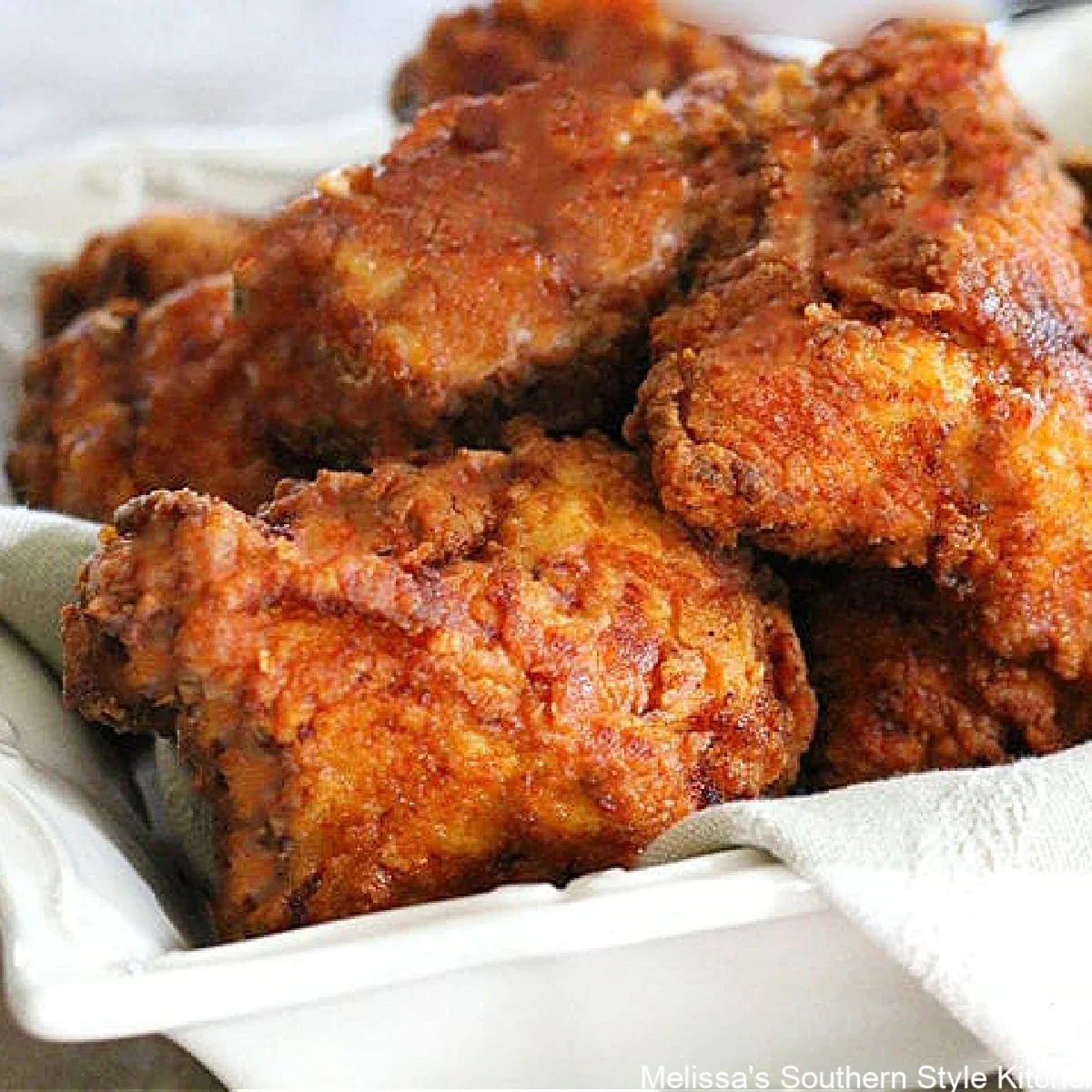
Chicken pieces soaked in buttermilk are coated in seasoned flour and egg, then fried until crisp and golden. The overnight-friendly marinade and double coating make this a satisfying Southern-style centrepiece for a family meal.
Ingredients
- 1 whole chicken, 1.4–1.8 kg (3–4 lb), cut into 8 pieceswhole chicken
- 480 ml (2 cups)whole buttermilk
- 1¾ tsp, dividedsalt
- 1¾ tsp, dividedground black pepper
- 310 g (2½ cups)plain flour
- 1 tspgarlic powder
- 1 tsponion powder
- 1 tsppaprika
- ¼ tspcayenne pepper
- 3 largeeggs
- A few dasheshot sauce
- 1.4–1.9 litres (6–8 cups)peanut oil
Instructions
- 1
Marinate the chicken
Arrange the chicken pieces in a large bowl or shallow dish and pour over the buttermilk. Cover and refrigerate for at least 3 hours or overnight. For more even cooking, cut large breast pieces in half.
- 2
Heat the oil
Half-fill a deep fryer or a Dutch oven fitted with a frying thermometer with oil, taking care not to overfill it. Heat to 175°C (350°F).
- 3
Mix the flour
In a shallow dish or on a platter, whisk together the flour, 1 tsp salt, 1 tsp black pepper, garlic powder, onion powder, paprika and cayenne.
- 4
Prepare the egg
In a separate dish, whisk the eggs with ¼ tsp salt, ¼ tsp black pepper and a few dashes of hot sauce.
- 5
Season the chicken
Lift the chicken from the buttermilk and shake off the excess. Lightly season all sides with the remaining ½ tsp salt and ½ tsp black pepper.
- 6
Coat each piece
Dip each piece of chicken in the flour mixture, then the egg wash, and then back into the flour. Set the coated pieces on a nearby baking tray.
- 7
Lower into oil
Carefully lower a few pieces at a time into the hot oil, placing them skin-side down. Keep the oil around 163–175°C (325–350°F) as the chicken cooks.
- 8
Fry in batches
Start with the dark meat and avoid overcrowding the pot. Cook dark meat for about 10–12 minutes on each side and white meat for 8–10 minutes on each side, until golden brown, the juices run clear and the internal temperature reaches 74°C (165°F).
- 9
Drain and serve
Use a stainless-steel spider to transfer the chicken to a paper-towel-lined platter or a baking tray fitted with an oven-safe rack. Let the excess oil drain and keep the chicken warm until serving.
What is buttermilk fried chicken?
Fried chicken is a staple of American Southern cooking, valued for its crisp coating and tender meat. In this version, chicken rests in buttermilk before being coated in seasoned flour and egg.
The coating is applied in two passes of flour, with egg in between, to create a substantial, craggy crust. Frying in batches helps that crust brown while the chicken cooks through.
Nutrition and macros by portion
The nutrition label shows one serving as written: 636 calories, 48g protein, 34g carbs, 33g fat.
| Portion | Adjustment | kcal | Protein | Carbs | Fat |
|---|---|---|---|---|---|
| Lighter | Smaller piece, extra slaw | 445 kcal | 34g | 24g | 23g |
| This serving | As written | 636 kcal | 48g | 34g | 33g |
| Hungry | Add another chicken piece | 954 kcal | 72g | 51g | 50g |
Chicken supplies most of the protein, while the flour coating contributes carbohydrates and the frying oil and egg account for much of the fat. Serve a piece with plenty of vegetables or slaw for a more balanced plate.
Why marinate in buttermilk?
Buttermilk clings to the chicken and gives the surface a lightly tangy flavour. The recipe calls for at least 3 hours of chilling, or an overnight rest if you want to prepare ahead.
Shake off excess buttermilk before coating so the flour mixture adheres without becoming overly wet.
Build the seasoned coating
Flour base: Plain flour carries the garlic powder, onion powder, paprika, cayenne, salt and pepper across the chicken. Whisk the dry ingredients together so the seasoning is evenly distributed.
Egg layer: The beaten egg, seasoned with salt, pepper and hot sauce, sits between the two flour layers. Coat each piece in sequence and place it on a tray while you finish the rest.
Fry safely and evenly
Oil level: Fill the pot only halfway, leaving room for the chicken and any bubbling oil. Heat it to 175°C before frying, and lower the pieces in carefully.
Oil temperature: Keep the oil between 163°C and 175°C during cooking. Add only a few pieces at a time, since overcrowding can make it harder to hold a steady temperature.
Check for doneness
Timing: Dark meat takes about 10–12 minutes per side, while white meat takes about 8–10 minutes per side. The pieces may finish at different times, so check them individually.
Doneness: Look for a golden-brown crust and clear juices, and confirm the thickest part reaches 74°C. Keep the thermometer away from the bone for a useful reading.
Serve while crisp
Drain the chicken on a paper-towel-lined platter or, for better airflow beneath the pieces, on a rack set over a tray. Keep it warm until the batch is ready to serve.
Pair it with a fresh, crisp salad or slaw and a vegetable side to balance the rich coating. Biscuits, potatoes or corn also make natural comfort-food companions.
Recipe notes & tips
- Marinate the chicken in the fridge for at least 3 hours, or leave it overnight.
- Use a frying thermometer to monitor the oil before and during each batch.
- If some breast pieces are especially large, halve them so they cook more evenly.
- Set the coated chicken on a tray before frying to keep the work area organised.
- Drain cooked pieces on a rack when available so the underside does not sit in oil.
Variations
- More heat: Add extra cayenne to the flour mixture for a spicier crust.
- Herb note: Mix dried herbs into the flour for an aromatic variation.
- Milder coating: Leave out the cayenne and use less hot sauce.
- Smaller pieces: Cut large breast pieces in half as suggested for more even cooking.
- Serving sides: Pair with slaw, salad, potatoes or corn for a different-style plate.
Common mistakes to avoid
- Skipping the marinade: Give the chicken at least 3 hours in the buttermilk for the recipe's intended preparation.
- Overfilling the pot: Keep the oil to halfway up the vessel so there is room for frying.
- Crowding the chicken: Fry a few pieces at a time to help maintain the oil temperature.
- Leaving excess buttermilk on: Shake off the extra before seasoning and coating.
- Guessing doneness: Check that the thickest part reaches 74°C rather than relying on colour alone.
How to store
Refrigerate leftover chicken in a covered container once cool and use within 3–4 days. Reheat in an oven until piping hot; the coating is likely to be less crisp after storage.
Frequently asked questions
Can I marinate the chicken overnight?
Yes. Cover it and keep it refrigerated overnight, as the recipe allows.
What temperature should the oil be?
Heat it to 175°C before frying and aim to maintain it between 163°C and 175°C while cooking.
How do I know the chicken is cooked through?
Check the thickest part with a thermometer; it should reach 74°C. The recipe also notes that the chicken should be golden brown and its juices should run clear.
Why fry the chicken in batches?
Adding too many pieces at once can make it difficult to maintain the oil temperature. Fry a few pieces at a time and avoid overcrowding the pot.
Can I use a different frying oil?
This recipe specifies peanut oil. If substituting, choose an oil suitable for deep frying and follow any relevant allergy considerations.
How should I drain the chicken?
Transfer it with a stainless-steel spider to a paper-towel-lined platter or a rack set over a tray, then let excess oil drain.
Cook it from the original
This recipe comes from melissassouthernstylekitchen.com. Their page has the author’s own photos, notes and tips — the best place to cook it from.
Open the recipe on melissassouthernstylekitchen.com