
Vanilla Glazed Baked Donuts
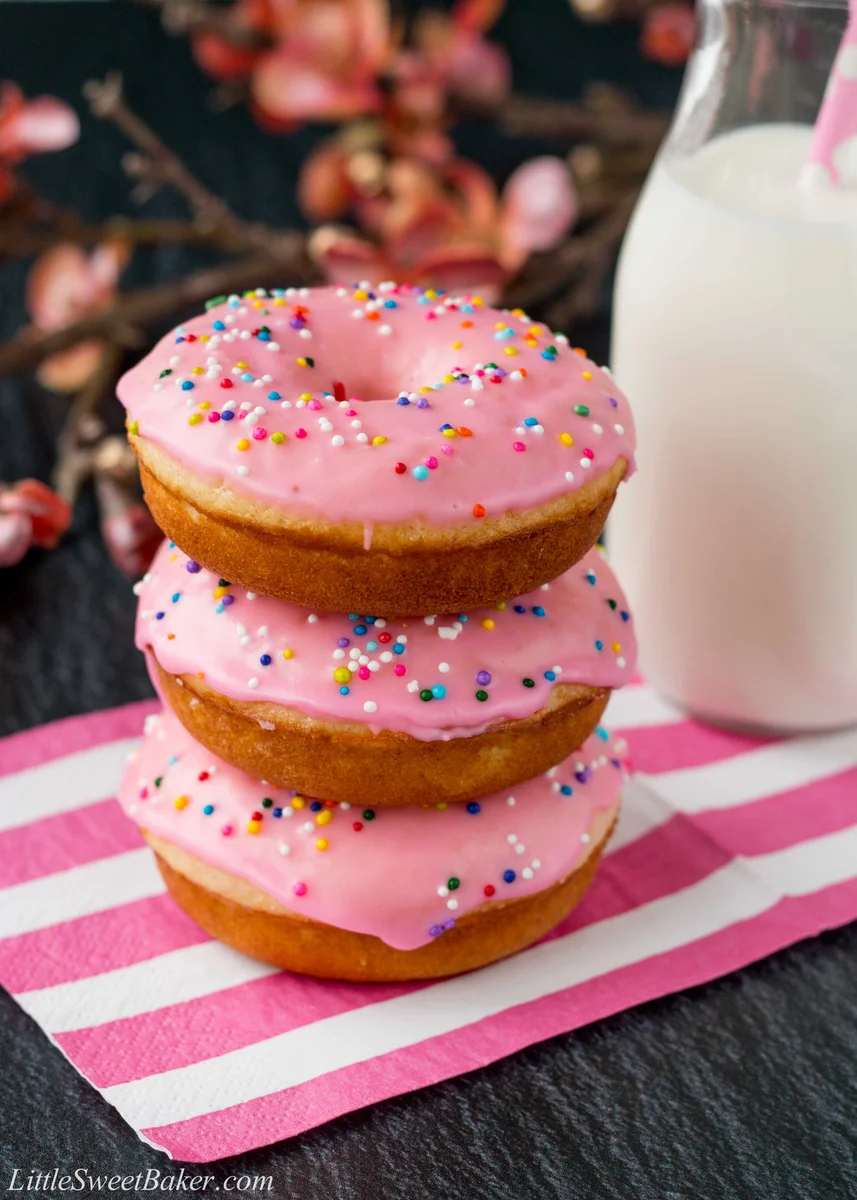
These American-style baked doughnuts are soft, lightly spiced with nutmeg and finished with a thick vanilla glaze. They’re a good choice when you want homemade doughnuts without deep-frying.
Ingredients
- 200 g (2 cups)sifted cake flour
- 150 g (¾ cup)granulated sugar
- 10 ml (2 tsp)baking powder
- 1.25 ml (¼ tsp)ground nutmeg
- 2.5 ml (½ tsp)salt
- 190 ml (¾ cup)buttermilk
- 2 largeeggs, lightly beaten
- 28 g (2 Tbsp)unsalted butter, melted
- 188 g (1½ cups)powdered sugar
- 3.75 ml (¾ tsp)vanilla extract
- 30–45 ml (2–3 Tbsp)milk or cream
- optionalpink food colouring
- to tastesprinkles, optional
Instructions
- 1
Prepare the pans
Heat the oven to 220°C (425°F). Spray two six-cavity doughnut pans with non-stick cooking spray.
- 2
Mix flour and sugar
In a large bowl, whisk together the cake flour and granulated sugar.
- 3
Add dry ingredients
Whisk in the baking powder, ground nutmeg and salt.
- 4
Make the batter
Add the buttermilk, eggs and melted butter. Beat just until combined, then fill each doughnut-pan cavity about two-thirds full.
- 5
Bake and cool
Bake for 7–9 minutes, until the tops spring back when touched. Leave the doughnuts in the pans for 5 minutes, then transfer them to a cooling rack and let them cool completely before glazing.
- 6
Glaze the doughnuts
In a small bowl, stir together the powdered sugar, milk and vanilla extract until the sugar has dissolved. Add a few drops of food colouring if desired, then use the glaze straight away. Add sprinkles if desired.
What are baked doughnuts?
Doughnuts are a familiar American bakery treat, often made from yeasted or cake-style dough and traditionally fried. This cake-style version is baked in a ring-shaped pan instead.
The buttermilk gives the crumb tenderness and a slight tang, while nutmeg adds a subtle bakery-style warmth. A vanilla glaze supplies the sweet finish.
Nutrition and macros by portion
The nutrition label shows one serving as written: 221 calories, 4g protein, 44g carbs, 4g fat.
| Portion | Adjustment | kcal | Protein | Carbs | Fat |
|---|---|---|---|---|---|
| Lighter | Use less glaze | 155 kcal | 3g | 31g | 3g |
| This serving | As written | 221 kcal | 4g | 44g | 4g |
| Hungry | Serve with fruit and yoghurt | 332 kcal | 6g | 66g | 6g |
The flour and sugar supply most of the carbohydrates, while the eggs and buttermilk contribute some protein. Butter and the glaze contribute fat and additional sugar; serve a doughnut with fruit or plain yoghurt for a more balanced plate.
Choosing the ingredients
Cake flour: its fine texture helps give these doughnuts a soft crumb. Sift it before measuring or use the stated 200 g quantity.
Buttermilk: it adds moisture and a gentle tang to the batter. Use the listed amount so the mixture remains suitable for piping or spooning into the pan.
Vanilla: vanilla extract flavours the glaze, while the small amount of nutmeg seasons the doughnut batter without overpowering it.
Mixing the batter
Combine the flour and sugar first, then whisk in the remaining dry ingredients so the baking powder and nutmeg are distributed through the mixture.
Once the wet ingredients go in, mix only until combined. Overmixing can make the baked doughnuts less tender.
Filling the pan
Two-thirds full: leave space in each cavity for the batter to rise as it bakes. Filling too close to the rim can blur the doughnut shape.
Even portions: divide the batter as evenly as you can between the 12 cavities so the doughnuts bake at a similar rate.
Checking when they’re done
Bake for the stated 7–9 minutes, then gently touch a top. It should spring back rather than stay indented; begin checking at the shorter end of the range.
Let the doughnuts cool completely before glazing. Warm doughnuts can soften the glaze and make it run off rather than form a coating.
Getting the glaze right
Stir the powdered sugar, milk and vanilla until the sugar dissolves. Add the milk gradually within the stated range so you can stop when the glaze reaches a thick but workable consistency.
Use the glaze promptly, as directed. Add food colouring a few drops at a time, and finish with sprinkles before the glaze sets.
Serving ideas
Serve the doughnuts once the glaze has set, with tea or coffee for a simple snack. Fresh berries or sliced fruit make a colourful accompaniment.
For a dessert plate, serve one doughnut with plain yoghurt or a small bowl of fruit to add a fresh, lightly tangy contrast.
Recipe notes & tips
- Have both doughnut pans greased before you mix the batter.
- Whisk the dry ingredients thoroughly to distribute the baking powder and nutmeg.
- Stop mixing as soon as the wet and dry ingredients are combined.
- Fill the cavities evenly and no more than about two-thirds full.
- Wait until the doughnuts are completely cool before applying the glaze.
- Add sprinkles while the glaze is still wet so they stick.
Variations
- Citrus glaze: add a little finely grated lemon zest to the glaze.
- Almond finish: replace the vanilla in the glaze with almond extract, using it sparingly.
- Coloured glaze: tint the glaze with a few drops of pink food colouring.
- Extra sprinkles: scatter sprinkles over the wet glaze for a more festive finish.
Common mistakes to avoid
- Overfilling the cavities: the doughnuts can lose their ring shape; fill each one about two-thirds full.
- Overmixing the batter: this can make the crumb tougher; beat only until the ingredients come together.
- Opening the oven too early: the doughnuts may not be ready to assess; check them at 7 minutes.
- Glazing while warm: the coating can run off; cool the doughnuts completely first.
- Making the glaze too thin: it may not coat well; add the milk gradually and stop once it is thick but workable.
How to store
Store the glazed doughnuts in an airtight container at room temperature and eat within 2 days for the best texture. If needed, warm them briefly in the microwave; the glaze may soften.
Frequently asked questions
Can I make these without a doughnut pan?
The recipe is written for two six-cavity doughnut pans, which give the doughnuts their shape. Without one, the dough will need a different baking vessel and the shape and baking time may differ.
How do I know the doughnuts are baked?
Bake for 7–9 minutes and gently touch the top; it should spring back. Check from 7 minutes so they do not overbake.
Can I prepare the batter ahead?
For the best rise, bake the batter soon after mixing. The recipe does not specify a resting or make-ahead step.
Can I use milk instead of buttermilk?
Buttermilk is part of the recipe and contributes moisture and tang. A direct swap may change the flavour and texture.
When should I add the sprinkles?
Add them immediately after glazing, while the glaze is still wet, so they adhere.
Can I skip the food colouring?
Yes. The pink food colouring is optional; the glaze will still work without it.
Cook it from the original
This recipe comes from littlesweetbaker.com. Their page has the author’s own photos, notes and tips — the best place to cook it from.
Open the recipe on littlesweetbaker.com