
Ground Beef and Red Wine Spaghetti Meat Sauce (Bolognese)
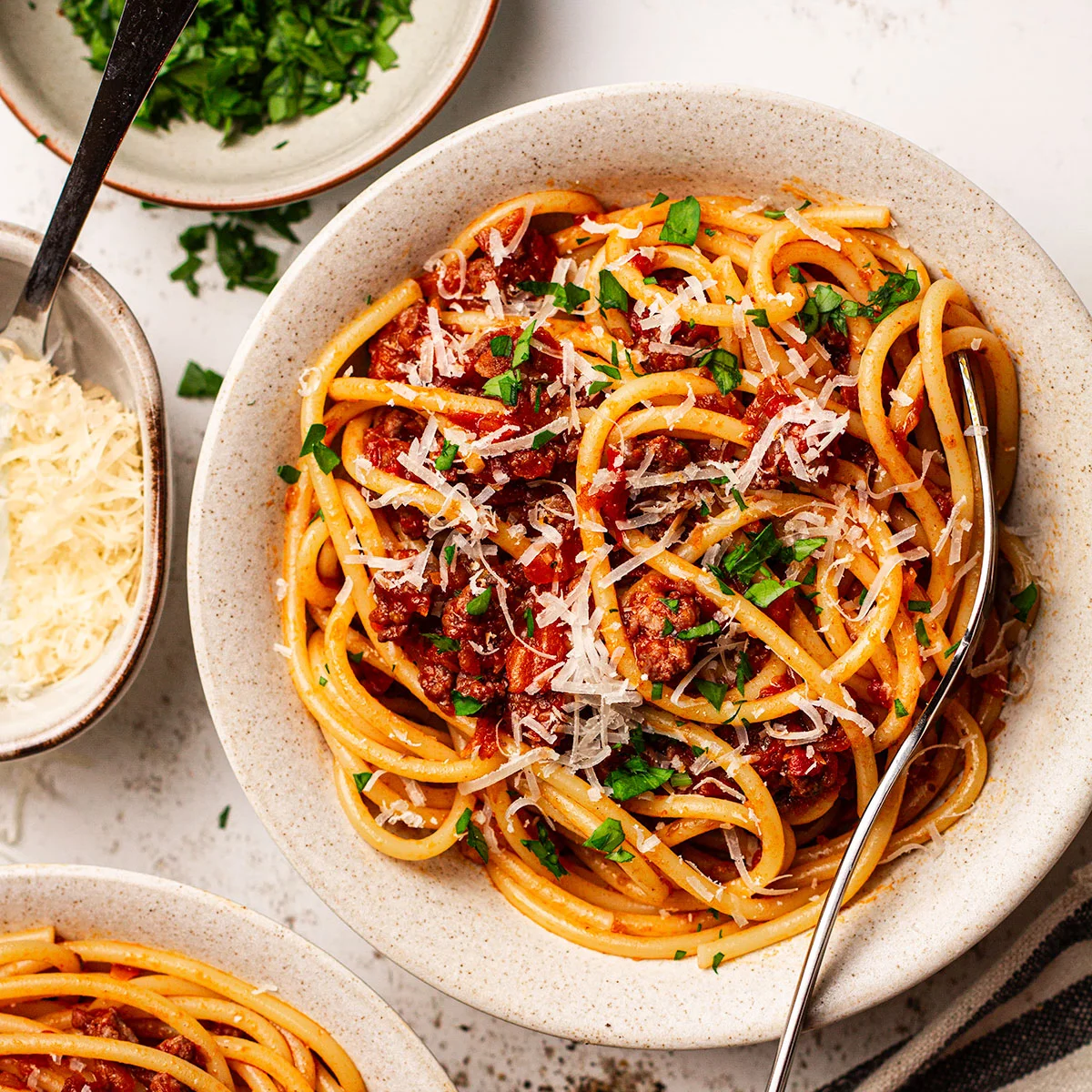
This hearty spaghetti meat sauce combines beef and bacon with red wine, tomatoes and finely chopped vegetables. It is a good choice when you want a deeply savoury pasta dinner made in one pan, with enough sauce to coat every strand.
Ingredients
- 1large onion
- 2carrots
- 2celery sticks
- 3garlic cloves
- 113 g (4 oz)bacon, finely chopped
- 454 g (1 lb)minced beef
- 2 tbspolive oil or butter
- 180 ml (¾ cup)red wine
- 397 g (14 oz)tin of crushed tomatoes
- 480 ml (2 cups)beef stock
- 2 tbsptomato purée
- 2 tspWorcestershire sauce
- 1 tspdried oregano
- to tastesalt and black pepper
- 397 g (14 oz)long pasta, such as spaghetti, linguine, tagliatelle or pappardelle
- to tastegrated Parmesan
- to tastefresh basil, finely chopped
Instructions
- 1
Chop vegetables
Finely chop the onion, carrots, celery and garlic in a food processor.
- 2
Soften vegetables
Set a large frying pan or saucepan over a medium-low heat. Add the olive oil or butter and cook the chopped onion, carrots, celery and garlic until softened. Take the vegetables out of the pan and set them aside.
- 3
Cook the bacon
Put the pan over a medium-high heat and fry the bacon until crisp.
- 4
Brown the beef
Add the minced beef and brown it over a high heat, breaking it up with a wooden spoon as it cooks, but not too finely so it can brown well.
- 5
Reduce the wine
Pour in the red wine and simmer for a few minutes, until it has reduced by half.
- 6
Simmer the sauce
Stir in the cooked vegetable mixture, crushed tomatoes, beef stock, tomato purée, Worcestershire sauce and oregano. Simmer for 30 minutes, until the sauce thickens and looks slightly glossy.
- 7
Season the sauce
Turn the heat down and season with salt and pepper to taste.
- 8
Cook the pasta
Cook the pasta until al dente in a large pan of generously salted boiling water.
- 9
Reserve pasta water
Before draining the pasta, set aside a cup of the cooking water.
- 10
Combine pasta
Add the cooked pasta to the pan with the meat sauce, along with a couple of tablespoons of the reserved pasta water.
- 11
Toss and loosen
Toss the pasta and sauce together over a low heat for a couple of minutes. Add a little more pasta water if the sauce needs extra moisture.
- 12
Garnish and serve
Serve straight away with freshly grated Parmesan and finely chopped basil.
What is Bolognese-style spaghetti sauce?
This is a rich minced-beef sauce served with long pasta, inspired by the meat sauces associated with Italian cooking. The title calls it Bolognese, though this particular version is a quick, tomato-rich recipe with bacon, red wine and beef stock.
Finely chopped onion, carrot and celery build a savoury base, while reducing the wine and simmering the sauce help bring its flavours together.
Nutrition and macros by portion
The nutrition label shows one serving as written: 554 calories, 26g protein, 12g carbs, 41g fat.
| Portion | Adjustment | kcal | Protein | Carbs | Fat |
|---|---|---|---|---|---|
| Lighter | Less pasta, extra vegetables | 388 kcal | 18g | 8g | 29g |
| This serving | As written | 554 kcal | 26g | 12g | 41g |
| Hungry | Larger pasta portion | 831 kcal | 39g | 18g | 62g |
The pasta and vegetables provide most of the carbohydrates, while the beef and bacon contribute protein and much of the fat; olive oil or butter adds further fat. Serve a little less pasta with extra vegetables or salad if you want a more balanced plate.
The vegetable base
Fine chop: Processing the onion, carrots, celery and garlic creates small pieces that soften into the sauce rather than remaining chunky.
Soften first: Cook the vegetables gently in the oil or butter, then take them out before browning the bacon and beef. This gives the meat room to brown in the pan.
Bacon, beef and wine
Bacon: Fry it until crisp to give the sauce a smoky, savoury note.
Beef: Brown the mince over high heat and avoid breaking it into very tiny pieces. Browning adds flavour and leaves the meat with a more substantial texture.
Red wine: Simmer it until reduced by half before adding the other sauce ingredients. This keeps the wine from diluting the finished sauce.
How to judge the sauce
Simmer: Give the sauce its full 30 minutes, until it has thickened and taken on a slight gloss. If it still looks thin, keep it simmering until it reaches that texture.
Seasoning: Taste after simmering, then adjust the salt and pepper. The bacon, stock and Worcestershire sauce all contribute savouriness, so season gradually.
Choosing and cooking pasta
Pasta shape: Spaghetti, linguine, tagliatelle and pappardelle are all suggested options. Choose a long pasta that is easy to toss through the meat sauce.
Doneness: Cook the pasta until al dente, following its packet timing as a guide. Save some cooking water before draining; its starch helps the sauce cling when you toss everything together.
Serving the sauce
Tossing: Combine the pasta and sauce over a low heat for a couple of minutes, adding a little reserved pasta water if the coating seems too thick.
Finishing: Serve immediately with grated Parmesan and finely chopped basil. A green salad or cooked vegetables can round out the plate alongside the pasta.
Recipe notes & tips
- Chop the vegetables finely so they soften evenly in the sauce.
- Use a wide pan when browning the beef to give it room to colour.
- Let the wine reduce by half before adding the tomatoes and stock.
- Save pasta water before draining, as it is easy to forget once the pasta is out of the pan.
- Add the reserved water a little at a time so the sauce stays thick enough to coat the pasta.
- Grate the Parmesan and chop the basil just before serving.
Variations
- Use butter: Choose butter instead of olive oil to soften the vegetables.
- Change the pasta: Swap spaghetti for linguine, tagliatelle or pappardelle.
- Adjust the herbs: Use another dried herb in place of oregano if preferred.
- Add a garnish: Finish each serving with extra Parmesan and basil.
- Serve separately: Keep the pasta and sauce apart at the table rather than tossing them together.
Common mistakes to avoid
- Crowding the beef: Too much meat packed into the pan can hinder browning; use a pan large enough to spread it out.
- Breaking up the mince too much: Very small pieces have less chance to brown; break it up without crumbling it finely.
- Skipping the wine reduction: Add the other sauce ingredients only after the wine has reduced by half.
- Draining all the pasta water: Reserve a cup before draining so you can loosen the sauce if needed.
- Overcooking the pasta: Cook it just to al dente, then toss it briefly with the sauce.
- Adding too much pasta water: Stir in a little at a time to avoid making the sauce watery.
How to store
Refrigerate leftover sauce and pasta in a covered container and use within 3 days. Reheat gently in a pan; add a splash of water if the sauce has thickened, and add fresh Parmesan and basil when serving.
Frequently asked questions
Can I make the sauce without a food processor?
Yes. Finely chop the onion, carrots, celery and garlic by hand so they soften into the sauce.
Can I use a different pasta shape?
Yes. The recipe suggests spaghetti, linguine, tagliatelle or pappardelle.
Why should I reserve pasta water?
A little cooking water helps loosen the sauce and coat the pasta. Add it gradually as you toss.
How do I know when the sauce is ready?
After 30 minutes of simmering, it should have thickened and look slightly glossy.
Can I serve the pasta and sauce separately?
Yes. Tossing them together is optional; you can spoon the sauce over the pasta when serving.
What can I serve with this spaghetti?
A green salad or cooked vegetables make a simple accompaniment to the pasta and meat sauce.
Cook it from the original
This recipe comes from knifeandsoul.com. Their page has the author’s own photos, notes and tips — the best place to cook it from.
Open the recipe on knifeandsoul.com