
Vegan Biryani
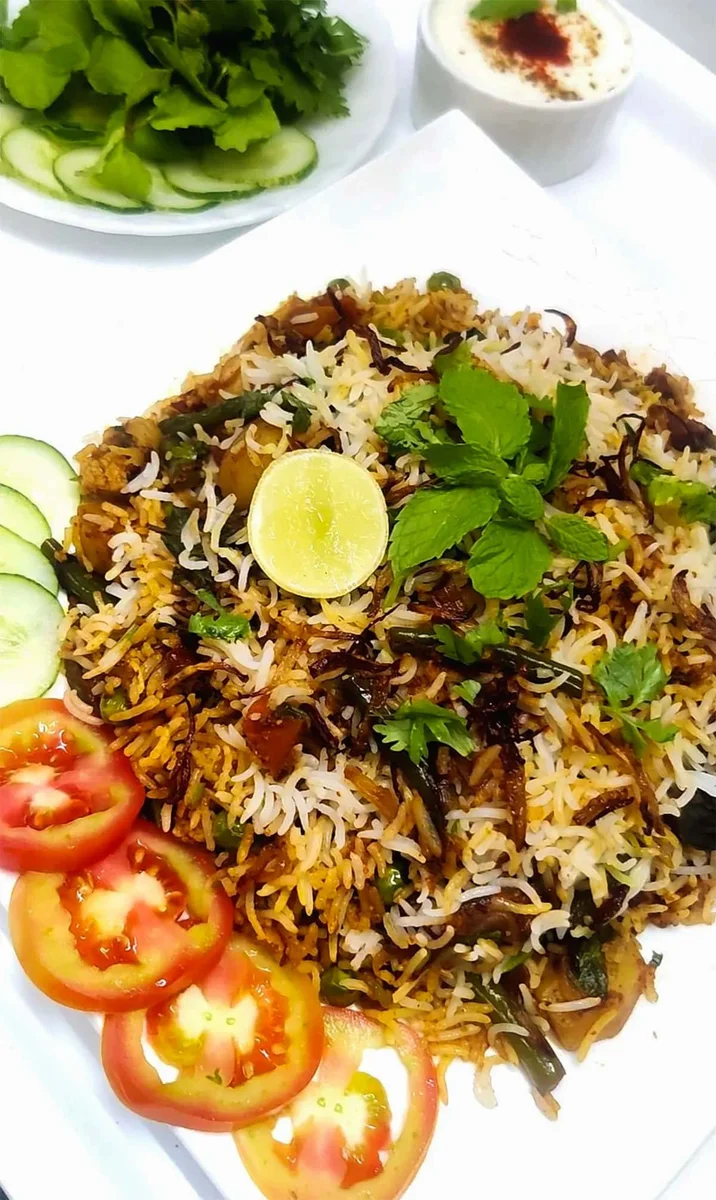
Vegan biryani layers basmati rice with spiced vegetables, herbs, saffron and fried onions. It makes a fragrant, filling meal in about 35 minutes, with a squeeze of lemon to brighten each serving.
Ingredients
- 370 g (2 cups), cooked and set asidebasmati rice
- 60 ml (1/4 cup), dividedavocado oil
- 1 large, sliced and dividedonion
- 10 threadssaffron
- 60 ml (1/4 cup)unsweetened almond milk
- 45 ml (3 tablespoons), or 5 ml (1 teaspoon) if using groundwhole garam masala
- 15 ml (1 tablespoon)ginger garlic paste
- 150 g (1 cup), choppedmixed vegetables (potatoes, green peas, green beans, cauliflower and carrots)
- 10 ml (2 teaspoons), or 1.25 ml (1/4 teaspoon) cayenne pepperred chilli powder
- 15 ml (1 tablespoon), optional; or curry powderbiryani masala
- to tastesalt
- 240 g (1 cup)tomato purée
- 60 ml (1/4 cup)water
- about 40 g (1 cup)fried onions
- 120 g (1/2 cup), unsweetenedcoconut yoghurt
- 8 g (1/2 cup), choppedcoriander leaves
- 5 g (1/4 cup), choppedmint leaves
- to tastelemon
Instructions
- 1
Fry the onion
Heat 30 ml (2 tablespoons) of the oil in a heavy-based saucepan over medium heat. Add half of the sliced onion and cook for about 15 minutes, until browned but not burnt. Set it aside.
- 2
Soak the saffron
Warm the almond milk in a small saucepan over low heat until it simmers. Add the saffron, switch off the heat and leave it to soak for 10 minutes. Set aside.
- 3
Cook the vegetables
Heat the remaining oil in a large saucepan over medium heat. Add the garam masala and sliced onion, and cook until golden. Stir in the ginger garlic paste and cook until fragrant. Add the mixed vegetables, chilli powder, biryani masala or curry powder, and salt; cook for about 2 minutes, until fragrant.
- 4
Add the sauce
Stir in the tomato purée, water and coconut yoghurt. Cook for about 5 minutes.
- 5
Divide the vegetables
Take half of the cooked vegetables out of the pan and set them aside.
- 6
Layer the biryani
Layer the cooked basmati rice over half of the vegetables. Add 3 tablespoons of the saffron mixture, a handful of fried onions, chopped coriander and mint, then add the remaining cooked vegetables.
- 7
Finish cooking
Add the remaining cooked vegetables, followed by a second layer of rice, saffron mixture, fried onions, coriander leaves and mint. Cover the pan with a tight-fitting lid and cook over a low heat for 10 minutes.
- 8
Serve the biryani
Serve with a squeeze of lemon, a salad and vegan yoghurt raita.
What is biryani?
Biryani is a South Asian rice dish, popular in India and Pakistan, usually made by layering rice with spiced ingredients. This vegan version pairs basmati with vegetables, herbs, saffron and fried onions.
Layering helps keep the rice and vegetable mixture distinct while their aromas mingle under the lid. Coconut yoghurt and tomato purée make a savoury, lightly creamy base.
Nutrition and macros by portion
The nutrition label shows one serving as written: 657 calories, 12g protein, 99g carbs, 23g fat.
| Portion | Adjustment | kcal | Protein | Carbs | Fat |
|---|---|---|---|---|---|
| Lighter | Use less oil | 460 kcal | 8g | 69g | 16g |
| This serving | As written | 657 kcal | 12g | 99g | 23g |
| Hungry | Serve a larger portion | 986 kcal | 18g | 149g | 35g |
The rice and vegetables provide most of the carbohydrates, while avocado oil, fried onions and coconut yoghurt contribute much of the fat. The vegetables and coconut yoghurt also contribute some protein, though the rice-based dish is not especially protein-rich. Serve it with salad or another generous portion of vegetables to balance the plate.
Choose the rice and vegetables
Basmati rice: Use rice that is already cooked and set aside, as the method calls for layering cooked rice rather than cooking it in the sauce. Separate any clumps gently so it layers more evenly.
Mixed vegetables: The recipe lists potatoes, peas, green beans, cauliflower and carrots. Chop them into similarly sized pieces so they cook at a comparable pace.
Build the flavour base
Whole spices: The recipe uses whole garam masala in the oil with the onion; ground garam masala is offered as an alternative. Let the spices warm with the onion to release their aroma without letting them scorch.
Aromatics: Ginger garlic paste cooks briefly before the vegetables go in. Stop when it smells fragrant, then add the vegetables and powdered spices for the stated two minutes.
Get the onion and saffron ready
Fried onion: Brown half the sliced onion slowly in the first portion of oil, aiming for deep colour without burning. Keep it aside for the layers, and use the listed fried onions as well.
Saffron milk: Let the saffron steep in warm almond milk for 10 minutes after taking it off the heat. This gives the liquid time to take on the saffron's colour and aroma.
Layer without overworking
Vegetables: Once the tomato, water and coconut yoghurt have cooked together for about 5 minutes, remove half the vegetables as directed. Keep the layers intact rather than stirring the rice through the sauce.
Rice and herbs: Add rice, saffron mixture, fried onions, coriander and mint in the sequence given. The method mentions adding the remaining vegetables at both the end of the first layer and again before the second rice layer, so follow the written sequence carefully.
Finish gently under a lid
Low heat: Cover the pan tightly and cook for 10 minutes on a low flame, as specified. A close-fitting lid helps retain steam while the flavours come together.
Doneness: The rice is already cooked, so this final stage is for warming the layers and melding their aromas. Avoid lifting the lid repeatedly during the 10 minutes.
What to serve with biryani
Fresh sides: The recipe suggests salad and vegan yoghurt raita alongside the biryani. Their cool, crisp qualities make a useful contrast to the warm spiced rice.
Lemon: Finish with a squeeze to taste just before serving. Add it at the table so everyone can adjust the brightness of their portion.
Recipe notes & tips
- Have the rice cooked and ready before starting, since the method uses it in layers.
- Slice the onion evenly so it browns at a similar rate.
- Keep the heat moderate while frying the onion to help it brown without burning.
- Chop the mixed vegetables into similarly sized pieces for more even cooking.
- Measure out the saffron milk and herbs before layering to make assembly easier.
- Keep the lid on during the final 10 minutes of cooking.
Variations
- Use curry powder: Substitute it for the optional biryani masala as listed.
- Choose ground garam masala: Use 1 teaspoon instead of 3 tablespoons whole garam masala.
- Adjust the heat: Use the listed cayenne alternative for a milder chilli option.
- Vary the vegetables: Use the listed mix of potatoes, peas, green beans, cauliflower and carrots in your preferred combination.
- Add more lemon: Offer extra wedges at the table for a brighter finish.
Common mistakes to avoid
- Burnt onion: Cook it over medium heat and watch closely as it approaches deep brown.
- Scorched spices: Keep the heat moderate and move on once the spices are fragrant.
- Uneven vegetable pieces: Chop the vegetables to similar sizes so they cook more consistently.
- Clumped rice: Separate the cooked rice gently before layering it.
- Lifting the lid: Leave the pan covered for the full 10-minute low-heat finish.
- Mixing the layers: Add the ingredients in sequence rather than stirring everything together.
How to store
Refrigerate leftovers in an airtight container and use within 3 days. Reheat until piping hot, either in a covered pan over low heat with a small splash of water or in the microwave.
Frequently asked questions
Can I use ground garam masala?
Yes. The ingredient list gives 1 teaspoon as the alternative to 3 tablespoons of whole garam masala.
Do I need to cook the rice first?
Yes. The recipe specifies cooked basmati rice, set aside before you begin layering.
Can I leave out the biryani masala?
It is marked optional. The recipe suggests curry powder as an alternative.
How long should I soak the saffron?
Simmer the almond milk, add the saffron, switch off the heat and leave it for 10 minutes.
What should I serve with vegan biryani?
The recipe suggests a squeeze of lemon, salad and vegan yoghurt raita.
How long does the biryani cook after layering?
Cover the pan with a tight-fitting lid and cook over low heat for 10 minutes.
Cook it from the original
This recipe comes from healthiersteps.com. Their page has the author’s own photos, notes and tips — the best place to cook it from.
Open the recipe on healthiersteps.com