
Orange Poppy Seed Scones
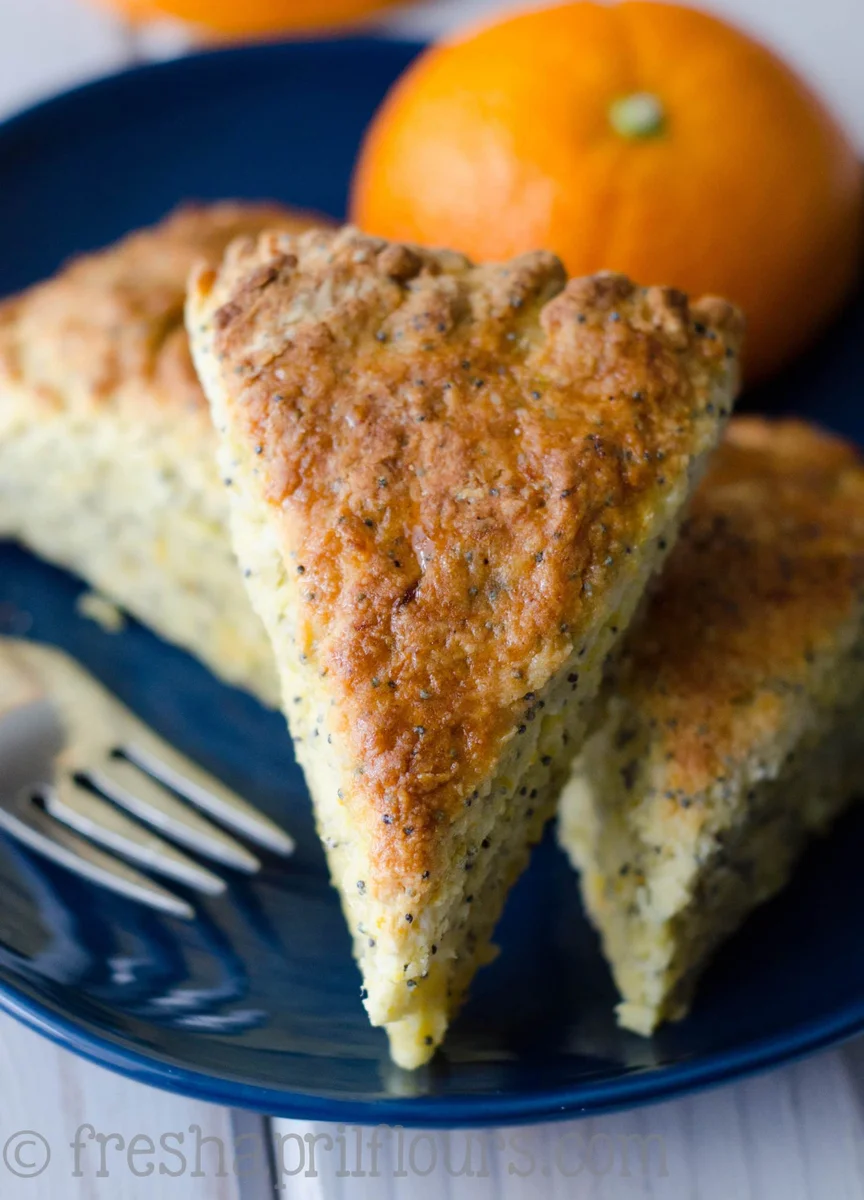
These American-style orange poppy seed scones pair a tender, buttery crumb with bright citrus and a sweet orange syrup. They make a cheerful breakfast or afternoon treat, and the syrup adds an extra hit of orange as it soaks in.
Ingredients
- 300 g (2½ cups)plain flour
- 66 g (⅓ cup)caster sugar
- 2½ teaspoonsbaking powder
- ½ teaspoonsalt
- 1½ tablespoonspoppy seeds
- ¼ teaspoonground ginger
- 100 g (6 tablespoons), frozenunsalted butter
- 1egg
- 79 g (⅓ cup) + 15 g (1 tablespoon)double cream
- 1½ teaspoonsvanilla extract
- Juice of 1 large navel orange (approximately 60 ml, or ¼ cup)orange juice
- Zest of 1 large navel orange (approximately 2½–3 teaspoons)orange zest
- Juice of 1 large navel orange (approximately 60 ml, or ¼ cup)orange juice
- 50 g (¼ cup)caster sugar
Instructions
- 1
Prepare the oven
Heat the oven to 204°C (400°F). Line a baking tray with a silicone baking mat or baking paper and set it aside.
- 2
Mix dry ingredients
Whisk the flour, sugar, baking powder, salt, poppy seeds and ground ginger together in a large bowl. Quickly grate the frozen butter into the bowl, then work it into the flour with a pastry blender, fork or two knives until the mixture resembles coarse crumbs. Set aside.
- 3
Combine wet ingredients
In a small bowl or preferably a jug with a spout, whisk together the egg, double cream, vanilla, the first measure of orange juice and the orange zest. Pour this evenly over the flour mixture and fold with a spatula until just moistened.
- 4
Shape the scones
Bring the dough together into a ball with your hands and place it on the prepared tray. Press it into an 20 cm (8-inch) disc, then cut it into 8 equal triangles with a sharp knife.
- 5
Bake until browned
Bake for 26–28 minutes, until the edges are quite brown but not burnt. Take the tray out of the oven and let the scones cool on it while you make the syrup.
- 6
Make orange syrup
Combine the second measure of orange juice and the sugar in a small bowl. Microwave on high in 20-second bursts, stirring after each one, until the sugar has dissolved completely.
- 7
Add the syrup
Drizzle the syrup over the slightly cooled scones and leave it to soak in. If you like, move them to a wire rack so any excess can drip away; otherwise, serve straight away.
What are orange poppy seed scones?
Scones are a familiar part of American baking, often served for breakfast or alongside a cup of tea or coffee. This version brings together orange, poppy seeds and a hint of ginger in a buttery, wedge-shaped bake.
Citrus juice and zest flavour the dough, while a simple orange syrup is poured over after baking. That extra finish gives the scones a sweet, fragrant surface without complicating the method.
Nutrition and macros by portion
The nutrition label shows one serving as written: 330 calories, 6g protein, 47g carbs, 14g fat.
| Portion | Adjustment | kcal | Protein | Carbs | Fat |
|---|---|---|---|---|---|
| Lighter | Smaller scone, less syrup | 231 kcal | 4g | 33g | 10g |
| This serving | As written | 330 kcal | 6g | 47g | 14g |
| Hungry | Serve two scones | 495 kcal | 9g | 71g | 21g |
Flour and sugar provide most of the carbohydrates, while butter and double cream account for much of the fat; the egg and flour contribute some protein. Pair a scone with fresh fruit or yoghurt for a more balanced plate.
Why frozen butter matters
Frozen butter is easier to grate quickly into the dry ingredients, distributing small pieces through the flour. Those pieces help give the baked scones a tender, crumbly texture.
Work the butter in only until the mixture looks like coarse crumbs. If it becomes warm and pasty, the dough can turn heavier.
Mix the dough gently
Wet ingredients: whisk the egg, cream, vanilla, orange juice and zest before adding them to the flour mixture. A jug with a spout makes it easier to pour them evenly.
Final mixing: fold with a spatula just until no dry patches remain, then bring the dough together by hand. Overworking it can make the scones tough.
Shape even wedges
Press the dough into a 20 cm disc and cut it into 8 equal triangles. Keeping the wedges a similar size helps them bake at roughly the same rate.
Use a sharp knife and make decisive cuts so the edges stay defined. Handle the dough lightly rather than repeatedly reshaping it.
Look for browned edges
Bake at 204°C for 26–28 minutes, checking towards the end of the range. The recipe’s cue is well-browned edges that are not burnt.
Let the scones cool slightly on the baking tray before adding syrup. They should still be warm enough for the orange mixture to soak in.
Let the syrup soak in
Stir the orange juice and sugar between each 20-second microwave burst so you can check whether the sugar has dissolved. Stop heating once the syrup is clear of sugar granules.
Drizzle it over the scones while they are slightly cooled, then give it time to absorb. A wire rack can catch any small amount that runs off.
Serve and enjoy
The scones can be served as soon as the syrup has soaked in, though the recipe notes that their flavour is especially good a few hours after baking. They work well with tea or coffee.
For a more substantial breakfast, serve one with yoghurt or fruit. Keep accompaniments simple so the orange remains the main flavour.
Recipe notes & tips
- Grate the butter straight from the freezer so it stays firm as you work.
- Measure out the orange juice for the dough and syrup separately before mixing.
- Use a jug with a spout to pour the wet mixture evenly over the flour.
- Stop mixing as soon as the dough is just moistened.
- Cut the disc into 8 similar-sized wedges for more even baking.
- Stir the syrup between microwave bursts to help the sugar dissolve evenly.
Variations
- More orange: Add extra orange zest to the dough for a stronger citrus aroma.
- Lemon twist: Replace the orange zest with lemon zest while keeping the orange juice.
- Extra spice: Increase the ground ginger slightly for a warmer flavour.
- Citrus glaze: Let the syrup cool briefly before drizzling for a more pronounced coating.
- Seed swap: Use fewer poppy seeds if you prefer a subtler crunch.
Common mistakes to avoid
- Soft butter: Keep it frozen until grating so it blends into crumbs rather than smearing.
- Overmixed dough: Fold only until just moistened to help keep the scones tender.
- Uneven wedges: Cut the disc into 8 equal triangles so they bake more consistently.
- Burnt edges: Check near the end of the 26–28-minute bake and remove once browned, not burnt.
- Undissolved sugar: Stir after every 20-second microwave burst and stop once dissolved.
- Syrup too soon: Let the scones cool slightly before drizzling so the syrup can soak in without immediately running off.
How to store
Store the scones in an airtight container at room temperature for up to one additional day. They can be frozen for up to 3 months; defrost at room temperature and warm to your preference before serving.
Frequently asked questions
Can I make the dough ahead?
The recipe gives instructions for baking and storing the finished scones, but does not specify making the dough ahead. For the best texture, follow the method and bake after shaping.
Can I use a different cream?
The ingredient list specifies heavy cream with no substitutions. In the UK, double cream is a suitable naming equivalent for this rich cream.
How do I know when the scones are done?
Bake for 26–28 minutes. The edges should be quite brown but not burnt.
Can I make the orange syrup without a microwave?
The method specifies heating the juice and sugar in the microwave in 20-second bursts. If you do not have one, warm them gently in a small pan, stirring until the sugar dissolves.
When should I add the syrup?
Drizzle it over the scones once they have cooled slightly, then allow it to soak in. You can serve them immediately afterwards.
Can I freeze these scones?
Yes. The recipe says they can be frozen for up to 3 months; defrost them at room temperature and warm them to your preference.
Cook it from the original
This recipe comes from freshaprilflours.com. Their page has the author’s own photos, notes and tips — the best place to cook it from.
Open the recipe on freshaprilflours.com