
Thai Vegetables Stir-Fry (Pad Pak Ruam Mit)
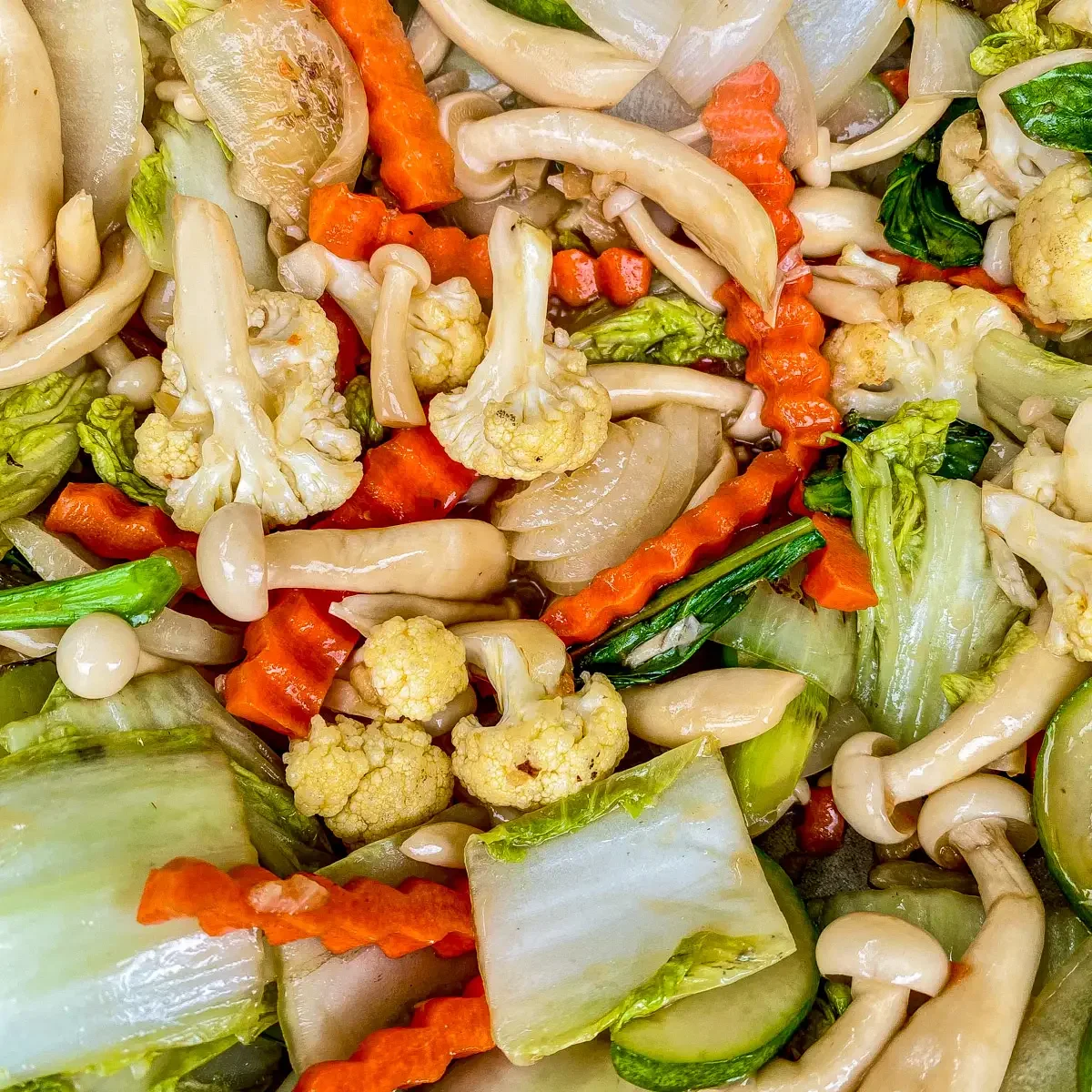
Pad pak ruam mit is a quick Thai stir-fry of mixed vegetables coated in a savoury oyster and soy sauce. It makes a colourful dinner in about 20 minutes, with the vegetables kept pleasantly crisp.
Ingredients
- 30 ml (2 tablespoons)oil
- 3 cloves, mincedgarlic
- 90 g (¾ cup), slicedcarrot
- about 100 g (¾ cup), slicedcucumber
- about 100 g (1 cup), slicedcauliflower
- 1, slicedonion
- about 70 g (¾ cup)shiitake mushrooms
- about 105 g (1½ cups), slicedcabbage
- about 35 g (½ cup), sliced, stems peeledChinese broccoli
- 37.5 ml (2½ tablespoons)oyster sauce
- 22.5 ml (1½ tablespoons)light soy sauce
- about 19 g (1½ tablespoons)white sugar
- 30 ml (2 tablespoons), optionalwater
- about 30 g (⅓ cup), chopped, optionalspring onions, for garnish
- Optional, to tastechilli flakes
Instructions
- 1
Prepare the vegetables
Cut the vegetables into evenly sized pieces so they cook at a similar rate.
- 2
Fry the garlic
Heat a wok or frying pan over high heat and add the oil. Add the minced garlic and stir-fry until golden, about 20 seconds.
- 3
Cook firm vegetables
Add the carrot, cucumber, onion, cauliflower and Chinese broccoli. Stir-fry for 3–4 minutes, softening them slightly while keeping some crunch.
- 4
Finish the stir-fry
Add the sugar, light soy sauce and oyster sauce, followed by the remaining vegetables. For a thinner sauce, add a splash of water, about 30 ml (⅛ cup). Cook for another 2–3 minutes, tossing until the vegetables are coated and cooked to your liking.
What is pad pak ruam mit?
Pad pak ruam mit is a Thai mixed-vegetable stir-fry; its name refers to a combination of vegetables cooked in a pan. It is a flexible, everyday-style dish rather than one fixed mix, so the vegetables can vary.
This version pairs crisp vegetables with shiitake mushrooms and a quick oyster and soy sauce dressing. Cooking the firmer vegetables first helps the whole mix finish together without losing its contrast of textures.
Nutrition and macros by portion
The nutrition label shows one serving as written: 280 calories, 6g protein, 35g carbs, 15g fat.
| Portion | Adjustment | kcal | Protein | Carbs | Fat |
|---|---|---|---|---|---|
| Lighter | Use less oil and sugar | 196 kcal | 4g | 25g | 11g |
| This serving | As written | 280 kcal | 6g | 35g | 15g |
| Hungry | Serve with extra rice | 420 kcal | 9g | 53g | 23g |
The recipe’s carbohydrates come mainly from the vegetables and sugar, while most of its fat comes from the oil. The vegetables and mushrooms contribute some protein, though this is a vegetable-led dish; serve it with a protein-rich side or rice and a protein of your choice to round out the plate.
Get the vegetables ready
Even pieces: slice the vegetables to a similar thickness so they cook at roughly the same pace. Peel the Chinese broccoli stems as directed, which helps them cook through alongside the other vegetables.
Keep the groups handy: the carrot, cucumber, onion, cauliflower and Chinese broccoli go in first. The remaining vegetables are added later, so have them ready by the wok before you start.
Build flavour in the wok
Hot pan: heat the wok or frying pan over high heat before adding the oil. A hot cooking surface helps the vegetables stir-fry rather than sit and stew.
Golden garlic: stir-fry the garlic for about 20 seconds, stopping when it turns golden. It can darken quickly, so add the vegetables promptly once it is ready.
Balance the sauce and texture
Sauce: oyster sauce brings savoury depth, light soy sauce adds saltiness and sugar rounds out the flavour. Toss well after adding them so the vegetables are coated evenly.
Crunch: cook the first group for 3–4 minutes, then the remaining vegetables for another 2–3 minutes. Use the vegetables’ tenderness as your guide and stop when they are cooked to your liking.
Choose the sauce consistency
Thinner coating: add the optional water a little at a time if you want more sauce in the pan. The recipe suggests about 30 ml (⅛ cup) for a saucier finish.
No extra water: leave it out for a more concentrated coating. Toss the vegetables frequently either way so the sauce reaches all the pieces.
Serve it while hot
Garnish: scatter over the optional chopped spring onions just before serving, and add chilli flakes if you like some heat.
On the plate: serve the stir-fry as it is for a vegetable-focused meal, or alongside rice to make it more filling. Keep any rice separate until serving so the vegetables retain their texture.
Recipe notes & tips
- Slice the vegetables before heating the pan, as the cooking moves quickly.
- Use the highest heat you can manage safely and keep the vegetables moving.
- Add the garlic only after the oil is hot, and watch it closely as it browns.
- Taste a piece near the end and stop cooking when it has the crunch you prefer.
- Add the optional water gradually so the sauce does not become thinner than you want.
Variations
- Add chilli: toss in chilli flakes at the end for a little heat.
- Use other mushrooms: swap in another mushroom variety if shiitake is unavailable.
- Change the vegetables: replace a vegetable with another quick-cooking option, cut to a similar size.
- Make it saucier: add the optional water while tossing the vegetables.
- Add a garnish: finish with the optional chopped spring onions.
Common mistakes to avoid
- Uneven pieces: some vegetables may turn soft while others stay firm; slice them to similar sizes.
- Crowded pan: the vegetables can steam rather than stir-fry; use a wide wok or frying pan.
- Dark garlic: it can turn bitter if left too long; add the vegetables as soon as it is golden.
- Overcooking: vegetables lose their crunch if left in the pan too long; check them after each cooking stage.
- Watery sauce: adding too much water dilutes the coating; start with a small splash and add more only if needed.
How to store
Refrigerate leftovers in a covered container and eat within 3 days. Reheat in a hot frying pan, stirring just until warmed through; the vegetables will be softer after reheating.
Frequently asked questions
Can I prepare the vegetables ahead?
Yes. Slice them in advance and keep them covered in the fridge, ready to add to the wok. For best texture, cook the stir-fry just before serving.
Can I leave out the oyster sauce?
Yes, but the flavour will be different. Use a suitable alternative sauce if you need one, and check its saltiness before adding extra soy sauce.
How do I keep the vegetables crisp?
Cut them evenly, use a hot pan and avoid overcrowding it. Cook only until they reach the tenderness you prefer.
Is the water essential?
No, it is optional and is there to make the sauce thinner. Leave it out for a more concentrated coating.
What should I serve with pad pak ruam mit?
Rice is an easy accompaniment. You can also serve it with a protein of your choice for a more substantial meal.
Cook it from the original
This recipe comes from hungryinthailand.com. Their page has the author’s own photos, notes and tips — the best place to cook it from.
Open the recipe on hungryinthailand.com