
Pad Thai with Chicken and Shrimp
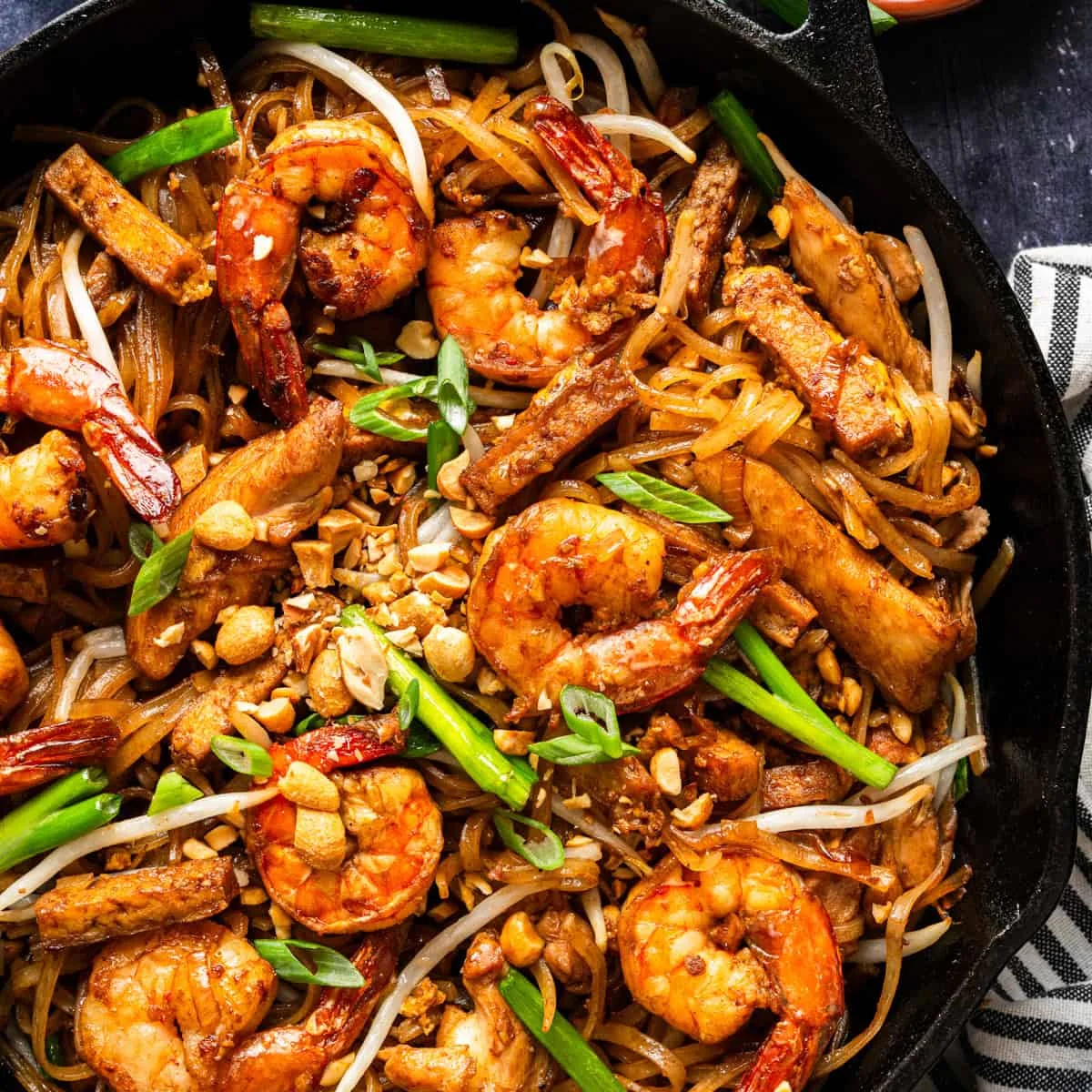
This Pad Thai brings chewy rice noodles together with chicken, prawns, tofu and scrambled egg in a tangy, sweet-savoury sauce. It makes a filling one-pan dinner, finished with crunchy peanuts, fresh lime and crisp bean sprouts.
Ingredients
- 227 g (8 oz)rice noodles, thin or medium, soaked in warm water for 20–30 minutes until pliable
- 3 tablespoonsfish sauce
- 3 tablespoonsbrown sugar
- 2 tablespoonstamarind paste
- 2 tablespoonssoy sauce
- 1 tablespoonwater
- 4 tablespoons, divided, plus extra if neededneutral oil
- 1/2 packextra-firm tofu, cut into 1.3 cm (1/2-inch) cubes or matchsticks and gently pressed to remove water
- 2 mediumboneless, skinless chicken thighs, sliced into thin strips
- 227 g (1/2 lb)large or jumbo prawns, peeled and deveined, tails on or off
- 3 clovesgarlic, minced
- 1 mediumshallot, thinly sliced
- 2 mediumeggs, lightly beaten
- 240 ml (1 cup)bean sprouts
- 3spring onions, green parts cut into 3.8 cm (1 1/2-inch) lengths
- 60 ml (1/4 cup)roasted salted peanuts, roughly chopped
- To tastecrushed or chopped salted roasted peanuts, for serving
- To tastelime wedges, for serving
- To tastesliced spring onions, for serving
- To tastebean sprouts, for serving
- Optional, to tastedried Thai red chilli flakes
Instructions
- 1
Soak the noodles
Put the rice noodles in a large bowl of warm water for 20–30 minutes, until just pliable. Drain them and set aside.
- 2
Mix the sauce
While the noodles soak, whisk the fish sauce, brown sugar, tamarind paste, soy sauce and 1 tablespoon of water in a small bowl until the sugar has mostly dissolved. Set aside.
- 3
Brown the tofu
Heat 2 tablespoons of oil in a wok or cast-iron frying pan over high heat. Add the tofu and cook, turning it to brown the sides, until just golden. Remove and set aside.
- 4
Sear the chicken
Keep the heat high and add 1 tablespoon of oil to the pan. When hot, add the chicken in an even layer and sear, turning once, until lightly browned, about 3 minutes in total. It need not be fully cooked yet. Remove and set aside with the tofu.
- 5
Sear the prawns
Keep the heat high and add the final tablespoon of oil if needed. Sear the prawns for about 1–2 minutes per side, until lightly browned but still undercooked. Remove and set aside with the tofu and chicken.
- 6
Cook the aromatics
Reduce the heat to medium and add more oil if needed. Cook the garlic and shallots for 1–2 minutes, until fragrant and just translucent.
- 7
Return the proteins
Put the tofu, chicken and prawns back in the pan. Stir to combine them with the garlic and shallots.
- 8
Scramble the eggs
Push the mixture to the edges of the pan to make a space in the centre. Pour in the beaten eggs and leave them undisturbed until about 80% set, then gently stir them through the other ingredients.
- 9
Toss noodles and sauce
Add the drained noodles and pour the prepared sauce evenly over them. Use tongs to toss gently, letting the noodles soften fully and absorb the sauce for about 3–5 minutes.
- 10
Add the garnishes
Add the bean sprouts, spring onions and chopped peanuts, then toss briefly until the sprouts are slightly wilted. If the noodles look dry, add 1–2 tablespoons of water to loosen the sauce.
- 11
Adjust the flavour
Take the pan off the heat and taste the noodles. Add more fish sauce or a squeeze of lime if desired.
- 12
Serve the Pad Thai
Divide the Pad Thai between plates, or serve it straight from the pan. Finish generously with chopped peanuts, spring onions, lime wedges and chilli flakes if using.
What is Pad Thai?
Pad Thai is a Thai stir-fried noodle dish built around rice noodles and a lively balance of savoury, sweet and tangy flavours. This version combines a tamarind-based sauce with chicken, prawns, tofu and egg for a substantial meal.
The quick cooking and separate searing help the different ingredients keep their character. Peanuts, lime and bean sprouts add a final contrast of crunch and freshness.
Nutrition and macros by portion
The nutrition label shows one serving as written: 631 calories, 33g protein, 69g carbs, 25g fat.
| Portion | Adjustment | kcal | Protein | Carbs | Fat |
|---|---|---|---|---|---|
| Lighter | Use less oil and peanuts | 442 kcal | 23g | 48g | 18g |
| This serving | As written | 631 kcal | 33g | 69g | 25g |
| Hungry | Add extra rice noodles | 947 kcal | 50g | 104g | 38g |
The rice noodles and brown sugar provide most of the carbohydrate, while the oil, peanuts and egg contribute much of the fat. Chicken, prawns, tofu and eggs all contribute protein. To balance the plate, add extra bean sprouts or serve a green salad alongside.
Get the noodles and sauce ready
Noodles: Soak them only until pliable, then drain well. They will soften further in the pan as they take up the sauce.
Sauce: Whisk the fish sauce, sugar, tamarind, soy sauce and water before you start frying. Having it ready makes it easier to coat the noodles evenly without pausing during the quick cooking.
Sear each protein in turn
Tofu: Press it gently to remove excess water, then brown it in hot oil. This helps the pieces hold their shape and gives them a lightly golden exterior.
Chicken and prawns: Cook them separately and remove them while they are still not fully cooked. They finish cooking when returned to the pan with the noodles, so avoid leaving them on the heat for too long at this stage.
Keep the pan moving
Hot pan: High heat helps the ingredients sear rather than stew. Cook in an even layer where possible, and avoid stirring constantly while the chicken and prawns brown.
Eggs: Make a clear space in the centre of the pan and let the beaten eggs set about 80% before stirring them through. This keeps them in soft pieces rather than coating the whole mixture.
Look for these doneness cues
Noodles: Toss for 3–5 minutes, until they are soft and have absorbed the sauce. If they seem dry before they are tender, add water 1–2 tablespoons at a time.
Sprouts: Add them at the end and toss only until slightly wilted. A brief cook preserves some of their crispness and keeps the finished dish from feeling too soft.
Finish and serve straight away
Taste the Pad Thai off the heat and adjust with extra fish sauce or a squeeze of lime if you like. The lime wedges, peanuts and optional chilli flakes let each person tailor the final balance.
Serve it directly from the pan or divide it between plates, with extra spring onions and bean sprouts alongside. A light cucumber salad or simply dressed greens would make a fresh side.
Recipe notes & tips
- Prepare the sauce and slice the proteins before heating the pan, as the stir-frying stages move quickly.
- Drain the soaked noodles thoroughly so excess water does not dilute the sauce.
- Use tongs to toss the noodles gently and separate them as they soften.
- Add the optional extra oil only when the pan needs it.
- Keep extra lime wedges at the table for a brighter finish.
Variations
- More vegetables: Add sliced vegetables alongside the bean sprouts, allowing them time to cook until just tender.
- Extra heat: Toss in dried Thai red chilli flakes at the end or let diners add them at the table.
- Peanut finish: Reserve some of the chopped peanuts for sprinkling over each serving.
- Lime-forward: Serve additional lime wedges so each person can adjust the tang to taste.
- Tofu-focused: Replace the chicken and prawns with more tofu, browning it in batches for an even sear.
Common mistakes to avoid
- Over-soaking the noodles: They can turn too soft in the pan; drain them when they are just pliable.
- Crowding the proteins: They may steam instead of sear; cook them in an even layer and work in batches if needed.
- Cooking the prawns through too early: They can become tough as they finish with the noodles; remove them while still undercooked.
- Adding all the water at once: The sauce can become loose; add 1–2 tablespoons only if the noodles look dry.
- Leaving the sprouts in too long: They lose their crunch; toss them in briefly at the end.
How to store
Refrigerate leftovers in an airtight container for up to 2 days. Reheat in a frying pan over medium heat, stirring until hot; add a small splash of water if the noodles have tightened. Add fresh lime and crunchy toppings after reheating.
Frequently asked questions
Can I soak the noodles in advance?
Yes. Drain them once pliable and keep them covered in the refrigerator until ready to cook. Use them soon so they do not become overly soft.
Can I use a different type of rice noodle?
Yes, thin or medium flat rice noodles are both listed for this recipe. Soak them until pliable and follow the packet guidance if the variety needs a different soaking time.
Can I make this without a wok?
Yes. A large cast-iron frying pan works as specified in the method. Choose a pan with enough room to toss the noodles and other ingredients.
How do I know when the noodles are ready?
They should be soft and should have absorbed the sauce after about 3–5 minutes in the pan. If they still seem firm and the pan looks dry, add water 1–2 tablespoons at a time.
Can I leave out the chilli?
Yes. The dried Thai red chilli flakes are optional, so leave them off or serve them separately.
What can I serve with Pad Thai?
Serve it with lime wedges and extra bean sprouts or spring onions. A simple green salad also works well alongside the noodles.
Cook it from the original
This recipe comes from juliasalbum.com. Their page has the author’s own photos, notes and tips — the best place to cook it from.
Open the recipe on juliasalbum.com