
Baked Bone-In Chicken Breast Recipe
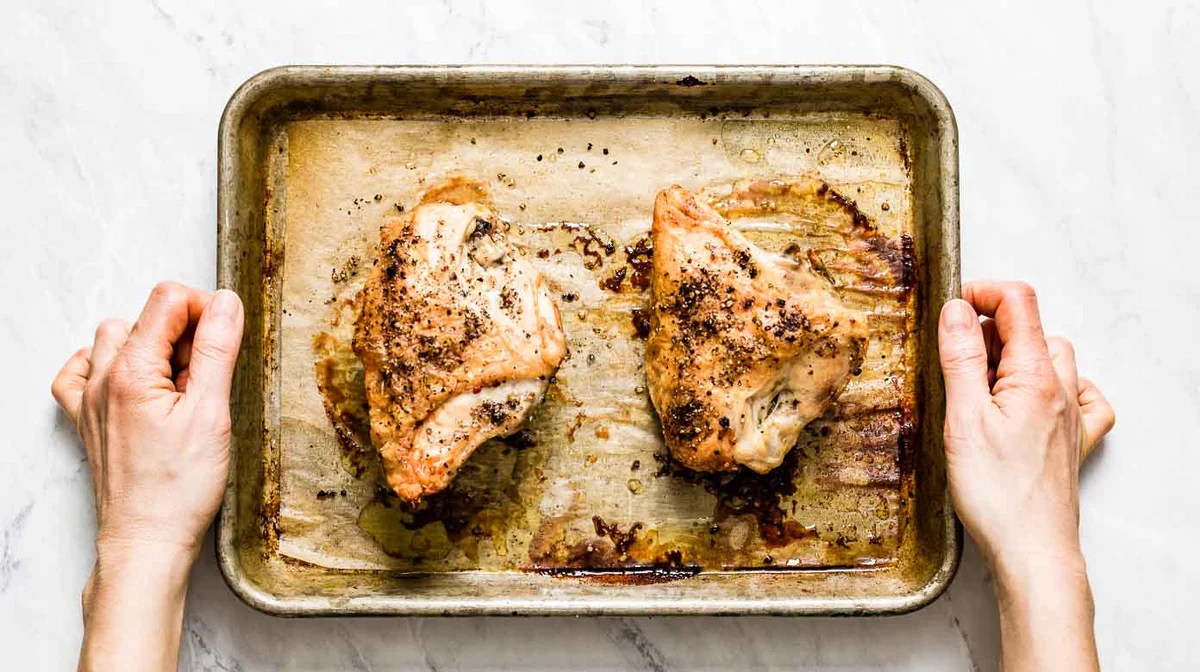
Bone-in, skin-on chicken breasts are roasted in a hot oven until juicy inside and golden on top. With just oil, salt and pepper, they make a straightforward main or a useful make-ahead ingredient for other meals.
Ingredients
- 2 (397–425 g each; 14–15 oz each)bone-in, skin-on chicken breasts
- 20 ml (4 teaspoons)vegetable oil, avocado oil or olive oil
- 1 teaspoonkosher salt
- ½ teaspoonfreshly ground black pepper
Instructions
- 1
Preheat the oven
Heat the oven to 218°C (425°F).
- 2
Dry and season
Pat the chicken breasts dry with paper towels. Rub oil over the whole surface, including the back, then season both sides with salt and pepper.
- 3
Roast the chicken
Set the breasts skin-side up on a baking sheet lined with parchment. Roast for 35–45 minutes, until the internal temperature reaches 74°C (165°F). Take the chicken out, cover loosely with foil and leave to rest for 5–10 minutes.
- 4
Slice and serve
Serve the breasts whole, or slice, dice or shred them to the size you want for another chicken dish.
What is baked bone-in chicken breast?
This American-style roast chicken uses split breasts, with the rib bone and skin left on during cooking. The bone-in cut is well suited to a simple oven roast, while the skin helps give the outside a savoury finish.
Here, a short list of seasonings lets the chicken remain versatile. Serve it as a main or prepare it for salads, soups and chilis.
Nutrition and macros by portion
The nutrition label shows one serving as written: 328 calories, 48g protein, 1g carbs, 14g fat.
| Portion | Adjustment | kcal | Protein | Carbs | Fat |
|---|---|---|---|---|---|
| Lighter | Use less oil | 230 kcal | 34g | 1g | 10g |
| This serving | As written | 328 kcal | 48g | 1g | 14g |
| Hungry | Serve a larger breast | 492 kcal | 72g | 2g | 21g |
The chicken provides most of the protein, while the oil contributes most of the fat; the carbs are minimal. Pair a portion with vegetables and a starchy side such as potatoes or rice for a more complete plate.
Why keep the bone and skin?
Bone-in breasts are thicker than boneless cuts, so cooking time can vary with their size. Keeping the bone in also means the meat is best judged by temperature rather than by the clock alone.
Skin side up: roasting with the skin facing upwards gives it direct exposure to the oven’s heat.
Drying and seasoning
Dry surface: patting the chicken dry helps the oil coat it evenly and avoids leaving excess moisture on the skin.
Even coverage: rub oil over the front and back, then season both sides so the flavour is not limited to the top.
How to check doneness
Temperature: check the thickest part of the breast with a thermometer, avoiding the bone. The recipe’s target is 74°C (165°F).
Resting: leave the cooked chicken loosely covered for 5–10 minutes before cutting. This also gives you time to prepare serving dishes or accompaniments.
Serving ideas
Serve the breasts whole with potatoes or vegetables for a simple dinner. Slice them for a salad, or dice or shred the meat for soups and chilis.
For a meal-prep batch, let the chicken cool before portioning it for later dishes.
Recipe notes & tips
- Use a thermometer to check the thickest section without touching the bone.
- Pat the skin and the underside dry before adding the oil.
- Arrange the breasts skin-side up on the lined baking sheet.
- Begin checking the temperature towards the earlier end of the 35–45-minute roasting range.
- Rest the chicken for 5–10 minutes before slicing or shredding.
Variations
- Change the oil: Use avocado oil or olive oil in place of vegetable oil.
- Add herbs: Season with dried herbs alongside the salt and pepper.
- Add garlic: Rub a little garlic into the oil before coating the chicken.
- Make it spicy: Add a pinch of chilli flakes with the black pepper.
- Use the leftovers: Shred the cooled chicken for soups, chilis or salads.
Common mistakes to avoid
- Skipping the drying: Pat the chicken dry first so the oil coats it evenly.
- Seasoning only the top: Rub on the oil and season both sides, including the back.
- Guessing doneness: Check the thickest part with a thermometer and aim for 74°C (165°F).
- Cutting straight away: Rest the chicken loosely covered for 5–10 minutes before slicing.
- Over-roasting: Start checking near 35 minutes, as breast size can affect the cooking time.
How to store
Refrigerate cooked chicken in a covered container within 2 hours and use within 3–4 days. Reheat portions until steaming hot, or use the chilled chicken in salads.
Frequently asked questions
Can I use boneless chicken breasts?
This method is written for bone-in, skin-on breasts, so boneless breasts will cook more quickly. Check their temperature early and use 74°C (165°F) as the recipe’s doneness target.
How long should I roast the chicken?
Roast for 35–45 minutes at 218°C (425°F), then confirm the thickest part reaches 74°C (165°F). The exact time depends on the size of the breasts.
Should I cover the chicken while it roasts?
No; place it skin-side up on the baking sheet to roast. Cover it loosely with foil only after removing it from the oven, while it rests.
Can I make this ahead for meal prep?
Yes. Roast the chicken, let it cool and refrigerate it in a covered container. Slice, dice or shred it when you are ready to use it.
What can I do with leftover chicken?
Slice or shred it for salads, soups and chilis, as suggested in the recipe. Refrigerate leftovers promptly and use them within 3–4 days.
Cook it from the original
This recipe comes from foolproofliving.com. Their page has the author’s own photos, notes and tips — the best place to cook it from.
Open the recipe on foolproofliving.com