
Thai Chicken Curry
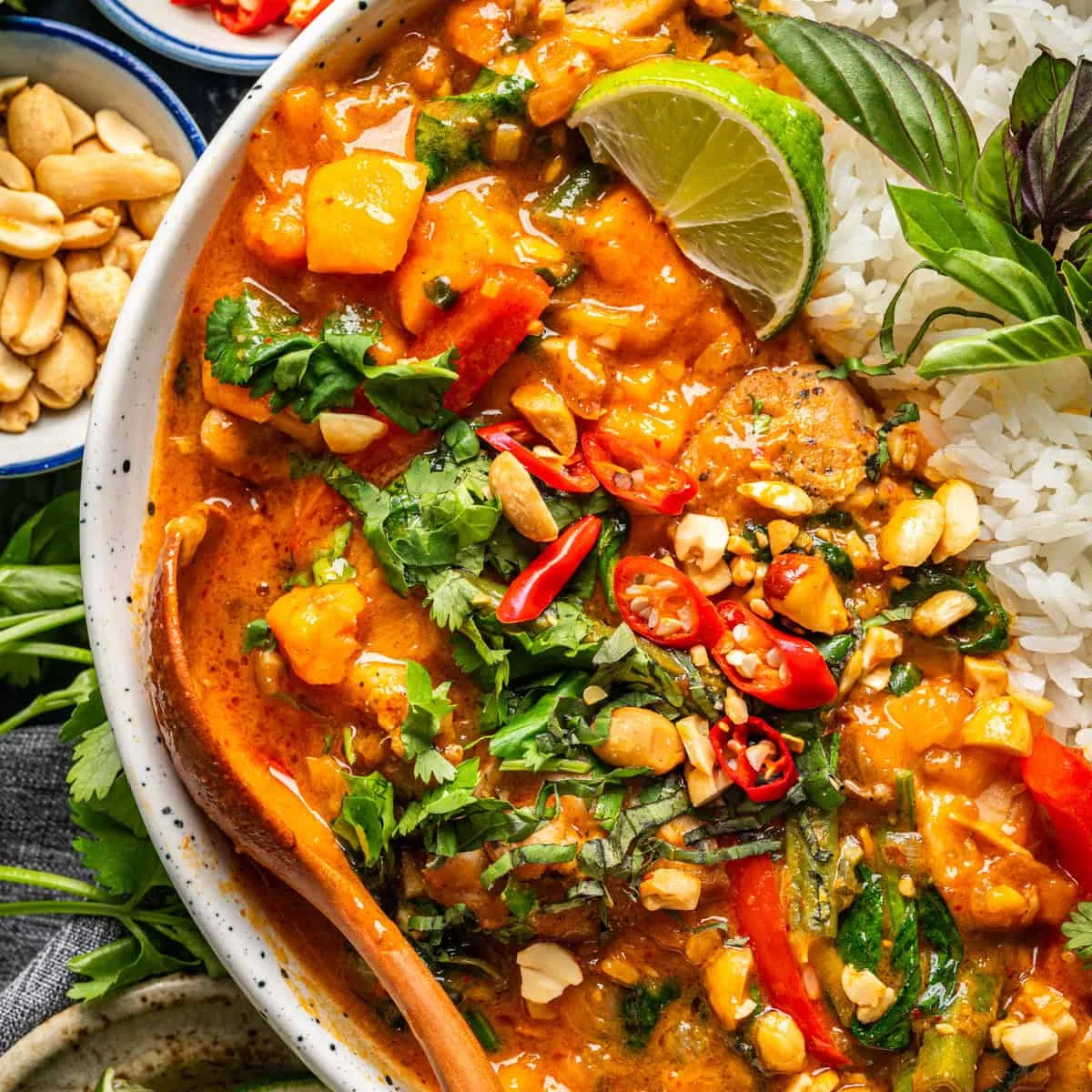
This Thai-inspired chicken curry pairs tender chicken thighs and colourful vegetables with a creamy coconut and red curry sauce. It comes together on the hob in 45 minutes, making it a practical dinner to serve with jasmine rice.
Ingredients
- 680 gboneless, skinless chicken thighs, cut into bite-sized pieces
- to tastesalt and black pepper
- 60 ml, dividedneutral oil
- 1 smallyellow onion, finely diced
- 5 clovesgarlic, minced
- 2.5 cmfresh ginger, peeled and finely minced
- 2 tbsp, up to 3 tbspThai red curry paste
- 1 smallsweet potato, peeled and cut into 1.25 cm cubes
- 400 gfull-fat coconut milk
- 180 mlchicken stock or water
- 1 mediumred bell pepper, thinly sliced
- 113 ggreen beans, trimmed and halved
- 1 tbspfish sauce
- 1 tbspbrown sugar or palm sugar
- 1 mediumlime
- 85 gbaby spinach, packed
- 3 cups (about 710 ml)cooked jasmine rice
- to tasteroasted, salted peanuts, chopped
- to tasteThai basil leaves
- to tastecoriander
- to tastelime wedges
- to tasteThai chillies, sliced
Instructions
- 1
Season the chicken
Put the chicken pieces in a medium bowl and season them with salt and pepper.
- 2
Sear the chicken
Heat 2 tablespoons of the oil in a large, deep-sided frying pan or wok over medium-high heat. Add the chicken and sear until golden on the outside; it does not need to be cooked through. Transfer it to a plate.
- 3
Soften the onion
Add the remaining 2 tablespoons of oil to the pan and lower the heat to medium. Cook the onion for 2–3 minutes, until softened.
- 4
Add aromatics
Stir in the garlic and ginger and cook for about 1 minute, until fragrant.
- 5
Cook the curry paste
Mix in the Thai red curry paste and cook for 1 minute, until it darkens slightly and smells aromatic.
- 6
Simmer the sweet potato
Add the sweet potato, coconut milk and chicken stock. Stir, scraping up any browned bits from the pan, then bring to a gentle boil. Lower the heat and simmer uncovered for about 6 minutes, until the sweet potato is just tender.
- 7
Cook chicken and vegetables
Return the seared chicken to the pan and add the red pepper and green beans. Simmer uncovered for 5–7 minutes, until the chicken is cooked through and the vegetables are crisp-tender.
- 8
Balance the sauce
Stir in the fish sauce, brown sugar and juice of the lime. Taste and adjust with more fish sauce for saltiness, sugar for balance or lime juice for brightness.
- 9
Wilt the spinach
Turn off the heat and fold in the baby spinach until it wilts.
- 10
Serve the curry
Spoon the curry over hot jasmine rice. Finish with chopped peanuts, Thai basil, coriander, lime wedges and sliced Thai chillies.
What is Thai chicken curry?
Thai curries are known for fragrant curry pastes simmered with ingredients such as coconut milk, herbs and vegetables. This version takes that approach and makes a hearty one-pan meal with chicken thighs, sweet potato and greens.
Red curry paste brings the main aromatic seasoning, while lime, fish sauce and sugar are stirred in near the end to balance the sauce. Jasmine rice makes a natural base for serving.
Nutrition and macros by portion
The nutrition label shows one serving as written: 410 calories, 25g protein, 15g carbs, 29g fat.
| Portion | Adjustment | kcal | Protein | Carbs | Fat |
|---|---|---|---|---|---|
| Lighter | Use less coconut milk | 287 kcal | 18g | 11g | 20g |
| This serving | As written | 410 kcal | 25g | 15g | 29g |
| Hungry | Add extra jasmine rice | 615 kcal | 38g | 23g | 44g |
The jasmine rice and sweet potato provide most of the carbohydrates, while coconut milk and oil contribute much of the fat. Chicken thighs supply the protein, with smaller amounts from the vegetables. Serve with a generous helping of the curry's vegetables and adjust the rice portion to suit your plate.
Build flavour in stages
Chicken: Searing the pieces first gives their surface colour and leaves browned bits in the pan to enrich the sauce. They finish cooking later in the coconut milk mixture.
Aromatics: Let the onion soften before adding the garlic and ginger, then briefly cook the curry paste. This gives each ingredient time to release its flavour without letting the garlic scorch.
Choose and use the curry paste
Curry paste: Start with 2 tablespoons for a milder result, or use up to 3 tablespoons for a more pronounced curry flavour. Paste brands vary in strength, so taste the sauce before adding more.
Coconut milk: Full-fat coconut milk gives the sauce a rich, creamy body. Stir it in with the stock and scrape the bottom of the pan to incorporate the seared-on flavour.
Get the timing right
Sweet potato: Cut it into even 1.25 cm cubes so the pieces cook at a similar rate. Give them the first 6-minute simmer before adding the other vegetables.
Chicken and vegetables: The chicken goes back into the pan with the pepper and beans for the final 5–7 minutes. Check that the thickest pieces are cooked through while the vegetables still have a little bite.
Finish with a balanced sauce
Seasoning: Fish sauce adds savoury saltiness, sugar rounds out the curry paste and lime juice lifts the rich coconut sauce. Add these in stages and taste as you go.
Spinach: Fold it in after turning off the heat. The residual warmth is enough to wilt it without cooking it down too far.
Serve it with rice and toppings
Rice: Spoon the curry over hot jasmine rice so it can catch the creamy sauce. Keep the rice separate until serving to retain its texture.
Garnishes: Peanuts add crunch, while Thai basil, coriander, lime and sliced Thai chillies provide fresh, aromatic or sharp contrasts. Offer the chilli on the side if diners prefer to choose their own heat level.
Recipe notes & tips
- Pat the chicken dry before seasoning to help it sear rather than steam.
- Cut the sweet potato into evenly sized cubes so they become tender together.
- Keep the curry at a gentle simmer after adding the coconut milk.
- Taste the sauce before serving and adjust the fish sauce, sugar and lime in small amounts.
- Add the spinach only after switching off the heat so it just wilts.
- Serve sliced Thai chillies separately for easier control of the heat.
Variations
- Use chicken breast: Cut it into bite-sized pieces and avoid overcooking it during the final simmer.
- Swap the vegetables: Use another quick-cooking vegetable in place of the pepper or green beans.
- Make it hotter: Add more red curry paste or serve with extra sliced Thai chillies.
- Add more herbs: Finish with extra Thai basil or coriander for a fresher garnish.
- Use water: Replace the chicken stock with water if that is what you have to hand.
Common mistakes to avoid
- Crowding the pan: The chicken may steam instead of browning; sear it in batches if needed.
- Cutting uneven cubes: Larger sweet potato pieces take longer to soften; keep the pieces close to 1.25 cm.
- Boiling hard: A vigorous boil can make the sauce reduce too quickly; keep it at a gentle simmer.
- Adding all the seasoning at once: Curry pastes vary in intensity; taste and adjust the fish sauce, sugar and lime gradually.
- Cooking the spinach too long: It can lose its fresh texture; stir it in off the heat.
How to store
Refrigerate leftover curry in an airtight container for up to 3 days. Store the rice separately where possible, and reheat both until steaming hot, adding a splash of water if the curry has thickened.
Frequently asked questions
Can I make this curry ahead?
You can cook the curry ahead and refrigerate it, then reheat gently until steaming hot. The vegetables may soften a little more after reheating.
How can I tell when the chicken is cooked?
Cut into the thickest piece: it should be cooked through with no pink centre. Follow the recipe's 5–7-minute simmer, allowing a little longer if your pieces are large.
Can I use light coconut milk?
Yes, but the sauce will be less rich and may be thinner. Simmer gently and check the consistency before serving.
What can I use instead of chicken stock?
Water is listed as an alternative. The fish sauce and curry paste will still add savoury flavour to the sauce.
How spicy is this curry?
The heat depends on the curry paste and how much you use. Start with 2 tablespoons, then add more to taste; you can leave the sliced chillies off the finished dish.
Can I freeze the leftovers?
The curry can be frozen in an airtight container, although the vegetables may soften when thawed. Thaw it in the fridge and reheat until steaming hot.
Cook it from the original
This recipe comes from juliasalbum.com. Their page has the author’s own photos, notes and tips — the best place to cook it from.
Open the recipe on juliasalbum.com