
Polish Cheesecake (Sernik)
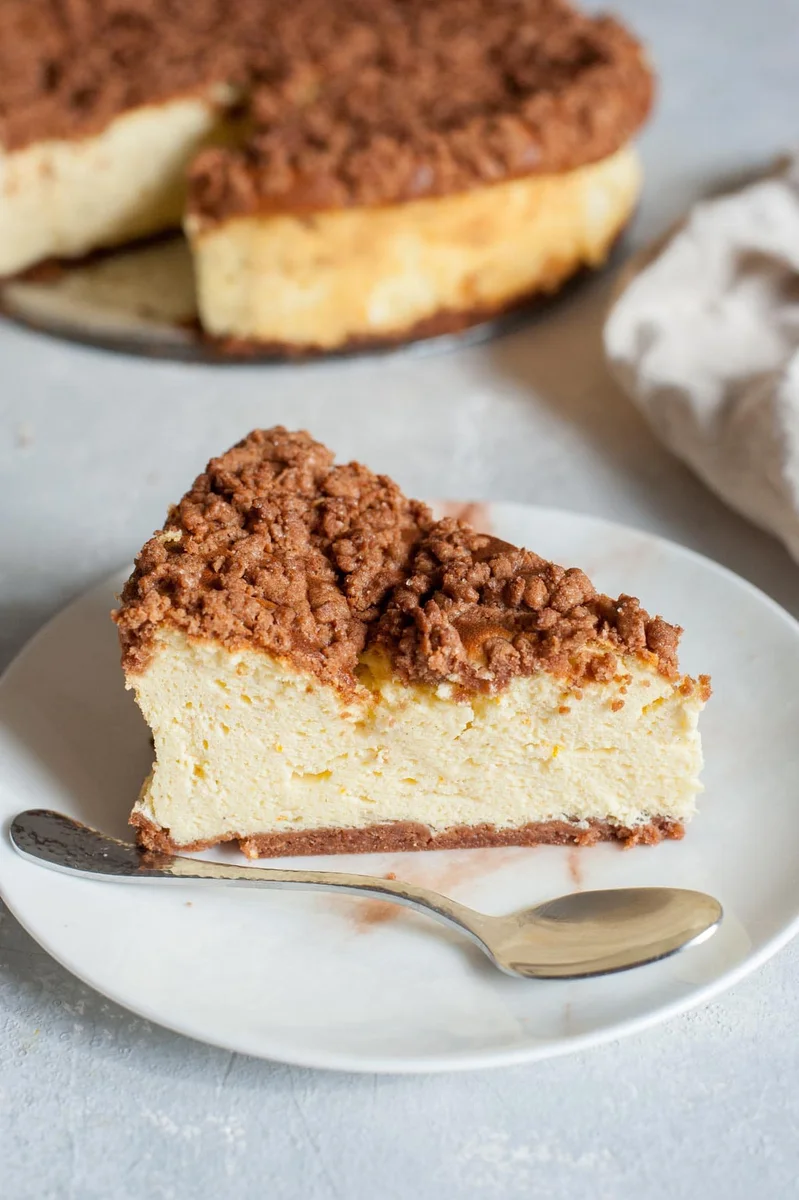
Sernik is a Polish cheesecake with a cocoa pastry base, a light, rich twaróg filling and grated pastry on top. This family-style version is a celebratory bake that rewards a slow bake and a long, cool rest.
Ingredients
- 280 g (2 1/4 cups)plain flour, spooned and levelled
- 15 g (3 tablespoons)cocoa powder
- 120 g (1 cup)icing sugar
- 1 teaspoonbaking powder
- A large pinchsalt
- 175 g (1 1/2 sticks)cold butter
- 1egg yolk
- 2 tablespoonssour cream
- 1 teaspoonvanilla extract
- 1 kg (2.2 lb)twaróg (farmer's cheese)
- 6 largeeggs
- 250 g (1 1/4 cups)granulated sugar
- 28 g (3 tablespoons)cornflour
- 1 tablespoonfinely grated orange zest
- 1 tablespoonvanilla extract
- 200 g (2 sticks minus 2 tablespoons; 7 oz)soft butter
Instructions
- 1
Mix the pastry
Stir together the flour, cocoa powder, icing sugar, baking powder and salt. Add the egg yolk, sour cream, vanilla extract and cold butter cut into small cubes. Rub everything together with your fingertips, or mix with a stand mixer fitted with a paddle, until it forms a smooth dough; it may look crumbly at first.
- 2
Chill the pastry
Divide the dough into two portions, making one about 3 tablespoons larger than the other. Flatten each into a disc, wrap in cling film and refrigerate for 45 minutes.
- 3
Prepare the tin
Heat the oven to 175°C (350°F, Gas Mark 4), without the fan. Grease a 26 cm (10-inch) springform tin generously with butter, including the sides, and line its base with baking parchment.
- 4
Bake the base
Put the smaller pastry disc in the freezer. Break or cut the larger disc into pieces, flatten them and press them over the base of the tin. Prick the pastry several times with a fork and bake for 20 minutes.
- 5
Smooth the cheese
While the base bakes, process the twaróg in a food processor until smooth; a few small lumps are fine. Alternatively, pass it twice through a meat grinder fitted with a plate with small holes.
- 6
Separate the eggs
Separate the eggs, taking care that no yolk gets into the whites, or they may not whip properly.
- 7
Mix the yolks
Beat the egg yolks with the soft butter, half the sugar and the orange zest until combined, using an electric mixer or a stand mixer with a whisk attachment. Add the cheese and vanilla extract, then beat until combined.
- 8
Whip the whites
In a separate, very large, clean bowl, beat the egg whites with a clean whisk attachment until soft peaks form. Gradually add the remaining sugar and beat until stiff, then beat in the cornflour until combined.
- 9
Fold the mixtures
Fold about a quarter of the whipped egg whites into the cheese mixture with a spatula. Add the cheese mixture to the remaining whites and gently fold until combined, with no visible streaks of egg white.
- 10
Fill and top
Pour the filling onto the warm baked base; it will come close to the rim, but should not overflow. Take the smaller pastry disc from the freezer and grate it over the filling using the large holes of a box grater.
- 11
Bake the cheesecake
Bake for 1 hour to 1 hour 10 minutes. Turn off the oven, open the door slightly and leave the cheesecake inside for 10 minutes, then transfer it to a cooling rack. The centre should be slightly jiggly but set; the cheesecake will rise, crack in the middle and then fall as it cools.
- 12
Cool before slicing
Leave the cheesecake to cool completely in its tin on the rack for at least 3 hours, and preferably overnight for better texture and flavour. Do not cut it while warm.
What is sernik?
Sernik is the Polish name for cheesecake, traditionally made with twaróg, a fresh curd cheese. This version pairs the cheese filling with cocoa pastry beneath and a grated pastry topping.
The contrast between the gently tangy cheese and chocolatey crust makes it feel rich without relying on a biscuit base. Whipped egg whites help give the filling its characteristic lightness.
Nutrition and macros by portion
The nutrition label shows one serving as written: 477 calories, 0g protein, 0g carbs, 0g fat.
| Portion | Adjustment | kcal | Protein | Carbs | Fat |
|---|---|---|---|---|---|
| Lighter | Smaller slice, fresh berries | 334 kcal | 0g | 0g | 0g |
| This serving | As written | 477 kcal | 0g | 0g | 0g |
| Hungry | Larger slice | 716 kcal | 0g | 0g | 0g |
The twaróg and eggs provide most of the protein, while the pastry flour and sugars contribute much of the carbohydrate. Butter in both the crust and filling is the main source of fat; serve a slice with fresh fruit to add freshness and balance the plate.
Choosing the cheese
Twaróg: this fresh farmer's cheese is the defining ingredient and gives the cake its familiar flavour and texture. Process it until mostly smooth, or grind it twice, as directed.
Texture: a few small cheese lumps are acceptable, but breaking down the larger curds helps the filling bake more evenly.
Making the cocoa pastry
Cold butter: cutting it into small cubes makes it easier to rub into the dry ingredients. The dough may seem crumbly at first; keep working it until it comes together.
Chilling: resting both pastry discs for 45 minutes firms the dough and makes it easier to press the base into the tin and grate the topping.
Folding in the egg whites
Clean bowl: even a trace of yolk can make the whites difficult to whip, so separate the eggs carefully and use a clean bowl and whisk.
Gentle folds: first loosen the cheese mixture with about a quarter of the whites, then fold it into the rest. Stop once no white streaks remain so you keep as much air in the batter as possible.
Judging when it is done
Bake: allow 1 hour to 1 hour 10 minutes at 175°C, then leave the cake in the switched-off oven with the door slightly open for 10 minutes.
Centre: a slight jiggle in the middle is expected when the cheesecake comes out; it should be set rather than liquid. Cracking and sinking as it cools are normal for this style.
Why the cooling time matters
Rest: cool the cheesecake in its tin on a rack for at least 3 hours. Waiting until it is completely cool helps it hold together when sliced.
Overnight: if time allows, leave it to cool overnight for a more settled texture and flavour. The stated baking time does not include this longer rest.
Serving the cheesecake
Slices: cut the cake only once it is fully cool, using a clean knife for neater portions. Its cocoa pastry and orange-scented cheese filling need little else.
To serve: offer slices with tea or coffee, or add fresh berries for a bright contrast to the rich filling.
Recipe notes & tips
- Cut the cold butter into small cubes before adding it to the pastry mixture.
- Keep the smaller pastry disc in the freezer until you are ready to grate it over the filling.
- Use a large, clean bowl for whipping the egg whites so there is enough room for them to expand.
- Fold the whites in gently and stop once the mixture is evenly combined.
- Allow the cheesecake to cool fully before cutting for cleaner slices.
Variations
- Citrus twist: replace the orange zest with finely grated lemon zest.
- Dutch cocoa: use Dutch-processed cocoa for a deep, mellow cocoa flavour.
- Berry side: serve each slice with fresh berries for a tart contrast.
- Vanilla aroma: use the specified vanilla in both pastry and filling for a rounded flavour.
- Tea-time serving: offer small slices alongside black tea or coffee.
Common mistakes to avoid
- Warm butter in the pastry: use cold butter cut into small cubes so the dough comes together as directed.
- Yolk in the whites: separate the eggs carefully, as even a little yolk can hinder whipping.
- Overmixing the whites: fold gently and stop once the white streaks disappear to retain air.
- Expecting a perfectly flat top: the cheesecake may rise, crack and sink as it cools.
- Cutting while warm: wait until it has cooled completely, at least 3 hours, before slicing.
How to store
Keep the cooled cheesecake covered in the refrigerator and eat within 3 days. Serve chilled or let a slice stand briefly at room temperature; the recipe does not specify reheating.
Frequently asked questions
Can I make this without a food processor?
Yes. Pass the twaróg twice through a meat grinder with a plate with small holes, as the method suggests.
Is it normal for the cheesecake to crack?
Yes. It is expected to rise and crack in the middle, then fall as it cools.
How do I know when the cheesecake is baked?
After 1 hour to 1 hour 10 minutes, the centre should be slightly jiggly but set. It will continue settling as it rests in the switched-off oven and cools.
Why do the egg whites need a clean bowl?
A clean bowl and whisk help the whites whip properly. Make sure none of the yolk gets into them when separating the eggs.
Can I cut it after the 10-minute oven rest?
No. That rest is followed by at least 3 hours of cooling in the tin, and overnight is preferred for texture and flavour.
What can I serve with sernik?
Serve slices with tea or coffee, or add fresh berries for a fresh contrast to the rich cheese filling.
Cook it from the original
This recipe comes from everyday-delicious.com. Their page has the author’s own photos, notes and tips — the best place to cook it from.
Open the recipe on everyday-delicious.com