
Plain Pancakes ( Without Baking Powder )
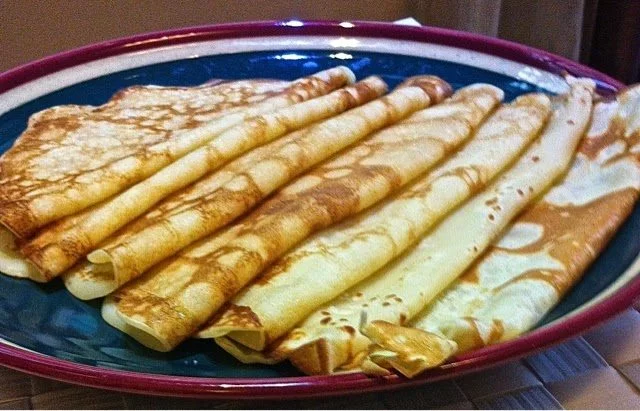
These thin, lightly browned pancakes are made without baking powder, so they are less fluffy than leavened versions. They make a simple breakfast, served hot with honey, jam or lemon and sugar.
Ingredients
- 200 gsieved plain flour
- 400 mlwater
- 60 gmilk powder
- 20 gbutter or margarine, melted
- 100 gsugar
- 2 mediumeggs, whisked with the water
- 1/4 teaspoonsalt
Instructions
- 1
Mix dry ingredients
In a large bowl, combine the flour, milk powder, salt and sugar.
- 2
Make the batter
Gradually whisk in the egg mixture until the batter is just smooth.
- 3
Add the butter
Stir the melted butter into the batter.
- 4
Heat the pan
Lightly grease a shallow frying pan and heat it until hot.
- 5
Add the batter
Pour in enough batter to make a thin layer across the bottom of the pan.
- 6
Cook both sides
Cook for a few seconds, until lightly browned, then turn the pancake and cook the other side.
- 7
Fold the pancakes
When cooked, transfer each pancake to a plate and fold it.
- 8
Keep them warm
If you are not serving the pancakes straight away, keep them warm in an oven at 100°C.
- 9
Serve hot
Serve with jam or honey. For a sweeter finish, sprinkle with caster sugar and add freshly squeezed lemon juice.
What are pancakes without baking powder?
Pancakes are thin cakes cooked in a frying pan, with versions found in food traditions around the world. This recipe skips baking powder and bicarbonate of soda, so the pancakes stay relatively flat rather than rising into a fluffy stack.
Milk powder, eggs and melted butter enrich a simple flour-and-water batter. Keeping the batter smooth and spreading it thinly helps the pancakes cook quickly and evenly.
Nutrition and macros by portion
The nutrition label shows one serving as written: 425 calories, 12g protein, 71g carbs, 11g fat.
| Portion | Adjustment | kcal | Protein | Carbs | Fat |
|---|---|---|---|---|---|
| Lighter | Use less sugar and butter | 298 kcal | 8g | 50g | 8g |
| This serving | As written | 425 kcal | 12g | 71g | 11g |
| Hungry | Serve a larger portion | 638 kcal | 18g | 107g | 17g |
The flour and sugar provide most of the carbohydrates, while butter and egg yolks contribute much of the fat; eggs and milk powder supply most of the protein. Pair a serving with fruit and a protein-rich accompaniment, or choose a modest amount of honey or jam, to make a more balanced breakfast.
Why use milk powder?
Milk powder: it adds dairy flavour and body without replacing the water in the recipe. Whisk it into the other dry ingredients so it is distributed through the batter.
Eggs: whisking them with the water first makes it easier to add the liquid gradually and helps avoid dry pockets of flour.
Getting a smooth batter
Gradual mixing: pour the egg-and-water mixture into the flour mixture in stages while whisking. Stop once the batter is smooth; prolonged whisking is unnecessary.
Butter: mix it in after the batter comes together, as directed. Melted butter blends in readily and adds richness.
Cooking thin pancakes
Hot pan: let the lightly greased pan heat before adding batter, so the pancake begins cooking as soon as it hits the surface. Use just enough batter to coat the base in a thin layer.
Turning point: the first side needs only a few seconds according to the method. Look for light browning, then turn carefully and cook the other side.
Keeping the texture tender
Thin layer: these pancakes are not intended to puff up, so a shallow coating of batter gives the right style. If you pour in too much, the centre will take longer to cook.
Just cooked: remove each pancake once both sides are cooked and lightly coloured. Folding them on a plate makes them easy to serve.
Serving and timing
Serve the pancakes hot with jam or honey, or use caster sugar and freshly squeezed lemon juice for a sharp-sweet topping. Butter can also be served alongside, as suggested in the recipe description.
Work in batches and keep finished pancakes in a 100°C oven if they cannot be served immediately. The recipe does not specify a total cooking time, so use the visual cues of a thin, lightly browned pancake.
Recipe notes & tips
- Sieve the flour before measuring it into the bowl.
- Whisk the eggs and water together before adding them to the dry ingredients.
- Add the liquid gradually to make it easier to whisk out lumps.
- Grease the pan lightly so the pancakes can turn without becoming oily.
- Keep the cooked pancakes warm at 100°C if serving them in batches.
- Add lemon juice just before serving so its fresh flavour remains prominent.
Variations
- Honey topping: drizzle honey over the hot pancakes just before serving.
- Jam filling: spread a little jam over each pancake before folding.
- Lemon and sugar: finish with caster sugar and freshly squeezed lemon juice.
- Margarine option: use melted margarine instead of butter as listed.
- Fruit side: serve with sliced fresh fruit for a fruity accompaniment.
Common mistakes to avoid
- Adding the liquid all at once: pour it in gradually while whisking to help keep the batter smooth.
- Overmixing: stop whisking as soon as the batter is smooth.
- Using a cold pan: heat the lightly greased pan before adding the batter.
- Making the layer too thick: use only enough batter to thinly cover the pan base.
- Turning too early: wait until the underside is lightly browned before flipping.
- Leaving pancakes uncovered: keep them warm in a 100°C oven if they are not being served straight away.
How to store
Cool leftover pancakes promptly and refrigerate them in a covered container for up to 2 days. Reheat in a frying pan over low heat or in a microwave until warmed through.
Frequently asked questions
Will these pancakes be fluffy?
No. They contain no baking powder or bicarbonate of soda, so they are thinner and less fluffy than leavened pancakes.
How do I avoid lumps in the batter?
Whisk the eggs with the water first, then add the mixture gradually while whisking the dry ingredients. Stop when the batter is just smooth.
How much batter should I put in the pan?
Use enough to form a thin layer that covers the bottom of the pan. A thick layer takes longer to cook through.
Can I use margarine instead of butter?
Yes. The ingredient list allows melted margarine as an alternative to melted butter.
What can I serve with these pancakes?
The recipe suggests jam or honey, or caster sugar with freshly squeezed lemon juice. The description also mentions butter.
Can I keep the pancakes warm while I cook the rest?
Yes. Place the cooked pancakes in an oven set to 100°C until you are ready to serve them.
Cook it from the original
This recipe comes from huangkitchen.com. Their page has the author’s own photos, notes and tips — the best place to cook it from.
Open the recipe on huangkitchen.com