
Karniyarik Turkish Stuffed Eggplant Recipe
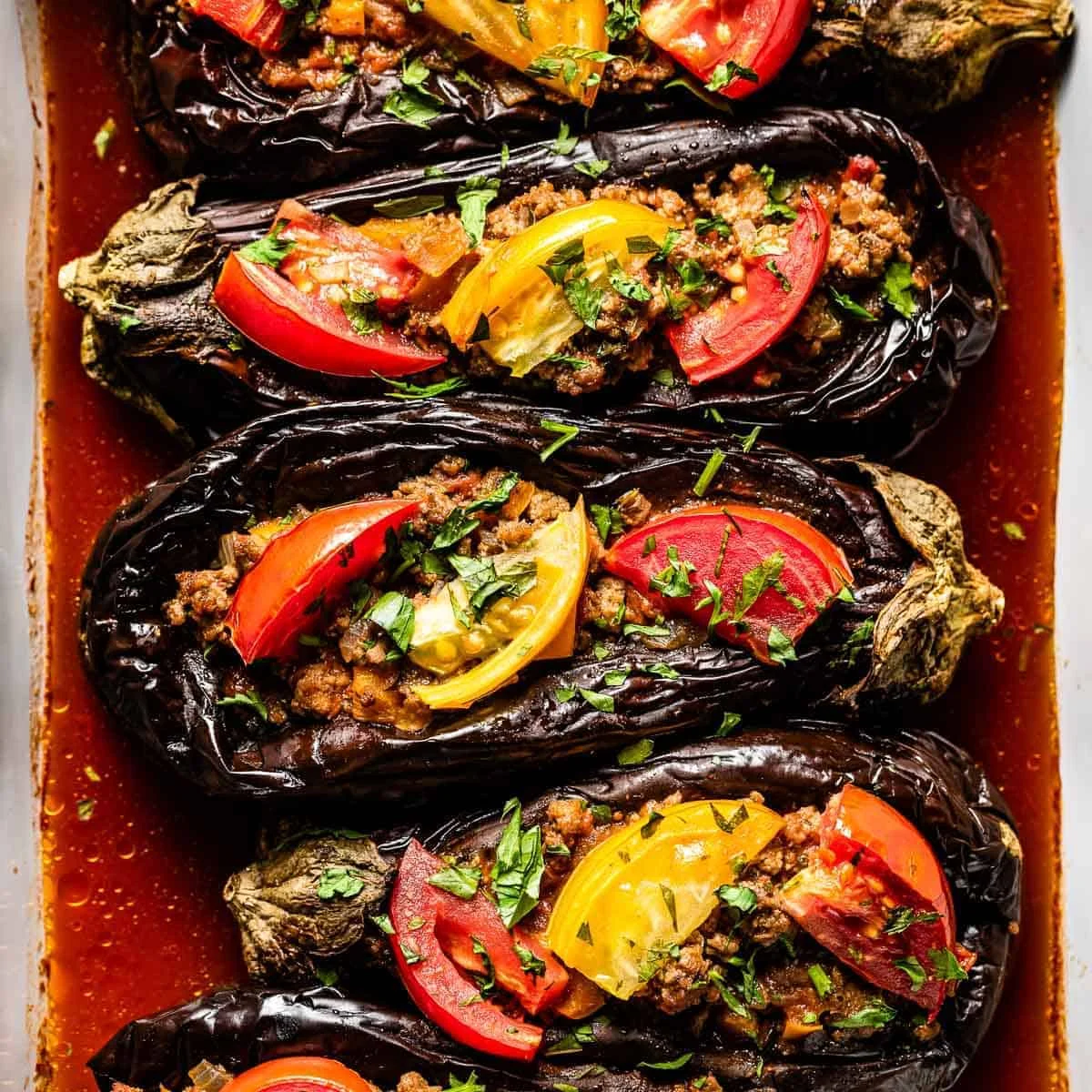
Karniyarik is Turkish roasted aubergine filled with a savoury beef, tomato and pepper mixture, then baked until tender. It is a comforting way to make aubergines the centrepiece of a meal, with the filling and tomato sauce doing the work in one casserole dish.
Ingredients
- 5 medium, preferably similar in sizeaubergines
- 15 ml (1 tablespoon)olive oil
- 1 medium, choppedonion
- 1 teaspoonground cumin
- 1 medium, deseeded and choppedbell pepper
- 225 g (½ lb), 80/20ground beef
- 4 cloves, thinly choppedgarlic
- 150 g (1 cup), plus extra for garnishdiced tomatoes
- ½ teaspoon, plus extra to season the aubergine centreskosher salt
- ¼ teaspoonblack pepper
- 15 g (½ cup), chopped, plus extra for garnishItalian parsley
- 240 ml (1 cup)hot water
- 15 ml (1 tablespoon)tomato paste
Instructions
- 1
Prepare the oven
Heat the oven to 200°C (400°F) and line a baking sheet with aluminium foil.
- 2
Pierce the aubergines
Prick each aubergine 7–10 times with a fork.
- 3
Roast the aubergines
Set them on the lined baking sheet and roast for 50 minutes to 1 hour, turning once or twice so they cook evenly.
- 4
Cool and lower
Remove the aubergines from the oven and let them cool on the counter. Turn the oven down to 180°C (350°F).
- 5
Cook the filling
Meanwhile, heat the olive oil in a large frying pan over a medium heat. Add the onion, cumin, bell pepper and beef, and cook for 10–12 minutes, stirring often.
- 6
Add the garlic
Stir in the garlic and cook for 30 seconds.
- 7
Simmer the sauce
Add the diced tomatoes, ½ teaspoon salt and black pepper. Bring to the boil over a medium heat, then reduce to medium-low and simmer for 10–15 minutes, or until the beef is fully cooked. Taste and add more seasoning if needed.
- 8
Stir in parsley
Take the pan off the heat and stir in 1 cup of chopped parsley.
- 9
Mix tomato water
Stir the hot water and tomato paste together in a measuring jug.
- 10
Arrange the aubergines
Place the roasted aubergines in a large casserole dish; they can fit snugly.
- 11
Open and season
With a knife, gently cut a small opening along the belly of each aubergine. Lightly season the openings with ½ teaspoon salt in total.
- 12
Fill the aubergines
Spoon the beef mixture into each opening, letting it mound above the slit.
- 13
Add the tomato liquid
Spoon 2–3 tablespoons of the tomato-water mixture over each aubergine, then pour the remainder into the bottom of the casserole dish.
- 14
Add tomato garnish
Cut one large tomato, or two small tomatoes, into 6 thin slices and arrange a few slices on top of each aubergine.
- 15
Bake the dish
Cover the casserole with aluminium foil and bake for 15 minutes. Remove the foil and bake for a further 10 minutes.
- 16
Garnish and serve
Finish with chopped parsley and serve.
What is Karniyarik?
Karniyarik is a Turkish dish whose name is commonly translated as “split belly”, referring to the slit in the aubergine that holds its filling. It is associated with Ottoman cuisine and pairs soft roasted aubergine with a savoury minced-meat mixture.
This version roasts the aubergines before filling them, then bakes them again in tomato water. That two-stage approach makes the aubergines tender while keeping the beef filling moist.
Nutrition and macros by portion
The nutrition label shows one serving as written: 394 calories, 19g protein, 51g carbs, 17g fat.
| Portion | Adjustment | kcal | Protein | Carbs | Fat |
|---|---|---|---|---|---|
| Lighter | More aubergine, less beef | 276 kcal | 13g | 36g | 12g |
| This serving | As written | 394 kcal | 19g | 51g | 17g |
| Hungry | Add rice or flatbread | 591 kcal | 29g | 77g | 26g |
The beef supplies most of the protein and contributes fat, while the aubergines, tomatoes and other vegetables provide carbohydrates and fibre. Serve one aubergine with a generous salad or other vegetables, and add rice or bread according to how filling you want the meal to be.
Roasting the aubergines
Even sizes: choose aubergines that are similar in length and thickness so they roast at roughly the same rate. Pricking the skins gives steam a way to escape as they cook.
Tenderness: turn them once or twice during roasting and check that they have softened before removing them. Let them cool enough to handle before cutting the openings.
Building the filling
Beef and vegetables: cooking the onion, pepper and beef together gives the filling time to develop flavour before the tomatoes go in. Stir regularly so the beef cooks evenly.
Garlic and parsley: garlic needs only 30 seconds in the pan before the tomatoes are added. Stirring in the parsley off the heat keeps it fresh and bright.
Filling without tearing
Gentle opening: cut a small slit into the softened aubergine rather than slicing it all the way through. If the flesh is very soft, steady it with a spoon as you open the centre.
Mounded filling: spoon the mixture into the opening and let it sit slightly proud of the aubergine. A snug fit in the casserole dish helps the filled aubergines hold their shape.
Using the tomato liquid
Sauce base: mix the tomato paste with hot water until it is evenly combined, then spoon some over each aubergine. Pour the rest around them in the dish.
Top and bottom: the tomato slices garnish the filling, while the liquid below keeps the casserole moist as it bakes. Keep the foil on for the first 15 minutes, then uncover for the final 10.
When it is ready
The aubergines should be soft enough to spoon through, and the beef should already be fully cooked from its time in the frying pan. The final bake warms everything together and lets the tomato liquid bubble around the edges.
If the tops need more colour, rely on the uncovered final 10 minutes rather than extending the covered bake. Scatter the parsley garnish over the dish just before serving.
What to serve with it
Serve the aubergines with rice or flatbread to make use of the tomato sauce in the casserole. A simple salad or a dish of yoghurt can add a cool, fresh contrast.
The recipe makes five servings, with one stuffed aubergine as a natural guide to a portion. Spoon a little of the sauce from the dish over each serving.
Recipe notes & tips
- Choose aubergines of similar size so their roasting times are close.
- Turn the aubergines once or twice during roasting for more even softness.
- Let the roasted aubergines cool before making the slits, so they are easier to handle.
- Taste the beef mixture before filling and adjust its seasoning then.
- Keep the tomato liquid in the casserole dish rather than pouring it all over the tops.
- Use a snug-fitting casserole dish to help the filled aubergines stay upright.
Variations
- Lamb filling: replace the ground beef with ground lamb and cook it through in the same way.
- More herbs: add chopped fresh mint to the parsley for a different herbal note.
- Extra heat: add chilli flakes to the beef mixture while it cooks.
- Vegetarian filling: replace the beef with cooked lentils and simmer them with the vegetables and tomatoes.
- Pepper mix: use a mixture of bell pepper colours for a more varied look.
Common mistakes to avoid
- Skipping the fork pricks: pierce each aubergine 7–10 times so steam can escape while it roasts.
- Cutting too deeply: make a small opening in the softened aubergine so the sides remain intact.
- Adding garlic too early: cook it for only 30 seconds before adding the tomatoes to avoid overcooking it.
- Crowding the frying pan: use a large pan and stir often so the beef cooks evenly.
- Leaving out the casserole liquid: pour the remaining tomato-water mixture around the aubergines to keep the dish moist.
- Uncovering too soon: bake covered for the full first 15 minutes, then remove the foil for the final 10.
How to store
Refrigerate leftovers in a covered container for up to 3 days. Reheat in a covered ovenproof dish until hot throughout, or microwave individual portions, spooning over some of the tomato sauce to keep them moist.
Frequently asked questions
Can I make Karniyarik ahead?
You can roast the aubergines and prepare the beef filling ahead, then assemble and bake the dish closer to serving. Keep the cooked components covered in the fridge until you are ready to continue.
How do I know when the aubergines are roasted?
They should be noticeably softened after 50 minutes to 1 hour. Turn them once or twice during roasting, as the recipe directs.
Do I need to peel the aubergines?
No. Roast them with their skins on; the recipe uses the softened aubergines as the shells for the filling.
Can I use a different minced meat?
Ground lamb can be used in place of the beef. Cook it with the onion, cumin and pepper, and make sure it is fully cooked during the simmer.
Can I freeze leftovers?
The aubergines may become softer after freezing and thawing, but you can freeze them in an airtight container. Thaw in the fridge and reheat until hot throughout.
What should I serve with Karniyarik?
Rice or flatbread works well with the tomato sauce. A fresh salad or yoghurt makes a simple accompaniment.
Cook it from the original
This recipe comes from foolproofliving.com. Their page has the author’s own photos, notes and tips — the best place to cook it from.
Open the recipe on foolproofliving.com