
Moro – Dominican Red Beans and Rice
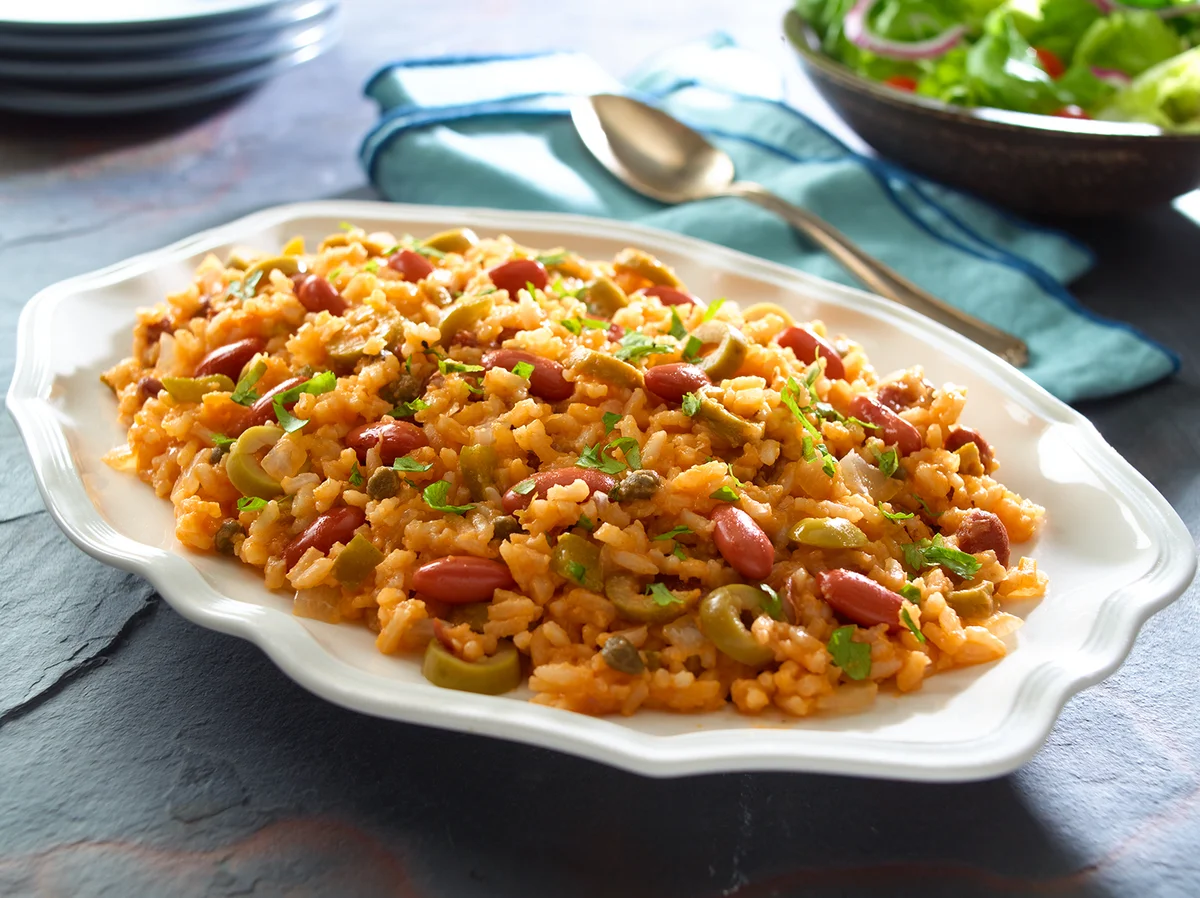
Moro de Habichuelas Rojas is a Dominican one-pot dish of red kidney beans and rice cooked with vegetables, olives, capers and tomato sauce. It makes a savoury, filling side to serve with seasoned meat or poultry, avocado and salad.
Ingredients
- 30 ml (2 tbsp)extra-virgin olive oil
- ½ small (about 60 ml chopped)yellow onion, finely chopped
- ¼ green pepper (about 60 ml chopped)green bell pepper, finely chopped
- 15 ml (1 tbsp)minced garlic
- 60 ml (¼ cup), optionalcapers
- 60 ml (¼ cup)pitted Manzanilla olives, sliced
- 5 ml (1 tsp)dried oregano leaves
- 30 ml (2 tbsp)tomato sauce
- 1 can, drained and rinsedred kidney beans
- 750 ml (3 cups)water
- 5 ml (1 tsp)salt
- 250 ml (1 cup)extra-long-grain rice
- 15 ml (1 tbsp)fresh coriander, chopped
Instructions
- 1
Soften the vegetables
Warm the oil in a medium, heavy-based pot over a medium heat. Add the onion, green pepper, garlic, capers if using, olives and oregano. Cook, stirring occasionally, for about 3 minutes, until the vegetables start to soften and smell fragrant. Stir in the tomato sauce.
- 2
Add beans and water
Stir in the kidney beans until evenly combined. Pour in 750 ml water and bring to the boil, then season with the salt.
- 3
Cook the rice
Stir in the rice. Reduce the heat to medium and simmer until the water has evaporated, about 5–7 minutes. Stir once from the bottom upwards, scraping the base of the pot. Turn the heat to low, cover and simmer until the rice is tender, about 15–20 minutes. Add the coriander and fluff with a fork before serving.
What is Moro de Habichuelas Rojas?
Moro is a Dominican preparation in which rice and beans cook together, taking on the flavour of the seasonings as they simmer. Red beans give this version its name and colour.
Here, onion, pepper, garlic, oregano, tomato, olives and capers create a savoury, tangy base. The rice cooks in the same pot, making the dish hearty enough to serve alongside a main or as part of a larger spread.
Nutrition and macros by portion
The nutrition label shows one serving as written: 350 calories, 13g protein, 65g carbs, 13g fat.
| Portion | Adjustment | kcal | Protein | Carbs | Fat |
|---|---|---|---|---|---|
| Lighter | Less oil, more salad | 245 kcal | 9g | 46g | 9g |
| This serving | As written | 350 kcal | 13g | 65g | 13g |
| Hungry | Serve a larger portion | 525 kcal | 20g | 98g | 20g |
Most of the carbohydrates come from the rice and kidney beans, while the oil and olives contribute much of the fat. The beans also provide protein, with smaller amounts from the rice. For a balanced plate, pair a serving with salad or vegetables and a portion of seasoned poultry or meat.
Build the flavour base
Aromatic vegetables: give the onion and pepper a few minutes in the oil so they begin to soften before the rice goes in. The garlic needs only this short cooking time to become fragrant without scorching.
Olives and capers: bring salty, briny notes to the pot. Capers are optional, so the dish still works if you leave them out.
Use the right rice and beans
Long-grain rice: is the specified choice here and should remain distinct when cooked. Rinse it only if that is part of your usual preparation, and drain it well before adding.
Kidney beans: drain and rinse them before use to remove the canning liquid. Stir gently once they are in the pot so they stay as intact as possible.
Manage the two-stage simmer
Before covering: let the water simmer uncovered until it has evaporated, about 5–7 minutes, then scrape and lift the rice once from the bottom. This step helps prevent rice from sticking to the pot.
Covered cooking: reduce the heat to low for the final 15–20 minutes. Keep the lid on so the rice cooks in the trapped steam, and check for tenderness at the end of the stated time.
Check the texture before serving
Tender grains: the rice should be cooked through but not mushy. If it is still firm after the covered simmer, keep it covered over low heat briefly and check again.
Fluffing: fold in the chopped coriander and lift the rice gently with a fork. Avoid vigorous stirring, which can break up the beans and make the rice clump.
Make it part of a meal
A traditional-style plate pairs moro with well-seasoned meat or poultry. Avocado and a fresh salad add cool, fresh contrasts to the rich, savoury rice.
You can also serve it as a substantial side alongside vegetables. Since the beans and rice are both filling, keep other portions in balance with what else is on the table.
Recipe notes & tips
- Use a heavy-based pot to help distribute the heat evenly during the simmer.
- Measure the water carefully so the rice has the intended amount of liquid.
- Keep the heat moderate while the water evaporates and low once the pot is covered.
- Scrape the bottom gently when you give the rice its single stir before covering.
- Let the rice rest covered briefly if it is tender but still looks a little moist, then fluff it with a fork.
Variations
- Skip the capers: leave them out for a milder, less briny flavour.
- Use vegetable stock: replace the water with unsalted vegetable stock for a deeper savoury base.
- Add more pepper: increase the green pepper for extra vegetable flavour.
- Serve with avocado: add sliced avocado at the table for a cool, creamy contrast.
- Add a fresh garnish: scatter extra chopped coriander over the finished rice.
Common mistakes to avoid
- Scorching the garlic: add it with the other vegetables and stir occasionally during the short cooking time.
- Skipping the uncovered simmer: allow the water to evaporate for 5–7 minutes before covering the pot.
- Stirring repeatedly: stir once from the bottom to the top before the covered simmer, then leave the rice undisturbed.
- Cooking on too high a heat: lower the heat to low for the covered stage so the base is less likely to catch.
- Fluffing too vigorously: lift the rice gently with a fork to keep the grains and beans intact.
How to store
Cool leftovers promptly and refrigerate in a covered container for up to 3 days. Reheat until steaming hot, adding a small splash of water if the rice has dried out; stir gently as it warms.
Frequently asked questions
Can I leave out the capers?
Yes. They are optional in the recipe, and the olives, oregano and tomato still season the dish.
Should I rinse the kidney beans?
Yes. Drain and rinse the canned beans before adding them to the pot.
How do I know when the rice is done?
After 15–20 minutes covered over low heat, check that the grains are tender. If they are still firm, cover the pot again and continue cooking briefly.
Why does the recipe cook the rice uncovered first?
The uncovered simmer allows the water to evaporate before the final steaming stage. Stir once from the bottom to the top when the water has gone.
What should I serve with moro?
The suggested accompaniments are well-seasoned meat or poultry, avocado and a fresh salad. It also works as a filling side with vegetables.
Can I make it without olives?
You can omit them, though the result will be less briny and savoury. Taste the finished dish before serving and adjust the seasoning if needed.
Cook it from the original
This recipe comes from goya.com. Their page has the author’s own photos, notes and tips — the best place to cook it from.
Open the recipe on goya.com