
Crackled Easter Eggs
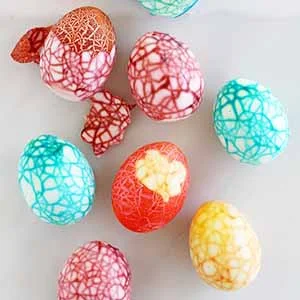
These crackled Easter eggs are hard-boiled, gently cracked and dyed so the colour reaches the shell’s fine lines. They make a simple, colourful addition to an Easter table, with most of the work done while the eggs chill in the dye.
Ingredients
- 12uncooked white eggs (or more)
- 710 ml (3 cups)water
- 15 ml (1 tablespoon)white vinegar
- 15 ml (1 tablespoon)gel food colouring
Instructions
- 1
Cook the eggs
Arrange the eggs in a single layer in a large saucepan and cover them with about 2.5 cm (1 inch) of cool water. Bring the water slowly to a boil over medium heat, then cover the pan, take it off the heat and leave the eggs for 12 minutes.
- 2
Cool the eggs
Drain the eggs carefully and run them under cold water until they are cool enough to handle. Set them in an empty egg carton and leave them to cool completely.
- 3
Mix the dye
In a sealable container holding about 950 ml (1 quart), combine 710 ml (3 cups) water, 15 ml (1 tablespoon) white vinegar and 15 ml (1 tablespoon) gel food colouring. Make a separate container for each colour, and stir until the colouring has dissolved completely.
- 4
Crack the shells
Carefully tap each egg all over with the back of a spoon to crack its shell. Place up to 4 eggs in each dye container and colour them for at least 30 minutes, or preferably overnight, sealed in the refrigerator.
- 5
Peel and serve
Take the eggs out of the dye and dry them gently with a paper towel. Carefully peel away the shells to reveal the crackled pattern.
What are crackled Easter eggs?
Crackled Easter eggs are hard-boiled eggs dyed with their shells still on, then peeled to show a coloured pattern on the whites. Egg dyeing is a familiar American Easter tradition, and this version uses small shell cracks to create its distinctive finish.
The method works because dye seeps through the cracks while the shell is intact. White eggs make the colour easier to see once they are peeled.
Nutrition and macros by portion
The nutrition label shows one serving as written: 63 calories, 6g protein, 0g carbs, 4g fat.
| Portion | Adjustment | kcal | Protein | Carbs | Fat |
|---|---|---|---|---|---|
| Lighter | Serve with extra vegetables | 44 kcal | 4g | 0g | 3g |
| This serving | As written | 63 kcal | 6g | 0g | 4g |
| Hungry | Add another egg | 95 kcal | 9g | 0g | 6g |
The eggs provide most of the protein and fat, while the small amount of carbohydrate comes from the food colouring. Pair an egg with vegetables and a source of fibre, such as wholemeal bread, to make a more balanced plate.
Choosing the eggs and dye
White eggs: Their pale shells and whites provide a clear backdrop for the food colouring. Use uncooked eggs so they can be boiled as directed.
Gel colouring: Dissolve it fully in the water and vinegar before adding the eggs. Make a separate dye bath for every colour you plan to use.
Crack the shells gently
Even cracks: Tap each egg all over with the back of a spoon, using light pressure. Aim for a network of fine cracks without breaking the shell into pieces.
Careful handling: Cracked shells are fragile, so lower the eggs into the dye gently and avoid stirring them around.
Let the colour develop
Short soak: The eggs need at least 30 minutes in the dye to pick up colour. A longer soak gives the dye more time to travel through the shell cracks.
Overnight soak: For the recipe’s preferred timing, keep the sealed containers in the refrigerator overnight. This also keeps the eggs chilled while they dye.
Check the texture
Set whites: The eggs sit off the heat for 12 minutes after the water reaches a boil, then cool before being cracked and dyed. Handle them only once they are cool enough to touch.
Finished pattern: Peel carefully to reveal the coloured lines on the egg white. If a shell sticks, ease it away in small pieces rather than pulling hard.
Serve them for Easter
These eggs can be served as they are or arranged on an Easter platter. They also pair well with other picnic-style foods, such as salad, bread or vegetables.
Recipe notes & tips
- Use a large saucepan so the eggs can sit in a single layer.
- Bring the water to a boil gradually over medium heat.
- Cool the eggs completely before tapping the shells.
- Dissolve the gel colouring fully to avoid patches of concentrated dye.
- Keep the dye containers sealed in the refrigerator during an overnight soak.
- Dry the dyed eggs gently so the shells are less likely to break during peeling.
Variations
- Use several colours: Prepare a separate dye container for each colour.
- Make a deeper colour: Leave the eggs in the dye overnight in the refrigerator.
- Try pastel shades: Use a smaller amount of gel colouring in each dye bath.
- Serve as egg salad: Chop the peeled eggs and mix them into your preferred egg salad.
- Make a platter: Arrange the peeled eggs with vegetables and bread for an Easter spread.
Common mistakes to avoid
- Boiling too vigorously: Bring the water to a boil slowly over medium heat, then remove the pan from the heat.
- Cracking too hard: Tap gently with the back of a spoon so the shell cracks without breaking apart.
- Dye clumps: Stir the gel colouring into the water and vinegar until it has dissolved completely.
- Crowding the container: Dye no more than 4 eggs in each container at a time.
- Peeling while warm: Cool the eggs completely before cracking and dyeing them.
How to store
Keep the dyed eggs in a covered container in the refrigerator and use within 1 week. Refrigerate them during an overnight dye soak as well.
Frequently asked questions
How long should the eggs stay in the dye?
Leave them in for at least 30 minutes. For a longer soak, seal the containers and refrigerate the eggs overnight.
Can I use more than one colour?
Yes. Mix each colour in a separate container, using 710 ml (3 cups) water, 15 ml (1 tablespoon) vinegar and 15 ml (1 tablespoon) gel food colouring per container.
How many eggs can I dye at once?
The method recommends dipping up to 4 eggs in each container. Use additional containers if you want to dye more at the same time.
Do the eggs need to be refrigerated while they dye?
Yes, especially for an overnight soak. Seal the dye containers and keep them in the refrigerator.
Can I eat the eggs?
Yes, they are hard-boiled eggs. Keep them refrigerated and peel them carefully before eating.
Cook it from the original
This recipe comes from girlversusdough.com. Their page has the author’s own photos, notes and tips — the best place to cook it from.
Open the recipe on girlversusdough.com