
Roasted Garlic Mashed Potatoes
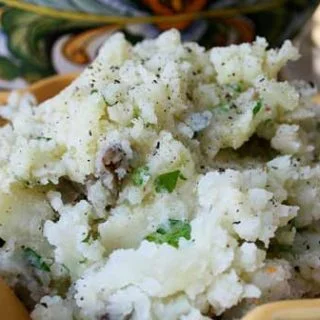
These creamy mashed potatoes pair the mellow sweetness of roasted garlic with butter, milk and parsley. They make an easy side for roasted or grilled meat.
Ingredients
- 907 gbaking potatoes
- 2 large headsroasted garlic, with the oil reserved
- 57 gunsalted butter
- 240 mlmilk
- to tastesalt and pepper
- 15 gminced parsley
- to taste, optionalred pepper flakes
Instructions
- 1
Cut the potatoes
Peel the potatoes and cut them into large dice.
- 2
Bring to the boil
Put the potatoes in a medium-sized pan, cover with salted water and bring to the boil.
- 3
Cook until tender
Cook for 15–20 minutes, until a fork pierces the potatoes easily.
- 4
Rice the potatoes
Drain the potatoes, then pass them through a potato ricer into a bowl.
- 5
Add butter and garlic
Add the butter, milk, roasted garlic pulp and garlic-flavoured olive oil.
- 6
Season and mix
Mix well, then season with salt and pepper. Stir in the parsley and red pepper flakes, if using.
What are roasted garlic mashed potatoes?
Mashed potatoes are a familiar side made by cooking potatoes until tender, then mashing or ricing them with enriching ingredients. Although this recipe is labelled Italian, mashed potatoes are enjoyed in many cuisines rather than belonging to one specific origin.
Roasted garlic gives this version a rounded, mellow flavour, while parsley adds freshness. Butter, milk and the reserved garlic oil make the potatoes rich and soft.
Nutrition and macros by portion
The nutrition label shows one serving as written: 379 calories, 8g protein, 52g carbs, 17g fat.
| Portion | Adjustment | kcal | Protein | Carbs | Fat |
|---|---|---|---|---|---|
| Lighter | Use less butter and oil | 265 kcal | 6g | 36g | 12g |
| This serving | As written | 379 kcal | 8g | 52g | 17g |
| Hungry | Serve a larger scoop | 569 kcal | 12g | 78g | 26g |
The potatoes provide most of the carbohydrates, while butter, milk and the reserved garlic oil contribute much of the fat; the milk and potatoes also provide some protein. Pair a serving with a lean protein and vegetables to round out the plate.
Choose potatoes that mash well
Baking potatoes: their starchy texture breaks down readily and helps produce a fluffy mash. Cut them into similarly sized large dice so they cook at roughly the same rate.
Roasted garlic: use the softened pulp and the flavoured oil reserved from roasting. The garlic should be tender enough to blend into the potatoes without leaving firm pieces.
Cook until easily pierced
Start the diced potatoes in salted water and bring the pan to the boil. The stated cooking time is 15–20 minutes, but check the texture with a fork rather than relying on the clock alone.
They are ready when a fork passes through easily. Drain them well before ricing so excess water does not make the mash loose.
Rice for a smooth texture
A potato ricer presses the cooked potatoes into fine, light pieces. Work while they are hot, then add the butter, milk, garlic pulp and oil as directed.
Mix just until combined. Overworking riced potatoes can make them gluey, so stop once the ingredients are incorporated and the texture looks even.
Season and finish
Salt and pepper: taste the mash after adding the butter, milk and garlic, then adjust the seasoning. The salted cooking water contributes flavour too.
Parsley and chilli: minced parsley brings a fresh finish, while optional red pepper flakes add a little heat. Add the flakes sparingly if you want the garlic to remain the main flavour.
Serve alongside a main
These potatoes are suited to roasted or grilled meat, as suggested in the recipe description. They also work alongside vegetables or a crisp salad for a more balanced plate.
Serve them soon after mixing, while they are warm and soft. A little of the reserved garlic oil can be used to finish the serving if any remains.
Recipe notes & tips
- Cut the potatoes into evenly sized large dice so they cook consistently.
- Salt the cooking water to season the potatoes from the start.
- Drain the potatoes thoroughly before putting them through the ricer.
- Use the roasted garlic pulp and its reserved oil for the intended flavour.
- Mix only until the butter, milk and seasonings are incorporated.
- Taste before serving and adjust the salt, pepper and chilli flakes.
Variations
- Herb finish: add extra minced parsley for a fresher flavour.
- Gentle heat: use a small pinch of red pepper flakes and taste before adding more.
- More garlic: fold in additional roasted garlic pulp to suit your taste.
- Dairy-free version: use plant-based milk and a suitable butter alternative.
- Chunkier texture: mash the cooked potatoes by hand instead of using a ricer.
Common mistakes to avoid
- Uneven pieces: cut the potatoes into similar-sized dice so they become tender together.
- Undercooked potatoes: continue cooking until a fork passes through easily.
- Watery mash: drain the potatoes well before ricing them.
- Gluey texture: mix gently and stop as soon as the ingredients are combined.
- Too much chilli: add the optional flakes gradually and taste as you go.
How to store
Refrigerate leftovers in a covered container for up to 3 days. Reheat gently in a pan or microwave, stirring as needed; add a small splash of milk if the mash has thickened.
Frequently asked questions
Can I make these mashed potatoes ahead?
They are best served freshly made, but you can prepare them ahead and refrigerate them in a covered container. Reheat gently before serving and stir well.
How do I know when the potatoes are cooked?
They should be easily pierced with a fork after 15–20 minutes of cooking. If they still feel firm, cook them a little longer and check again.
Can I mash the potatoes without a ricer?
Yes. Mash them by hand until they reach your preferred texture. Avoid vigorous mixing, which can make the potatoes gluey.
Can I use roasted garlic without the oil?
The method adds both the garlic pulp and garlic-flavoured olive oil. If you leave out the oil, the finished potatoes will be less rich and may have a different texture.
Are the red pepper flakes necessary?
No. They are optional and can be left out, or added gradually for a little heat.
Cook it from the original
This recipe comes from italianfoodforever.com. Their page has the author’s own photos, notes and tips — the best place to cook it from.
Open the recipe on italianfoodforever.com