
Easy Quorn Stir Fry with Noodles
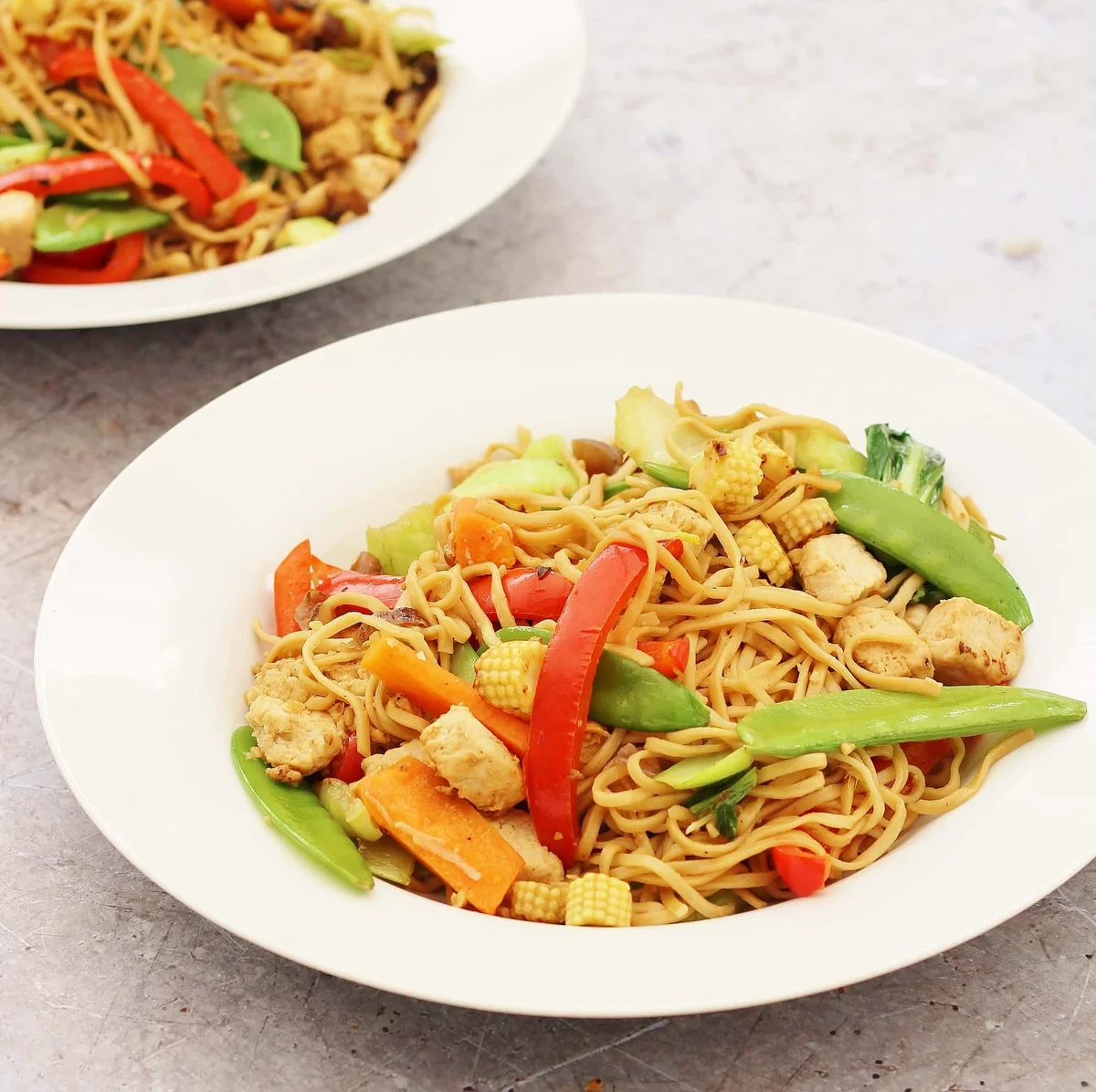
A quick noodle stir-fry with Quorn chicken pieces, crisp vegetables, ginger and soy sauce. It is ready in about 15 minutes and is easy to adapt to the vegetables you have on hand.
Ingredients
- 250 gdried egg noodles
- 1 tablespoon (or more to taste)sesame oil
- 1 tablespoonwok oil (coconut oil or sunflower oil)
- 1onion, thinly sliced
- 100 gbaby corn
- 4mushrooms, thickly sliced
- 1red, orange or yellow pepper, cut into strips
- 150 gQuorn chicken pieces
- 2carrots, cut into batons
- 2 bulbspak choi, stems sliced and leaves separated
- 2 clovesgarlic, grated
- 2 cmginger, grated
- 100 gmangetouts
- 2 tablespoons (or more to taste)soy sauce or tamari
Instructions
- 1
Prepare vegetables
Prepare and cut all the vegetables as specified in the ingredients.
- 2
Cook noodles
Put the noodles in a large saucepan and cover them with boiling water. Boil for 4 minutes, gently teasing them apart with a fork as they cook so they do not clump together.
- 3
Drain noodles
After 4 minutes, drain the noodles in a sieve. Return them to the pan and toss with a little sesame oil to help prevent sticking.
- 4
Stir-fry vegetables
While the noodles cook, heat a wok or large frying pan over a high heat and drizzle in a little oil. Add the onion, baby corn, mushrooms, pepper and Quorn pieces, then stir-fry for 2 minutes. Add the carrots and pak choi stems and fry for a further 2 minutes. Add the ginger and garlic and fry for 1 more minute.
- 5
Finish the stir-fry
Add the mangetouts, pak choi leaves, drained noodles and soy sauce. Fry for 1 more minute.
- 6
Serve at once
Serve with a glass of Riesling or Sauvignon Blanc. Put the sesame oil and soy sauce on the table so everyone can add more if they wish.
What is a Quorn stir-fry?
A stir-fry is a dish of quickly cooked ingredients, traditionally cooked over high heat and tossed together in a wok. This version pairs noodles and Quorn chicken pieces with a colourful mix of vegetables, ginger, garlic and soy sauce.
Its flexible mix of vegetables makes it useful for using up what is already in the fridge. The short cooking time helps the vegetables keep some bite while the noodles make it a substantial one-pan meal.
Nutrition and macros by portion
The nutrition label shows one serving as written: 390 calories, 19g protein, 60g carbs, 10g fat.
| Portion | Adjustment | kcal | Protein | Carbs | Fat |
|---|---|---|---|---|---|
| Lighter | Use less sesame oil | 273 kcal | 13g | 42g | 7g |
| This serving | As written | 390 kcal | 19g | 60g | 10g |
| Hungry | Serve a larger portion | 585 kcal | 29g | 90g | 15g |
Most of the carbohydrates come from the egg noodles, while the oils contribute much of the fat. Quorn pieces provide a share of the protein, with smaller contributions from the noodles and vegetables. For a balanced plate, serve a generous portion of the vegetables alongside the noodles and Quorn.
Get everything ready first
Vegetable prep: Slice and grate the ingredients before heating the wok, since the cooking moves quickly once it starts.
Even pieces: Cut the carrots into batons and the pepper into strips so they cook in the brief time allowed. Keep the pak choi stems and leaves separate because they go into the pan at different stages.
Cook the noodles separately
Boiling: Cook the noodles for 4 minutes, teasing them apart with a fork as they soften. Check the packet too, since brands can differ slightly.
After draining: A little sesame oil tossed through the noodles helps keep them from sticking while you finish the stir-fry. Drain them well so they do not bring excess water into the wok.
Keep the wok hot
High heat: Heat the wok or frying pan before adding oil and the first group of ingredients. Stir and toss frequently so the vegetables cook quickly without sitting in one spot.
Work in stages: The onion, baby corn, mushrooms, pepper and Quorn pieces get 2 minutes, followed by the carrots and pak choi stems for another 2. Garlic and ginger go in for the final minute of cooking before the more delicate leaves and mangetouts.
Look for the right texture
Vegetables: The timings are short, so the finished vegetables should retain some firmness rather than becoming soft and watery. Keep the pan moving, particularly after adding the garlic and ginger.
Noodles: Once added, toss them through the vegetables and sauce just long enough to heat through. The final minute lets the flavours combine without overcooking the pak choi leaves.
Make it your own
Vegetable swaps: The suggested vegetables are a starting point, so use other suitable vegetables you have available. Cut them to a size that will cook quickly.
Seasoning: The recipe uses 2 tablespoons of soy sauce or tamari, with more to taste. Serve extra at the table for anyone who wants a stronger seasoning.
What to serve alongside
On its own: Noodles, Quorn pieces and vegetables make this a complete, filling bowl without a separate side dish.
To drink: The recipe suggests serving it with Riesling or Sauvignon Blanc. You can also simply serve the stir-fry as it is, with extra sesame oil and soy sauce on the table.
Recipe notes & tips
- Prepare and arrange the ingredients before heating the wok so they can go in without delay.
- Tease the noodles apart as they boil to keep them from cooking into a clump.
- Drain the noodles thoroughly before adding them to the wok.
- Keep the wok hot and stir frequently for quick, even cooking.
- Add the pak choi leaves and mangetouts at the end so they have only 1 minute in the pan.
- Taste before adding extra soy sauce, as the sauce is already part of the stir-fry.
Variations
- Use spare vegetables: Swap in suitable vegetables from the fridge, cut into quick-cooking pieces.
- Change the pepper: Use an orange or yellow pepper instead of red, as suggested in the recipe.
- Choose tamari: Use tamari in place of soy sauce for the seasoning.
- Adjust the sesame: Add more sesame oil to taste, either in the noodles or at the table.
- Try another noodle: Use a different dried noodle if you do not have egg noodles, adjusting its cooking time to the packet.
Common mistakes to avoid
- Skipping the prep: The stir-fry cooks quickly, so prepare and cut all the vegetables before heating the wok.
- Leaving noodles in a clump: Tease them apart gently with a fork while they boil.
- Adding wet noodles: Drain them well before tossing them into the wok.
- Overcooking the greens: Add the pak choi leaves and mangetouts only for the final minute.
- Adding garlic too early: Follow the method and add garlic and ginger after the earlier vegetables have cooked, frying them for just 1 minute.
How to store
Refrigerate leftovers in a covered container and eat within 2 days. Reheat in a frying pan until piping hot, stirring regularly; add a small splash of water if the noodles seem dry.
Frequently asked questions
Can I use different vegetables?
Yes. The recipe is designed to be flexible, so use vegetables you have available. Cut them into pieces that will cook quickly and add firmer vegetables earlier than delicate leaves.
Can I use tamari instead of soy sauce?
Yes, the recipe lists soy sauce or tamari. Start with 2 tablespoons and add more to taste.
How do I stop the noodles sticking together?
Tease the noodles apart with a fork as they cook, then drain and toss them with a little sesame oil.
Can I make this without a wok?
Yes. Use a large frying pan over a high heat and follow the same cooking order.
How do I know when the stir-fry is ready?
The whole stir-fry takes only a few minutes in the pan. The vegetables should still have some bite, and the noodles should be heated through after their final minute with the sauce.
Can I prepare the vegetables ahead?
Yes. Cut and grate the vegetables ahead of time and keep them chilled until you are ready to cook. Add them to the wok in the order given.
Cook it from the original
This recipe comes from easypeasyfoodie.com. Their page has the author’s own photos, notes and tips — the best place to cook it from.
Open the recipe on easypeasyfoodie.com