
Spatchcock Chicken
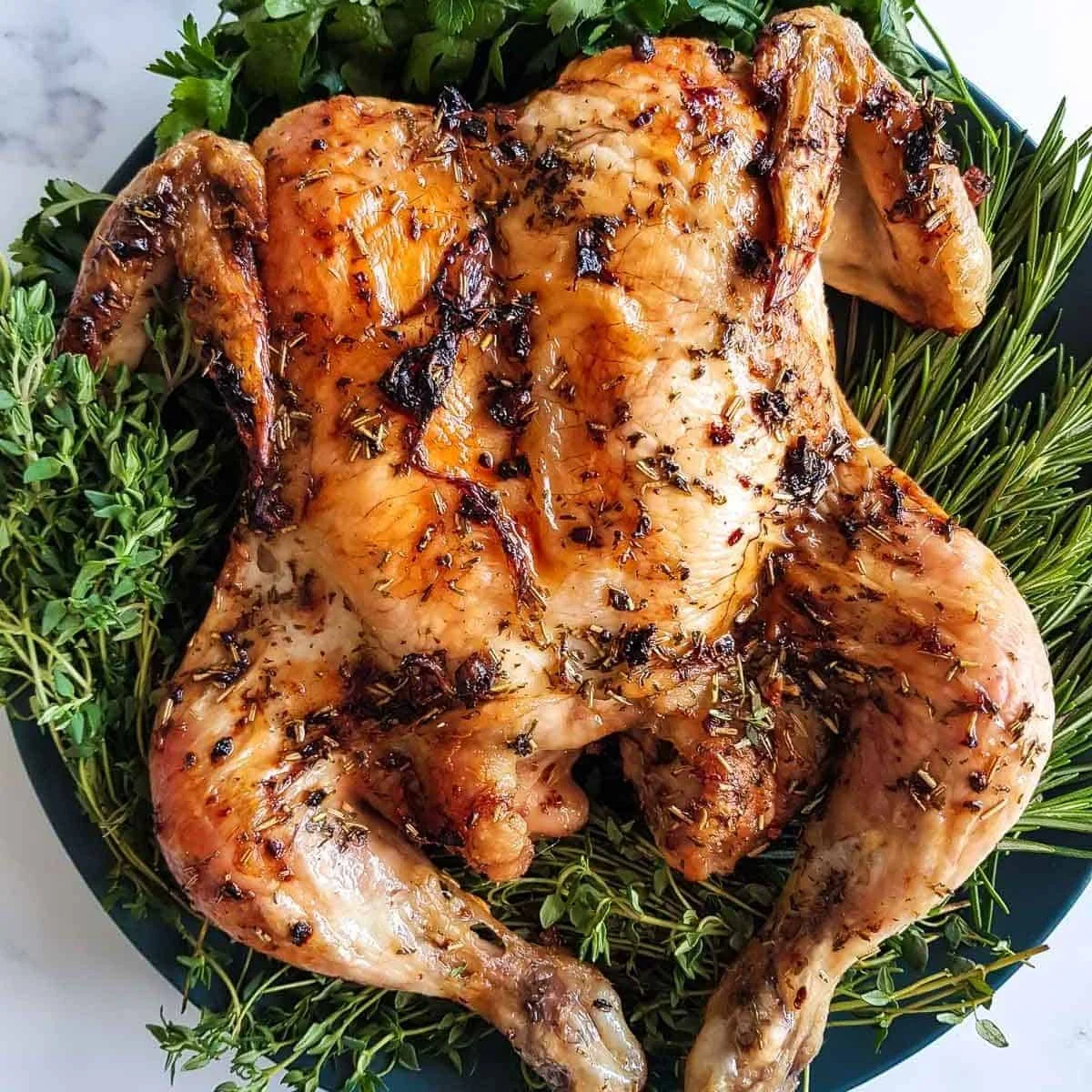
Spatchcocking a whole chicken helps it roast quickly and evenly, with crisp skin and juicy meat. It is a practical centrepiece for a weeknight dinner or a special meal.
Ingredients
- 1whole chicken
- 3garlic cloves
- 30 ml (2 tablespoons)olive oil
- 5 ml (1 teaspoon)dried parsley
- 5 ml (1 teaspoon)dried thyme
- 1.25 ml (1/4 teaspoon)salt
Instructions
- 1
Heat the oven
Preheat the oven to 220°C (200°C fan).
- 2
Remove the backbone
Set the chicken breast-side down with the legs facing you. Using sturdy poultry shears or a sharp knife, cut down both sides of the backbone through the ribs, then remove the backbone.
- 3
Flatten the chicken
Turn the chicken breast-side up and press down on the breastbone with your hands to flatten it.
- 4
Season the chicken
Pour 15 ml (1 tablespoon) of the olive oil into a roasting tin or cast-iron skillet. Coat the chicken with the remaining oil, grated garlic, lemon juice and herbs, then place it in the tin or skillet. The method mentions lemon juice, but the ingredient list gives no amount and does not list it.
- 5
Roast until cooked
Roast for approximately 40–55 minutes; the time depends on the oven and the size of the chicken. Check the thickest part with a meat thermometer and cook until it reaches 74°C.
- 6
Rest and carve
Take the chicken out of the oven and leave it to rest for 10–15 minutes before carving.
What is spatchcock chicken?
Spatchcocking means removing a chicken’s backbone and pressing the bird flat before roasting. The technique is used for whole birds in several cooking traditions, and it makes the chicken easier to cook evenly in a standard oven.
This version keeps the seasoning simple, with garlic, dried herbs and olive oil. The method’s reference to lemon juice is not matched by the ingredient list, so check the source recipe before adding it.
Nutrition and macros by portion
The nutrition label shows one serving as written: 475 calories, 36g protein, 1g carbs, 36g fat.
| Portion | Adjustment | kcal | Protein | Carbs | Fat |
|---|---|---|---|---|---|
| Lighter | Serve with extra vegetables | 333 kcal | 25g | 1g | 25g |
| This serving | As written | 475 kcal | 36g | 1g | 36g |
| Hungry | Add potatoes and bread | 713 kcal | 54g | 2g | 54g |
Most of the fat comes from the chicken and olive oil, while the chicken supplies the protein; the listed seasonings contribute very little carbohydrate. Serve with vegetables and a modest portion of potatoes or another grain for a more balanced plate.
Preparing the chicken
Shears: sturdy poultry shears make cutting through the ribs more manageable. If using a knife, work carefully on a stable board and keep your free hand clear of the blade.
Flattening: press firmly over the breastbone until the chicken lies more evenly. A flatter bird sits steadily in the roasting tin and has more skin exposed to the heat.
Making the herb coating
Garlic: grate the cloves so they spread through the oil rather than staying in large pieces on the surface. This helps distribute their flavour across the chicken.
Oil: use 15 ml in the tin and coat the bird with the remaining 15 ml. The listed parsley and thyme provide the dried herb seasoning; the method does not specify quantities beyond the ingredient list.
Checking doneness
Temperature: roasting time is given as approximately 40–55 minutes, but the chicken’s size and oven affect how long it takes. Use a meat thermometer rather than relying on the clock alone.
Check the thickest part of the chicken for 74°C, taking care not to touch bone with the thermometer probe. Resting the bird for 10–15 minutes after roasting gives the juices time to settle before carving.
Serving the chicken
Carving: separate the legs and wings, then slice the breast meat across the grain. Serve the pieces warm with any juices from the roasting tin.
Sides: pair the chicken with roast potatoes, vegetables or a crisp salad. Choose a starchy side and vegetables to make the meal more substantial and varied.
Planning the timing
The recipe gives a 50-minute total time, while its roasting estimate alone is 40–55 minutes and the resting period adds another 10–15 minutes. Allow extra time if needed, and judge readiness by the internal temperature rather than trying to meet a strict finish time.
Recipe notes & tips
- Pat the chicken dry before seasoning if you want the skin to brown well.
- Use a stable chopping board and sturdy shears when cutting out the backbone.
- Grate the garlic finely so it is easier to spread over the bird.
- Check the chicken’s temperature in the thickest part without touching bone.
- Let the chicken rest for 10–15 minutes before carving.
- Check the original recipe for the intended amount of lemon juice, as it is mentioned in the method but omitted from the ingredient list.
Variations
- Add lemon: use lemon juice only after checking the amount intended by the original recipe.
- Use fresh herbs: replace the dried parsley and thyme with chopped fresh herbs to taste.
- Add black pepper: season the chicken with freshly ground pepper alongside the listed salt.
- Try smoked paprika: add a little to the herb coating for a warmer, smoky flavour.
- Serve with vegetables: roast suitable vegetables alongside the chicken if the tin has room.
Common mistakes to avoid
- Uneven flattening: press the breastbone down so the chicken lies as flat as possible.
- Cutting towards your hand: keep fingers clear and use a stable board while removing the backbone.
- Guessing doneness: check the thickest part with a thermometer and look for 74°C.
- Overcooking: begin checking before the upper end of the 40–55-minute estimate.
- Carving too soon: rest the chicken for 10–15 minutes before cutting it.
- Adding unspecified lemon juice: confirm the amount first, since it is missing from the ingredient list.
How to store
Refrigerate leftover chicken in a covered container within 2 hours of cooking and use within 3–4 days. Reheat portions until piping hot throughout, or enjoy the meat cold in salads or sandwiches.
Frequently asked questions
How long does spatchcock chicken take to roast?
The method estimates 40–55 minutes, depending on the chicken and oven. Check the thickest part with a thermometer and cook to 74°C.
Do I need poultry shears?
Sturdy poultry shears are recommended, but the method also allows a sharp knife. Work carefully and keep the chicken on a stable board.
Why flatten the chicken?
Removing the backbone and flattening the bird helps it sit more evenly in the roasting tin. It also makes the whole chicken easier to handle and carve.
Is lemon juice part of the recipe?
The method says to coat the chicken with lemon juice, but the ingredient list does not include it or give an amount. Check the original recipe for clarification before using it.
Can I prepare the chicken ahead?
You can spatchcock and season it ahead, then keep it covered in the fridge until you are ready to roast. Keep raw chicken separate from ready-to-eat foods.
How long should the chicken rest?
Rest it for 10–15 minutes after taking it out of the oven, then carve and serve.
Cook it from the original
This recipe comes from hintofhealthy.com. Their page has the author’s own photos, notes and tips — the best place to cook it from.
Open the recipe on hintofhealthy.com