
Crème Brûlée
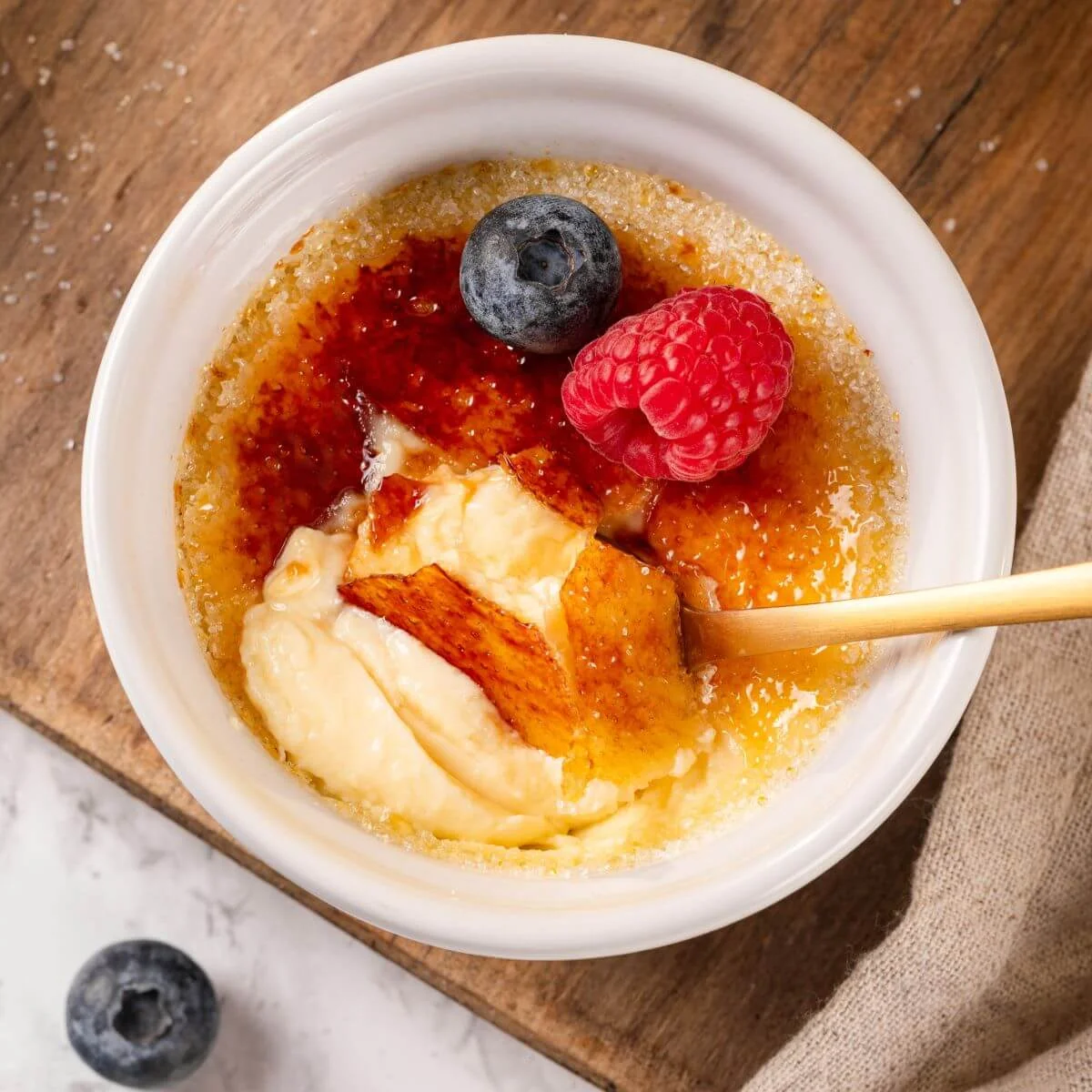
Crème brûlée is a silky baked custard finished with a thin layer of crisp caramelised sugar. This French classic is made with a short list of ingredients and can be prepared ahead, then brûléed just before serving.
Ingredients
- 480 ml (2 cups)double cream
- 67 g (1/3 cup), dividedgranulated sugar
- 1/4 teaspoonkosher salt
- 1/2vanilla pod, split and scraped
- 1egg yolk
- 1 largeegg
- 1 teaspoonvanilla extract
- 50 g (1/4 cup)granulated sugar, for brûlée
Instructions
- 1
Heat the oven
Preheat the oven to 163°C (325°F).
- 2
Warm the cream
Put the cream, approximately half of the divided sugar, salt and split, scraped vanilla pod in a small saucepan. Bring the mixture just to a boil.
- 3
Whisk the eggs
As the cream comes to a simmer, vigorously whisk the egg and egg yolk together. Whisk in the sugar until the mixture becomes slightly lighter.
- 4
Temper the eggs
When the cream reaches a gentle boil, slowly whisk a little into the eggs. Keep whisking as you gradually add the rest of the cream.
- 5
Fill the ramekins
Skim the foam from the custard, then divide it among the ramekins. Set them in a large, deep baking dish or roasting pan; a scale or measuring cup can help you divide the mixture evenly.
- 6
Add the water
Cover the large dish with foil, leaving a corner pulled back so you can see inside. Put it on the middle oven rack, then carefully pour hot water from a kettle into the dish until it reaches halfway up the sides of the ramekins, avoiding splashes in the custards. Replace the foil over the corner and close the oven.
- 7
Bake the custards
Bake for about 20–30 minutes, until the centres wobble like set jelly rather than looking liquid. Alternatively, a small spoon placed on the surface should be supported by the custard.
- 8
Cool and chill
Carefully lift the ramekins out using kitchen tongs, a spatula and a towel as needed. Cool to room temperature, cover with cling film and chill for at least 2 hours, ideally overnight.
- 9
Coat with sugar
When ready to serve, scatter about 1/2 tablespoon of the brûlée sugar over each surface, adjusting for the size of the ramekin. Tilt each ramekin to spread the sugar in an even layer: it should be visible without completely hiding the custard.
- 10
Caramelise the tops
Hold a kitchen torch a little farther away or use a lower flame to start melting the sugar. Gradually increase the speed and heat until a dark caramel layer forms.
- 11
Set and serve
Leave the caramel to set for about 3 minutes, then serve immediately.
What is crème brûlée?
Crème brûlée is a French dessert of baked, vanilla-scented custard topped with a brittle layer of caramelised sugar. The contrast between the cool, soft custard and the crisp topping is its signature.
This version uses cream, eggs and vanilla for a rich custard, which is gently baked in a water bath. Chilling it before torching makes it practical to prepare ahead.
Nutrition and macros by portion
The nutrition label shows one serving as written: 368 calories, 4g protein, 22g carbs, 30g fat.
| Portion | Adjustment | kcal | Protein | Carbs | Fat |
|---|---|---|---|---|---|
| Lighter | Use smaller ramekins | 258 kcal | 3g | 15g | 21g |
| This serving | As written | 368 kcal | 4g | 22g | 30g |
| Hungry | Larger ramekin portion | 552 kcal | 6g | 33g | 45g |
The cream supplies most of the fat, while the sugar contributes most of the carbohydrates; the egg and yolk provide some protein. Serve a ramekin after a meal with fruit on the side if you want to balance the plate with something fresh.
The cream and vanilla
Cream: warming it with the sugar, salt and vanilla helps infuse the custard and dissolves the sugar before baking.
Vanilla: the scraped pod adds its seeds to the cream, while the extract in the ingredient list provides another layer of vanilla flavour.
Temper the eggs gradually
Eggs: whisk them with the sugar first, then add the hot cream in a slow stream while whisking constantly. This gradual mixing helps keep the eggs smooth as they warm.
Steady bowl: placing a folded kitchen towel beneath the bowl can stop it sliding while you pour and whisk.
Bake gently in a water bath
Water bath: the hot water should come halfway up the ramekins, and it must stay out of the custard. Pour carefully once the dish is on the oven rack.
Doneness: start checking at about 20 minutes. The centres should wobble like set jelly, not ripple like liquid; the recipe gives a baking range of 20–30 minutes.
Chill before brûléeing
Cooling: let the ramekins reach room temperature before covering and chilling them for at least 2 hours. Overnight chilling is also an option.
Timing: the topping is brûléed just before serving. Allow about 3 minutes for the caramel to set so it becomes crisp.
Make an even sugar crust
Sugar layer: begin with about 1/2 tablespoon per ramekin, then tilt the dish to spread it across the surface. The amount needed depends on the ramekin's surface area.
Torching: start with the flame farther away or lower, then gradually work across the sugar until it darkens into caramel. The chilled custard gives you time to form the crust.
What to serve with it
Serve the crème brûlée as it is, while the custard is cold and the topping has just set. Its creamy texture and crisp sugar crust make it a complete dessert.
For a larger dessert spread, offer fresh berries alongside it without placing them on the caramel, which is best enjoyed crisp.
Recipe notes & tips
- Set the ramekins in the baking dish before adding water so you do not have to carry a filled water bath.
- Pour the hot cream into the egg mixture slowly and keep whisking throughout.
- Divide the custard evenly with a scale or measuring cup for more consistent baking.
- Check for a jelly-like wobble rather than waiting for the centres to become completely firm.
- Spread the brûlée sugar in an even layer, adjusting the amount to the width of each ramekin.
- Torch the sugar shortly before serving so the crust stays crisp.
Variations
- Citrus accent: add finely grated citrus zest to the cream as it warms for a fragrant variation.
- Coffee flavour: infuse the warming cream with coffee, then strain it before combining with the eggs.
- Cinnamon note: add a cinnamon stick to the cream while it warms, then remove it before mixing.
- Fresh fruit: serve berries alongside the custard for a fruity contrast.
- Vanilla focus: use the scraped vanilla pod as directed and let it infuse in the warm cream.
Common mistakes to avoid
- Adding cream too quickly: the eggs can turn lumpy; pour it in gradually while whisking continuously.
- Splashing the water bath: water can spoil the custard surface; pour carefully and keep the level halfway up the ramekins.
- Overbaking: the custard may lose its soft texture; take it out when the centres wobble like set jelly.
- Skipping the chill: the custards will not be properly cold; allow at least 2 hours in the fridge.
- Using an uneven sugar layer: some patches may burn before others caramelise; tilt the ramekin to spread the sugar evenly.
- Torching too close at once: the sugar can darken unevenly; start farther away or with a lower flame and increase gradually.
How to store
Keep the baked custards covered in the fridge and brûlée the sugar just before serving. The recipe does not specify a storage duration; avoid torching in advance, as the caramel crust is best served crisp.
Frequently asked questions
Can I make crème brûlée ahead?
Yes. Bake and chill the custards for at least 2 hours, ideally overnight, then add and torch the sugar just before serving.
How do I know when the custards are baked?
The centres should wobble like set jelly and should no longer look liquid. The recipe suggests checking from about 20 minutes, with a total baking range of 20–30 minutes.
Do I need a kitchen torch?
The method uses a kitchen torch to caramelise the sugar. It does not give an alternative method for making the topping.
How much sugar should I use on each ramekin?
Start with about 1/2 tablespoon per ramekin and spread it by tilting. The amount depends on the surface area of the ramekin.
Why use a water bath?
The ramekins are baked in hot water that reaches halfway up their sides. Take care not to splash any water into the custards.
How long should the caramel set?
Leave it for about 3 minutes before serving.
Cook it from the original
This recipe comes from girlversusdough.com. Their page has the author’s own photos, notes and tips — the best place to cook it from.
Open the recipe on girlversusdough.com