
Pici con ’nduja with peperonata and burrata
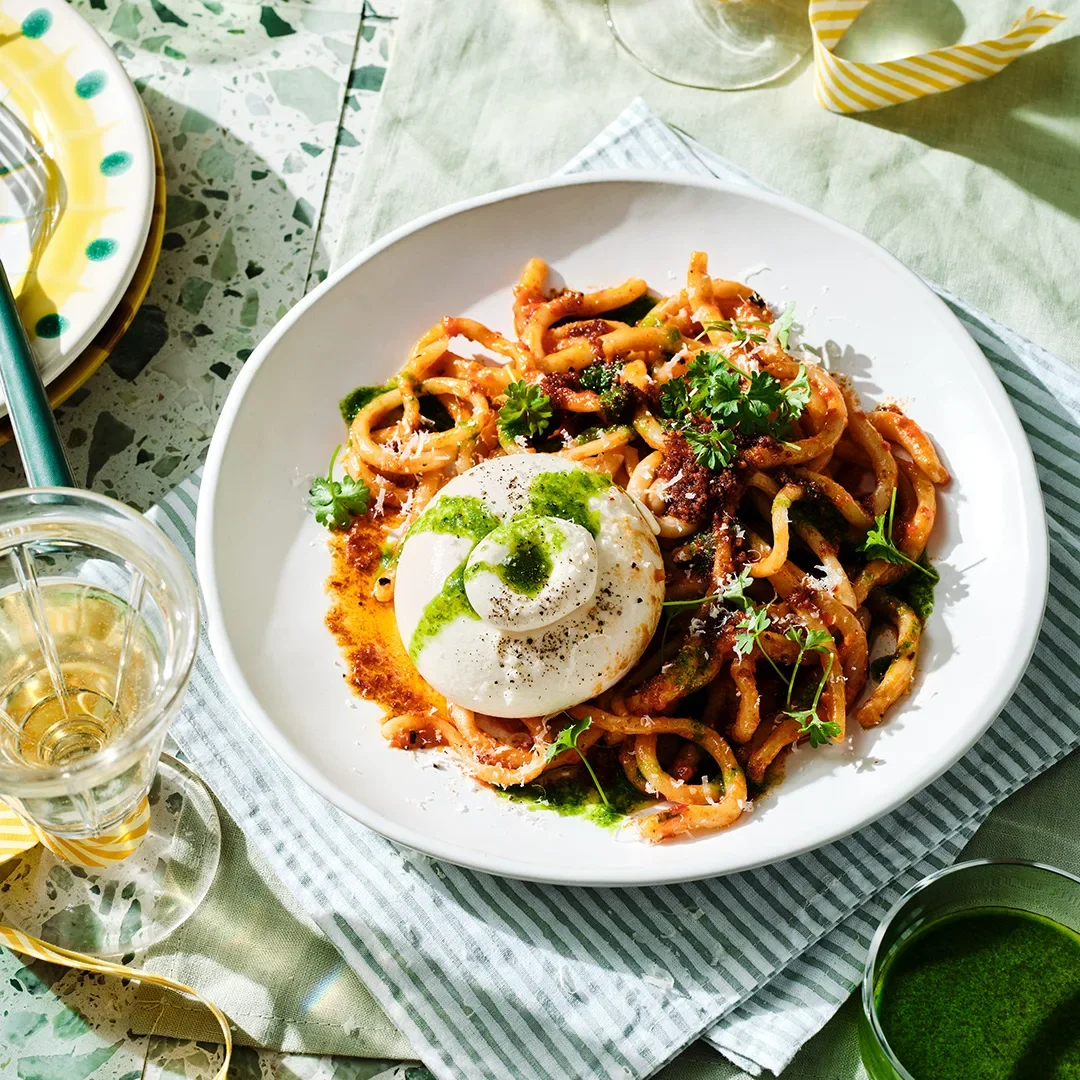
Pici with ’nduja, peperonata and burrata brings hand-rolled Tuscan pasta together with a smooth roasted pepper and tomato sauce, spicy sausage and creamy cheese. It takes some preparation, but the pasta and sauce can be made ahead of serving.
Ingredients
- 1 cup (loosely packed)parsley
- 1garlic clove, crushed
- 165 ml (⅔ cup)extra-virgin olive oil
- 1lemon, finely grated zest and juice
- 100 gParmesan, finely grated
- 100 g’nduja
- 1 tspsmoked paprika
- 2burrata, at room temperature and drained
- 440 g, plus 80 g for dusting00 flour
- 1½ tbspextra-virgin olive oil
- As neededsemolina, for dusting
- 2 tspfine sea salt
- 165 mlwarm water
- 2 largecapsicums, cheeks removed
- 100 mlextra-virgin olive oil
- 600 gcherry tomatoes
- 4garlic cloves, peeled and bruised with the back of a knife
- 2 small sprigsrosemary, leaves stripped
- 2 tspaged balsamic vinegar
- To tastesalt and pepper, for seasoning
Instructions
- 1
Make the dough
For the pici dough, mix the flour and 2 tsp fine sea salt in a large bowl and make a well in the centre. Add the oil and 165 ml warm water, then use your hands to bring everything together into a shaggy dough. Knead on a clean work surface for 5–8 minutes until smooth. Divide the dough in two, shape each piece into a rectangle and pat it to about 1 cm thick. Wrap and leave at room temperature for 1 hour.
- 2
Roast the sauce
Meanwhile, heat the oven grill to high. Put the capsicum pieces skin-side up on a foil-lined tray, drizzle with 1 tbsp oil, season and grill for 10–12 minutes until blackened. Transfer to a bowl, cover with plastic wrap and let steam; once cool enough to handle, peel off and discard the skins. Set the oven to 200°C fan-forced. Put the remaining sauce ingredients in a roasting pan, season and toss together. Roast for 25–30 minutes until slightly caramelised, then cool briefly. Blend with the charred capsicum until smooth and season.
- 3
Shape the pici
Put the extra flour in a large bowl. Roll one piece of dough into a rectangle about 35 × 12 cm and cut it crossways into 5 mm strips. Roll each strip with your fingertips into a rope about 25 cm long. Dust the ropes in the flour, then arrange them on a lined tray lightly dusted with more flour. Repeat with the other piece of dough, cover and refrigerate until needed.
- 4
Blend parsley oil
Blend the parsley, garlic, 125 ml olive oil, lemon zest and lemon juice in a small blender until smooth and bright green. Transfer to a small bowl, season and set aside.
- 5
Cook and coat
Warm the peperonata in a large saucepan over low heat. Shake excess flour from the pici, then cook in a large saucepan of salted water for 3–4 minutes, until al dente or floating to the surface. Drain, reserving 125 ml pasta water. Add the pasta and three-quarters of the Parmesan to the sauce. Stir constantly, gradually adding pasta water until the sauce looks glossy and coats the pasta.
- 6
Finish and serve
Meanwhile, heat the remaining olive oil in a small frying pan over medium heat. Add the ’nduja and paprika and cook, stirring constantly, for 3–4 minutes until golden and fragrant. Divide the pasta between two serving bowls, top with burrata, spoon over the ’nduja, scatter with the remaining Parmesan and drizzle with parsley oil.
What is pici with ’nduja?
Pici are thick, hand-rolled pasta associated with Tuscany, where their simple flour-and-water dough is shaped into long ropes. Here they are paired with peperonata, a slow-roasted pepper and tomato sauce, and Calabrian ’nduja, a soft, spicy spreadable sausage.
The combination works through contrast: chewy pasta and mellow, sweet-roasted vegetables meet hot ’nduja, tangy parsley and lemon oil, and cool, creamy burrata.
Nutrition and macros by portion
The nutrition label shows one serving as written: 1760 calories, 43g protein, 105g carbs, 130g fat.
| Portion | Adjustment | kcal | Protein | Carbs | Fat |
|---|---|---|---|---|---|
| Lighter | Less oil, smaller burrata | 1232 kcal | 30g | 74g | 91g |
| This serving | As written | 1760 kcal | 43g | 105g | 130g |
| Hungry | Larger pasta portion | 2640 kcal | 65g | 158g | 195g |
The flour supplies most of the carbohydrates, while olive oil, ’nduja, Parmesan and burrata contribute much of the fat. Protein comes mainly from the cheeses, ’nduja and flour. Balance a serving with a crisp green salad or other simply dressed vegetables.
The dough and flour
Resting time: Leave the wrapped dough at room temperature for the full hour so it can relax before shaping. The dough should be smooth after kneading for 5–8 minutes.
Dusting flour: The extra flour helps keep the ropes from sticking together. Shake off any excess before boiling so the sauce does not become floury.
Roasting the peperonata
Charred capsicum: Grill the capsicum skin-side up until the skins are blackened, then cover it to steam. This makes the skins easier to peel and gives the sauce a roasted flavour.
Tomatoes and aromatics: Roast the tomatoes with garlic, rosemary, olive oil and balsamic until slightly caramelised. Blend them with the peeled capsicum for a smooth sauce.
Rolling the pici
Even strips: Cut the dough into strips about 5 mm wide, then roll them with your fingertips into ropes roughly 25 cm long. They need not be perfectly uniform, but similar thickness helps them cook at the same pace.
Keep them separate: Coat each rope lightly in flour and lay it on the dusted tray without piling it up. Cover and chill the shaped pasta until you are ready to cook.
Cooking and coating
Doneness: The pici should be tender but still have a little bite; begin checking at 3 minutes. Floating is another cue, but taste a piece to make sure it is cooked through to your liking.
Glossy sauce: Stir the drained pasta into the hot peperonata with Parmesan, adding the reserved water gradually. The starchy water helps the sauce cling without making it too loose.
The finishing touches
’Nduja: Cook it with the smoked paprika over medium heat, stirring for 3–4 minutes until fragrant and golden. Spoon it over the pasta so its spicy oil stays distinct from the pepper sauce.
Burrata and parsley oil: Keep the burrata at room temperature and add it just before serving. Finish with the green parsley and lemon oil for a fresh, bright counterpoint.
What to serve alongside
A crisp green salad or simply dressed leaves make a fresh side for this rich pasta. Keep the dressing light so it does not compete with the lemon and parsley oil.
The dish is substantial on its own, so serve a modest side and let the pasta remain the focus.
Recipe notes & tips
- Measure the water for the dough and add it with the oil before mixing.
- Cover the dough while it rests so its surface does not dry out.
- Steam the grilled capsicum under cover before peeling for easier skin removal.
- Dust the shaped pici lightly and shake off excess flour before boiling.
- Reserve the pasta water before draining, as it helps bring the sauce together.
- Add the burrata at the end so it remains cool and creamy.
Variations
- Milder finish: Use less ’nduja so the roasted pepper flavour comes through more gently.
- Extra greens: Serve with a side of wilted spinach or leafy salad.
- Herb change: Replace some of the parsley with basil in the green oil.
- Chunkier sauce: Blend the peperonata briefly rather than processing it completely smooth.
- More lemon: Add a little extra zest to the parsley oil for a sharper finish.
Common mistakes to avoid
- Skipping the dough rest: The dough can resist rolling; give it the full hour at room temperature.
- Under-charring the capsicum: The skins will be harder to remove; grill until blackened before steaming.
- Crowding the pici: Ropes can stick together; dust them and spread them out on the tray.
- Adding all the pasta water at once: The sauce may become thin; add it gradually while stirring.
- Overcooking the ’nduja: It can lose its fragrant, glossy finish; stir over medium heat and stop once golden.
- Putting burrata on too early: It can lose its cool, creamy contrast; add it immediately before serving.
How to store
Store the peperonata separately in a sealed container in the fridge for up to 3 days. Keep uncooked pici covered in the fridge and cook them soon after shaping; cooked pasta is best eaten straight away. Reheat the sauce gently in a pan, adding a splash of water if needed, and cook fresh pici for serving.
Frequently asked questions
Can I make the peperonata ahead?
Yes. Roast and blend it ahead, then refrigerate it in a sealed container. Reheat gently in a saucepan before adding the cooked pici.
Can I shape the pici in advance?
Yes. The method calls for covering and refrigerating the shaped pasta until needed. Keep the ropes lightly dusted and separated on the tray.
How do I know when the pici are cooked?
They should be al dente, usually after 3–4 minutes, or when they float to the surface. Taste one to check the centre.
What can I use instead of ’nduja?
A soft, spicy sausage spread is the closest substitute. If using a firmer sausage, finely chop it and cook until browned and fragrant.
Why reserve pasta water?
Its starch helps the peperonata and Parmesan coat the pici. Add it a little at a time until the pasta looks glossy.
Can I use a different pasta?
Yes. Choose a sturdy pasta that can hold the thick sauce, and follow its packet timing rather than the pici cooking time.
Cook it from the original
This recipe comes from gourmettraveller.com.au. Their page has the author’s own photos, notes and tips — the best place to cook it from.
Open the recipe on gourmettraveller.com.au