
Spice Cake
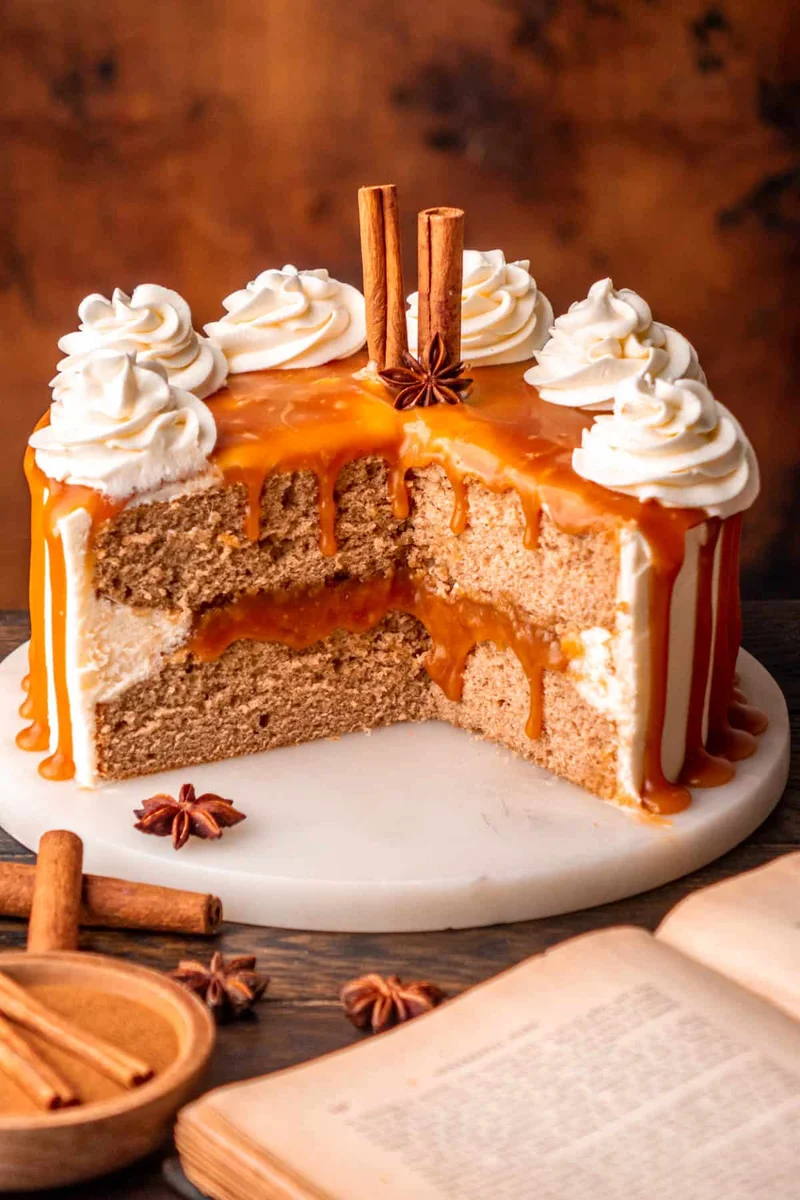
A layered spice cake with cinnamon, ginger and other warm spices, filled with salted caramel and finished with cream cheese frosting and a caramel drip. It makes a celebratory centrepiece, with a make-ahead caramel and cooling time built into the process.
Ingredients
- 200 ggranulated sugar
- 70 gunsalted butter, softened
- 120 mldouble cream
- 1 tspvanilla
- 1/2 tspsalt
- 281 gplain flour, spooned and levelled
- 1 1/2 tspbaking powder
- 1/4 tspbicarbonate of soda
- 1/2 tspsalt
- 1 tbspground cinnamon
- 1/2 tspground ginger
- 1/2 tspground allspice
- 1 tspground nutmeg
- 1/4 tspground cloves
- 140 gunsalted butter, softened
- 200 ggranulated sugar
- 110 glight brown sugar, packed
- 3eggs, at room temperature
- 2 tspvanilla
- 240 mlbuttermilk, at room temperature
- 82 gsour cream, at room temperature
- 224 gunsalted butter, softened
- 226 gcream cheese, cold
- 455 gicing sugar
Instructions
- 1
Melt the sugar
For the salted caramel, heat the sugar in a saucepan over medium heat, stirring occasionally so it melts evenly. Be patient; when most of it has melted but a few crystalline lumps remain, lower the heat to low to keep the melted sugar from burning.
- 2
Add the butter
As soon as all the sugar has melted, add the butter and stir briskly until incorporated.
- 3
Finish the caramel
Once the butter has melted in, add the double cream, vanilla and salt.
- 4
Simmer and cool
Stir until combined, then simmer for 2–3 minutes to thicken slightly. When it coats the back of a spoon, take it off the heat, pour it into a small bowl and leave it to cool completely; it will thicken further as it cools.
- 5
Prepare the tins
For the cake, heat the oven to 177°C. Spray two 20 cm round cake tins with non-stick spray and line their bases with rounds of baking parchment.
- 6
Mix the dry ingredients
Whisk the flour, baking powder, bicarbonate of soda, salt, cinnamon, ginger, allspice, nutmeg and cloves together in a medium bowl.
- 7
Cream the butter
In a large bowl, beat the softened butter with both sugars on high speed for about 2 minutes, until light and fluffy.
- 8
Add eggs and vanilla
Add the eggs and vanilla, then mix on medium speed until the mixture is smooth and pale.
- 9
Mix in dairy
Add the buttermilk and sour cream and mix on medium-low until combined. The mixture may look curdled at this stage; it will come together once the dry ingredients are added.
- 10
Combine the batter
Add the dry ingredients a little at a time, mixing on low just until the batter is smooth and combined. Scrape down the bowl with a rubber spatula as needed.
- 11
Bake the layers
Divide the batter evenly between the tins. Bake for 23–26 minutes, until a toothpick inserted in the centre comes out clean.
- 12
Cool the cakes
Leave the cakes in their tins for 5 minutes, then turn them out onto a cooling rack and let them cool completely.
- 13
Beat the butter
For the cream cheese frosting, beat the softened butter in a large bowl on high speed for about 5 minutes, until light and fluffy.
- 14
Add cream cheese
Add the cold cream cheese and mix on medium speed for 1–2 minutes, until combined and fluffy.
- 15
Add icing sugar
Sift in the icing sugar a little at a time and mix on low until combined. Beat on high for 1 minute to make the frosting fluffy again.
- 16
Fill the cake
Place the serving plate on a cake turntable and dab a little frosting in the centre to anchor the first cake layer. Spread a generous amount of frosting over it. Put about a quarter of the frosting in a piping bag with a 1.3 cm opening, or use a large round tip, and pipe a border about 1.3 cm thick and 2.5 cm high around the edge. Spoon about 80 ml of caramel sauce inside the border.
- 17
Chill the crumb coat
Set the second cake layer on top. Add small dollops of frosting to the top and sides, then spread them into a thin, even crumb coat with an offset spatula and cake scraper, turning the cake as you work. Chill for 20 minutes.
- 18
Apply final frosting
Remove the chilled cake and add the remaining frosting generously to the top and sides. Smooth it with an offset spatula and cake scraper as you turn the cake. Rewhip the frosting first if needed, then chill the cake for 20 minutes.
- 19
Add caramel drip
Put the salted caramel in a piping bag and snip off a small piece of the tip. Once the cake has chilled, pipe caramel around the top edge so it drips down the sides, then pipe some over the top and smooth it with an offset spatula. The caramel keeps running, so do this shortly before serving.
- 20
Pipe and serve
If needed, rewhip the remaining frosting and put it in a piping bag fitted with a decorative tip. Once the cake has chilled, pipe decorative swirls on top, decorate with cinnamon sticks and star anise, then serve.
What is spice cake?
Spice cake is a style of cake flavoured with a blend of warming ground spices; recipes vary, and there is no single defining mix. This version pairs cinnamon, ginger, allspice, nutmeg and cloves with a tangy cream cheese frosting.
Its layered format gives the salted caramel a place to sit inside the cake, while the frosting and caramel drip make it feel suited to a gathering or special occasion.
Nutrition and macros by portion
The nutrition label shows one serving as written: 1060 calories, 10g protein, 132g carbs, 56g fat.
| Portion | Adjustment | kcal | Protein | Carbs | Fat |
|---|---|---|---|---|---|
| Lighter | Smaller cake slice | 742 kcal | 7g | 92g | 39g |
| This serving | As written | 1060 kcal | 10g | 132g | 56g |
| Hungry | Larger cake slice | 1590 kcal | 15g | 198g | 84g |
Most of the carbohydrates come from the flour, sugars, caramel and icing sugar, while the butter, cream and cream cheese contribute much of the fat. Eggs and dairy provide some protein, though this is primarily a dessert rather than a protein-rich dish. Balance a slice with fresh fruit, or serve it after a meal with a lighter main course.
Why the dairy matters
Buttermilk and sour cream: These add moisture and a gentle tang to the batter. Keep them at room temperature as directed so they mix in more smoothly with the creamed butter and sugars.
Cold cream cheese: The frosting method adds it after beating the butter, which helps the two come together while keeping the frosting cool. Add the icing sugar gradually to reduce mess and keep the mixture even.
Making the salted caramel
Dry sugar: Heat it patiently and stir occasionally so it melts evenly. Lower the heat when only a few crystals remain, since the melted sugar can burn while you wait for the last lumps to disappear.
Butter and cream: Add the butter as soon as the sugar has melted, then stir in the cream, vanilla and salt. Simmer for 2–3 minutes, stopping when the caramel coats the back of a spoon; it thickens further as it cools.
Getting the cake texture right
Creaming: Beat the butter and sugars until light and fluffy, then mix in the eggs and vanilla until the mixture looks smooth and pale. This builds the cake’s base before the liquid and dry ingredients go in.
Gentle mixing: The batter may look curdled after the buttermilk and sour cream are added, but the recipe notes that it will pull together with the flour mixture. Mix on low and stop once the batter is smooth, scraping the bowl as needed.
Check for doneness
Timing: Bake the two layers at 177°C for 23–26 minutes. Begin checking near the shorter end of that range rather than relying on colour alone.
Centre: A toothpick inserted into the middle should come out clean. Cool the layers completely before frosting so the frosting does not soften as you assemble the cake.
Layering and decorating
Caramel filling: The piped frosting border holds the caramel inside the first layer. Keep the filling to about 80 ml as specified, and spread it within that border.
Crumb coat: A thin first layer of frosting catches loose crumbs; chilling it for 20 minutes helps set it before the final coat. Chill the smoothly frosted cake for another 20 minutes before adding the drip.
Serving the cake
The recipe finishes with piped frosting swirls and a caramel drip, added shortly before serving because the caramel continues to run. Cinnamon sticks and star anise are suggested as decoration.
Serve slices on their own or with fresh fruit to bring a lighter, tart contrast to the sweet frosting and caramel.
Recipe notes & tips
- Weigh the flour rather than packing it into a measuring cup.
- Let the caramel cool completely before using it between the cake layers.
- Bring the cake ingredients to the stated room temperature before mixing the batter.
- Use parchment rounds in the tins to help the cake layers release cleanly.
- Wait until the layers are completely cool before frosting them.
- Add the caramel drip shortly before serving so it does not run too far down the cake.
Variations
- Extra cinnamon: Increase the cinnamon slightly for a more pronounced cinnamon note.
- Pecan finish: Scatter chopped toasted pecans over the top just before serving.
- Apple pairing: Serve each slice with thinly sliced fresh apple for a crisp, tart contrast.
- No drip: Skip the caramel topping and serve the remaining sauce at the table.
- Simple finish: Leave off the piped swirls and smooth the frosting over the top instead.
Common mistakes to avoid
- Burning the sugar: Lower the heat once most of the crystals have melted and keep a close eye on the pan.
- Using warm caramel: Cool it completely before filling the cake so it does not loosen the frosting.
- Overmixing the batter: Stop as soon as the dry ingredients are incorporated and the batter is smooth.
- Frosting warm layers: Cool the cakes completely before assembling to avoid soft, sliding frosting.
- Skipping the crumb coat chill: Chill the thin coat for 20 minutes so fewer crumbs catch in the final layer.
- Adding the drip too early: Pipe it shortly before serving because it continues to run down the sides.
How to store
Because of the cream cheese frosting, store the assembled cake covered in the fridge and aim to eat it within 4 days. Let slices sit briefly at room temperature before serving for a softer texture; avoid reheating the frosted cake.
Frequently asked questions
Can I make the caramel ahead?
Yes. Make it in advance and let it cool completely before using it. It will thicken as it cools, so allow time for it to reach a spoonable consistency.
Why does the batter look curdled?
The mixture can look curdled after the buttermilk and sour cream are added. The method says this is expected and that the batter will come together when you add the dry ingredients.
How do I know the cake layers are baked?
Bake for 23–26 minutes at 177°C, then test the centre with a toothpick. It should come out clean.
Can I assemble the cake before the day I serve it?
You can assemble it ahead and keep it covered in the fridge. For the neatest finish, add the caramel drip shortly before serving.
Do the cake layers need to be completely cool?
Yes. Cool them in the tins for 5 minutes, then transfer them to a rack and wait until they are completely cool before frosting.
What can I use instead of a cake turntable?
A turntable makes smoothing the frosting easier, but you can rotate the serving plate by hand while working with an offset spatula and cake scraper.
Cook it from the original
This recipe comes from inbloombakery.com. Their page has the author’s own photos, notes and tips — the best place to cook it from.
Open the recipe on inbloombakery.com