
Classic French Crème Brûlée
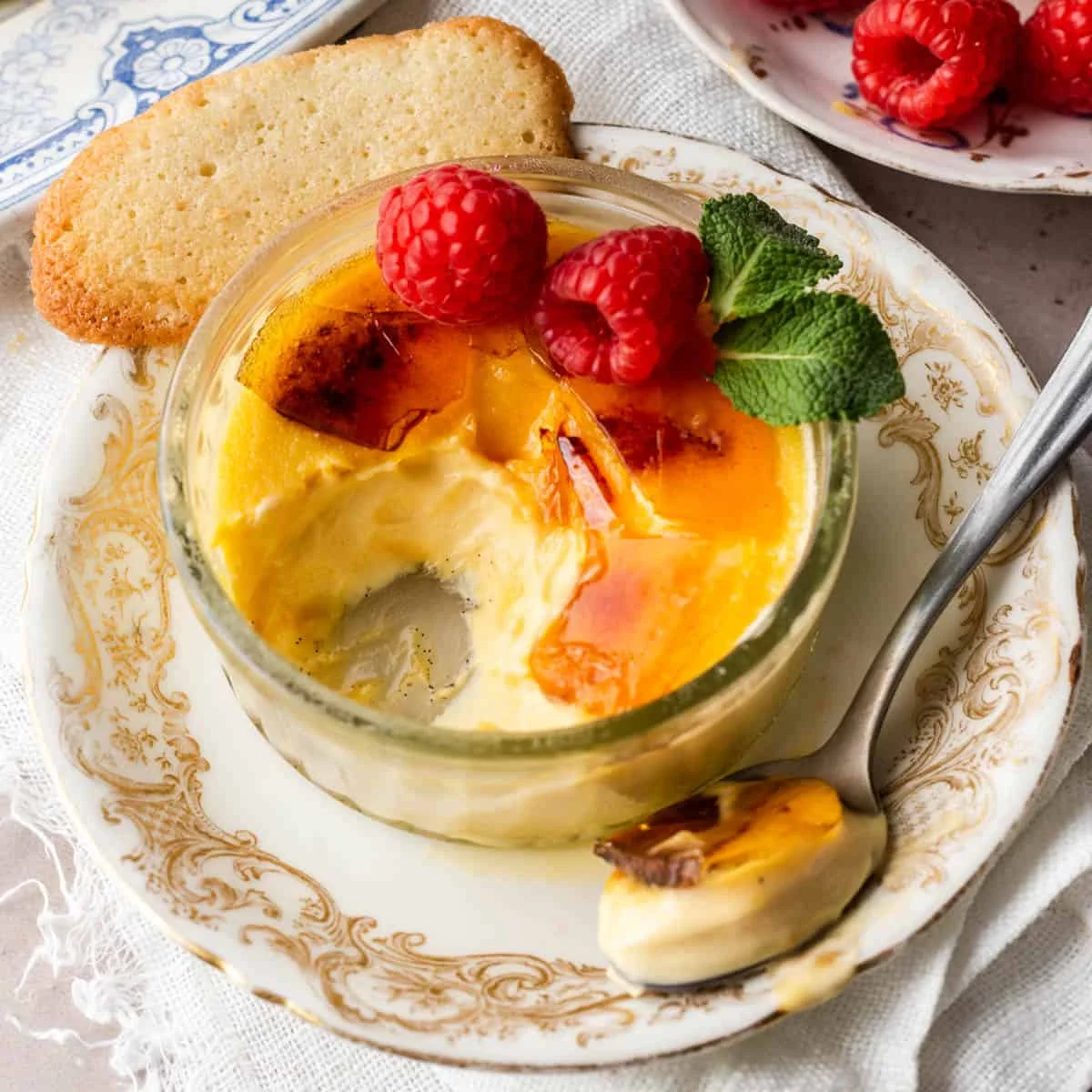
Classic French crème brûlée pairs a smooth, vanilla-scented baked custard with a thin, brittle layer of caramelised sugar. Make it ahead so the custards have time to chill, then torch the topping just before serving.
Ingredients
- 480 mldouble cream
- 1 tbspvanilla bean paste (or vanilla bean)
- 5 largeegg yolks
- 100 g, dividedgranulated sugar
Instructions
- 1
Heat the cream
Put the double cream and vanilla bean paste in a medium saucepan over medium heat. Bring it to a simmer; as soon as bubbles appear around the edge, take the pan off the heat.
- 2
Whisk yolks
While the cream heats, put the egg yolks and half the sugar in a separate bowl. Whisk with a handheld electric whisk until pale and thickened.
- 3
Temper the eggs
Whisk the egg mixture continuously as you slowly pour in the hot cream. Continue until all the cream has been added and the mixture is combined.
- 4
Strain the custard
Pass the mixture through a fine-mesh sieve into a jug. Use a large spoon to remove and discard any foam from the surface.
- 5
Fill the ramekins
Line the base of a deep baking dish with a couple of pieces of kitchen paper and set 5 ramekins inside. Pour the custard from the jug, dividing it evenly between them.
- 6
Add the water
Put the baking dish in the oven. Pour boiling water from a kettle into the dish around the ramekins until it comes about two-thirds of the way up their sides.
- 7
Bake the custards
Bake for 35–40 minutes, until the edges are set but the centres still wobble. The custards will firm further as they cool and chill.
- 8
Cool and chill
Remove the baking dish from the oven and carefully lift out the ramekins. Leave them on a wire rack until they reach room temperature, then refrigerate for at least 4 hours.
- 9
Caramelise the tops
Just before serving, sprinkle 1 teaspoon of the remaining sugar evenly over each custard. Use a kitchen blowtorch to melt the sugar until bubbling and deep amber, then leave it to cool into a brittle crust. Serve immediately.
What is crème brûlée?
Crème brûlée is a French dessert of chilled baked custard topped with a crisp layer of caramelised sugar. Its contrast of cool, silky custard and brittle topping is what makes each spoonful distinctive.
This version keeps the flavour classic, using cream, egg yolks and vanilla. A gentle water bath helps the custards bake evenly, while the sugar is torched only when they are ready to serve.
Nutrition and macros by portion
The nutrition label shows one serving as written: 475 calories, 6g protein, 25g carbs, 40g fat.
| Portion | Adjustment | kcal | Protein | Carbs | Fat |
|---|---|---|---|---|---|
| Lighter | Smaller ramekin portion | 333 kcal | 4g | 18g | 28g |
| This serving | As written | 475 kcal | 6g | 25g | 40g |
| Hungry | Larger portion | 713 kcal | 9g | 38g | 60g |
The cream provides most of the fat, while the egg yolks contribute fat and protein; the sugar supplies most of the carbohydrates. Pair a ramekin with fresh fruit for a lighter-feeling dessert plate, or serve it after a meal with plenty of fruit alongside.
The cream and vanilla
Warm cream: take the saucepan off the heat as soon as bubbles form around the edge. It should be simmering, not vigorously boiling.
Vanilla: bean paste is easy to mix into the cream and gives it a clear vanilla flavour. A vanilla bean can be used instead, as the ingredient list allows.
Whisking and tempering
Whisked yolks: beating the yolks with half the sugar until pale and thickened prepares them to combine smoothly with the cream.
Slow addition: pour the hot cream in gradually while whisking without pause. Adding it too quickly can cook the yolks unevenly.
A smooth custard
Straining: pass the mixture through a fine-mesh sieve to catch any small cooked egg particles. Skimming off the foam also helps leave a smoother surface.
Water bath: the boiling water should reach about two-thirds of the way up the ramekins. Take care when moving the dish, as both the water and baking dish will be hot.
When the custards are done
Doneness: look for set edges with a slight jiggle in the centre after 35–40 minutes. The custards continue to firm as they cool, so avoid waiting for the centres to become completely solid in the oven.
Chilling: cool the ramekins to room temperature before refrigerating them for at least 4 hours. This gives the custard time to set before the topping is added.
Make the topping just before serving
Even sugar: distribute 1 teaspoon of the remaining sugar over each custard in a thin, even layer. An even layer melts more consistently under the torch.
Caramel colour: torch until the sugar is bubbling and deep amber, then let it cool until brittle. Serve straight away to enjoy the contrast between crisp topping and chilled custard.
Serving ideas
Serve each ramekin on its own, cracking the caramel with the back of a spoon. The custard is rich, so a small bowl of fresh berries or sliced fruit makes a bright accompaniment.
If serving several people, caramelise the tops at the table or just before bringing them out. The topping is best when it has not had time to soften.
Recipe notes & tips
- Use a jug to divide the custard evenly between the 5 ramekins.
- Pour the boiling water carefully around the ramekins after placing the baking dish in the oven.
- Keep whisking as you add the hot cream to the yolks.
- Let the custards cool to room temperature before refrigerating.
- Torch the sugar shortly before serving so the crust stays crisp.
Variations
- Vanilla bean: use a vanilla bean instead of the paste, as suggested in the ingredient list.
- Citrus aroma: add a strip of lemon or orange zest to the cream while warming, then remove it before mixing.
- Coffee note: infuse the warming cream with a little coffee, then strain it out before combining.
- Berry pairing: serve with fresh berries for a tart contrast to the sweet custard.
- Caramel finish: torch each sugared custard to a deep amber for a more pronounced caramel flavour.
Common mistakes to avoid
- Boiling the cream: remove it from the heat as soon as bubbles appear around the edge.
- Adding cream too fast: pour it in gradually while whisking continuously to help prevent the yolks from cooking in patches.
- Skipping the sieve: strain the mixture to catch any small pieces of cooked egg.
- Overbaking: take the custards out when the edges are set but the centres still wobble.
- Caramelising too early: torch the sugar just before serving so the brittle crust does not soften.
How to store
Keep the baked custards covered in the refrigerator for up to 3 days, without the caramelised sugar topping. Add and torch the sugar just before serving; the finished crust softens during storage.
Frequently asked questions
Can I make crème brûlée ahead?
Yes. Bake the custards, cool them and refrigerate for at least 4 hours. Wait to add and torch the sugar until just before serving.
How can I tell when the custards are baked?
The edges should be set while the centres retain a gentle jiggle. They will firm further as they cool and chill.
Do I need a water bath?
Yes, the method uses boiling water around the ramekins, reaching about two-thirds of their height. It helps the custards cook gently and evenly.
Can I make the sugar crust without a blowtorch?
This method specifies a kitchen blowtorch for caramelising the sugar. Without one, the recipe does not provide an alternative method.
Why strain the custard?
Straining catches any small bits of egg that may have formed, helping the custard stay smooth. Skim off the foam as well.
Why is the sugar topping no longer crisp?
The caramel layer can soften when it sits on the chilled custard. Torch it just before serving and bring the desserts to the table promptly.
Cook it from the original
This recipe comes from emmaduckworthbakes.com. Their page has the author’s own photos, notes and tips — the best place to cook it from.
Open the recipe on emmaduckworthbakes.com