
Brioche Buns
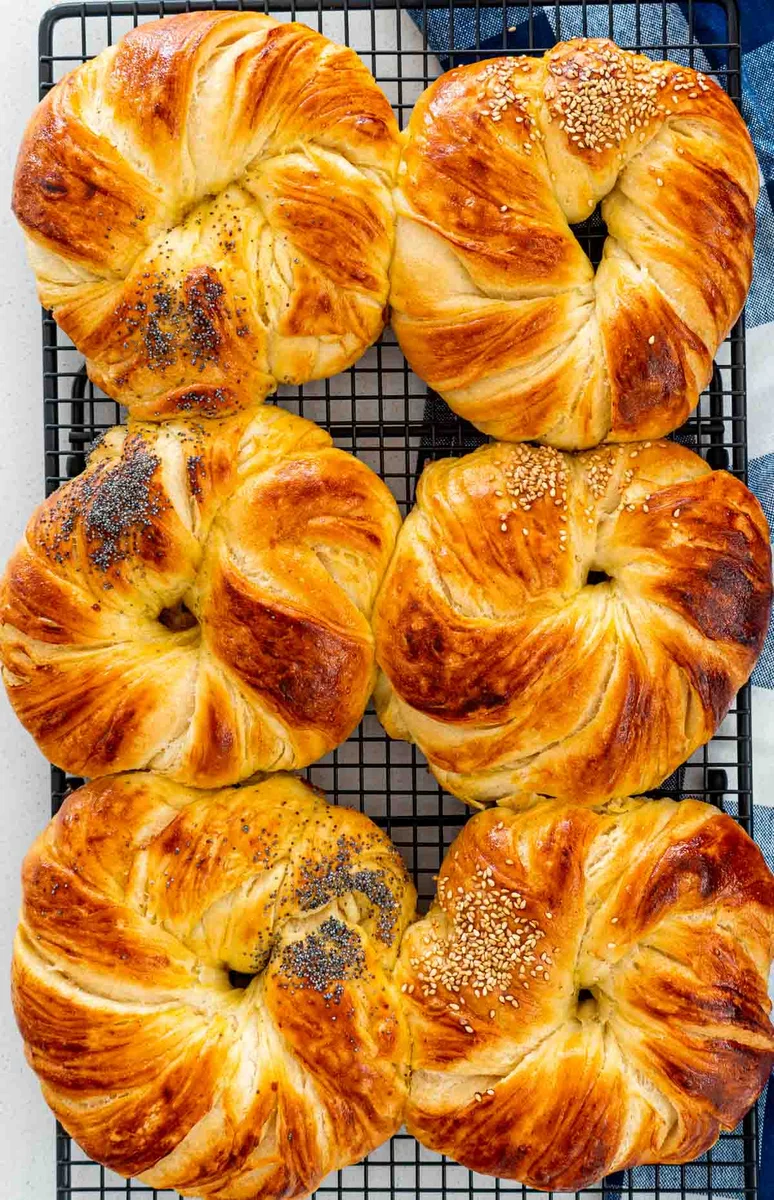
These French-inspired brioche buns are soft and buttery, with folded layers that give them a lightly flaky texture. Make them for breakfast, brunch or a homemade bread basket.
Ingredients
- 240 mllukewarm water
- 25 ggranulated sugar
- 1 tablespoon (about 9 g)active dry yeast
- 240 mllukewarm milk
- 120 mlvegetable oil
- 2 largeeggs, separated and at room temperature
- 1 teaspoon (about 5 g)salt
- 480–720 g (4–6 cups)plain flour
- 85 g (6 tablespoons)unsalted butter, softened
- 1 teaspoonvanilla paste
- 1 tablespoon (about 9 g)sesame seeds
- 1 tablespoon (about 9 g)poppy seeds
Instructions
- 1
Activate the yeast
Put the lukewarm water, 1 tablespoon of the sugar and the active dry yeast in a mixer bowl. Stir and leave for 5–10 minutes, until frothy.
- 2
Add wet ingredients
Add the remaining sugar, milk, oil, salt and egg whites. Whisk briefly to combine.
- 3
Mix the dough
Add 2 cups of flour and mix on low for a couple of minutes. Add more flour, 1 cup at a time, until the dough comes together but remains soft and slightly sticky. The recipe uses 4 cups, though you may need more. It should be elastic and spring back when poked. Use an oiled bench scraper to move the dough into a well-oiled bowl. Cover with cling film and leave in a warm, draught-free place for 1–2 hours, until doubled in size.
- 4
Prepare the oven
Heat the oven to 190°C (375°F). Line 2 baking sheets with baking parchment.
- 5
Shape the dough
Press the dough down to release the air. Oil your work surface with a couple of tablespoons of oil, transfer the dough to it and use your fingers or a rolling pin to make a rectangle about 51 × 41 cm (20 × 16 inches).
- 6
Fold in butter
Spread about 3 tablespoons of butter over the dough, fold it into thirds, then gently spread it out again. Spread on another 2 tablespoons of butter and fold into thirds once more. Spread the dough out a little, add the remaining butter and fold into thirds for a final time. Shape it into a rectangle about 30 × 20 cm (12 × 8 inches).
- 7
Form the buns
Use a pizza cutter to divide the dough into 8 long strips, each about 4 cm (1½ inches) wide. Fold each strip in half and twist it, then bring the ends together and pinch to join. Oil your hands if the dough sticks. Arrange the buns on the prepared baking sheets; bake 6 on one sheet and the remaining 2 separately.
- 8
Brush with egg
Whisk the egg yolks with the vanilla paste, if using, and generously brush the buns. Sprinkle with sesame seeds or poppy seeds, if you like.
- 9
Bake and cool
Bake for 20–25 minutes, until golden brown. Leave the buns on the baking sheet for 5 minutes, then move them to a cooling rack to cool completely.
What are brioche buns?
Brioche is a French enriched bread, made with ingredients such as eggs and butter for a tender, rich crumb. These buns take inspiration from that style, while folding butter through the dough to create distinct layers.
The dough is shaped into twisted rounds and finished with an egg-yolk glaze. Sesame or poppy seeds add a simple, savoury contrast.
Nutrition and macros by portion
The nutrition label shows one serving as written: 485 calories, 10g protein, 53g carbs, 26g fat.
| Portion | Adjustment | kcal | Protein | Carbs | Fat |
|---|---|---|---|---|---|
| Lighter | Smaller bun portion | 340 kcal | 7g | 37g | 18g |
| This serving | As written | 485 kcal | 10g | 53g | 26g |
| Hungry | Add another bun | 728 kcal | 15g | 80g | 39g |
The carbohydrates come mainly from the flour and sugar, while butter and oil provide most of the fat; eggs and milk contribute protein alongside the flour. Pair a bun with fruit and a protein-rich topping such as yoghurt or eggs for a more balanced plate.
Choosing the flour
Flour: The amount can vary, so add it gradually rather than tipping in the full quantity at once. The dough should stay soft and a little sticky, not stiff.
Yeast: Warm water helps the yeast activate, while the short rest gives you a chance to check for foam before mixing the dough.
Getting the dough right
Kneading and mixing: Mix on low as directed, adding flour a cup at a time. Look for an elastic dough that springs back when pressed; avoid adding extra flour just to make it completely dry.
First rise: Give the covered bowl a warm, draught-free spot and wait until the dough has doubled. The rise may take 1–2 hours, depending on the conditions in your kitchen.
Making the butter layers
Soft butter: Spread it over the dough in the stated portions, folding into thirds after each addition. This repeated folding creates layers without requiring specialist pastry techniques.
Easy handling: Oil the work surface and your hands if the dough is sticking. Spread it gently so it remains easy to fold and shape.
Shaping and baking
Twists: Cut 8 strips, fold and twist each one, then pinch the ends together to make a bun. Keep the joins secure so the shapes hold during baking.
Doneness: Bake at 190°C for 20–25 minutes, until the buns are golden brown. Leave them on the tray for 5 minutes before transferring to a rack.
Serving ideas
Serve the buns warm or at room temperature with butter, jam or honey. Their rich, lightly flaky texture also works alongside eggs, fruit or a savoury brunch spread.
Recipe notes & tips
- Measure the flour and add it gradually, stopping when the dough is elastic and still slightly sticky.
- Let the yeast mixture stand for the full 5–10 minutes, until frothy.
- Oil the work surface lightly but thoroughly to make the soft dough easier to spread.
- Use softened butter so it spreads without tearing the dough.
- Bake the final 2 buns separately rather than crowding them onto a tray.
- Cool the buns on a rack to keep their bases from becoming damp.
Variations
- Seed topping: Use sesame seeds, poppy seeds or a mix of both.
- Plain finish: Leave off the seeds for a simple glazed bun.
- Vanilla glaze: Include the vanilla paste in the egg-yolk wash for a gently fragrant finish.
- Smaller buns: Divide the dough into more strips and check them earlier, as smaller buns may bake faster.
- Brunch serving: Split a cooled bun and fill it with egg or a savoury topping.
Common mistakes to avoid
- Adding all the flour at once: Add it a cup at a time so the dough does not become too firm.
- Using hot liquid: Keep the water and milk lukewarm so the yeast can activate properly.
- Skipping the first rise: Wait until the dough has doubled before shaping for a lighter result.
- Using cold butter: Soften it first so it spreads across the dough without ripping it.
- Crowding the tray: Bake only 6 buns on one sheet and bake the remaining 2 separately.
- Overbaking: Start checking at 20 minutes and take the buns out when golden brown.
How to store
Once completely cool, store the buns in an airtight container at room temperature for up to 2 days. Warm them briefly in a low oven before serving; freezing is also suitable for longer storage.
Frequently asked questions
Can I make the dough without a stand mixer?
Yes. Mix the ingredients in a large bowl, then work in the flour gradually by hand until the dough is elastic and slightly sticky.
How do I know when the dough has risen enough?
It should be about double its original size. The stated rise is 1–2 hours, but use the dough’s appearance as your guide.
Can I use less flour than the recipe lists?
Yes. Add it gradually and stop when the dough comes together while remaining soft, elastic and a little sticky.
Is the vanilla paste essential?
No. The recipe describes it as optional, so you can leave it out of the egg-yolk wash.
Why are there two egg components in the method?
The egg whites go into the dough, while the yolks are whisked with the vanilla paste and brushed over the shaped buns.
How can I tell the buns are baked?
They should be golden brown after 20–25 minutes at 190°C. Let them rest on the baking sheet for 5 minutes before moving them to a cooling rack.
Cook it from the original
This recipe comes from jocooks.com. Their page has the author’s own photos, notes and tips — the best place to cook it from.
Open the recipe on jocooks.com