
Gluten-Free Cereal Sprinkle Cookies
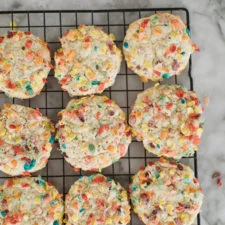
These chewy, crisp-edged sugar cookies have Fruity Pebbles folded into the dough and pressed over the outside for extra crunch. They come together quickly and make a colourful treat with a soft centre.
Ingredients
- 204 g (1½ cups)gluten-free baking flour
- 1 teaspoonbaking powder
- 1 teaspooncream of tartar
- ½ teaspoonbicarbonate of soda
- ½ teaspoonkosher salt
- 113 g (½ cup; 1 stick), at room temperatureunsalted butter
- 150 g (¾ cup)granulated sugar
- 1 largeegg
- 1 largeegg yolk
- 1 teaspoonpure vanilla extract
- ½ cup (about 120 ml), plus 1–1½ cups (about 240–360 ml) for dippingFruity Pebbles cereal
Instructions
- 1
Heat the oven
Set racks in the centre and upper third of the oven and preheat it to 177°C (350°F). Line two baking sheets with baking parchment.
- 2
Mix dry ingredients
Whisk the flour, baking powder, cream of tartar, bicarbonate of soda and salt together in a medium bowl.
- 3
Beat butter mixture
Using a paddle attachment, beat the butter and sugar at medium speed for 3–4 minutes, until light and fluffy. Add the egg, egg yolk and vanilla, then beat until combined.
- 4
Make the dough
Turn the mixer to low and gradually add the dry ingredients to the butter mixture. The dough will be thick; finish mixing with a spatula if needed, then fold in ½ cup of cereal.
- 5
Coat dough balls
Put 1–1½ cups of cereal in a medium bowl. Scoop 2 tablespoons of dough at a time, roll into balls and dip them in the cereal to coat generously. Arrange the balls on a baking-paper-lined sheet.
- 6
Bake and cool
Bake until the cookies have spread and are just starting to brown at the edges, while remaining mostly pale and soft, for 10–12 minutes. Leave them on the baking sheets for 5 minutes, then transfer to wire racks to cool completely.
What are cereal sprinkle cookies?
These are sugar cookies with colourful breakfast cereal mixed through the dough and used as a crunchy coating. The recipe gives a familiar, buttery cookie a playful texture contrast: soft and chewy in the middle, with crisp cereal on the outside.
This is a contemporary cookie variation rather than a traditional regional bake. Cream of tartar helps create the characteristic tender, slightly tangy sugar-cookie texture, while the gluten-free flour blend makes the dough suitable for a gluten-free version.
Nutrition and macros by portion
The nutrition label shows one serving as written: 133 calories, 2g protein, 22g carbs, 6g fat.
| Portion | Adjustment | kcal | Protein | Carbs | Fat |
|---|---|---|---|---|---|
| Lighter | Make smaller cookies | 93 kcal | 1g | 15g | 4g |
| This serving | As written | 133 kcal | 2g | 22g | 6g |
| Hungry | Serve two cookies | 200 kcal | 2g | 33g | 9g |
Most of the carbohydrates come from the flour, sugar and cereal, while butter supplies most of the fat; the egg and egg yolk contribute a little protein and fat. Pair a cookie with fresh fruit or plain yoghurt for a more balanced snack.
Choosing the flour and cereal
Flour blend: Use a gluten-free baking blend intended to replace wheat flour measure for measure. Different blends absorb moisture differently, so the finished dough may need a little spatula mixing to come together evenly.
Cereal: Fruity Pebbles go both into the dough and around each ball. Keep the coating cereal in a separate bowl so the dough pieces can be covered generously without making the whole batch difficult to handle.
Cream the butter and sugar well
Butter temperature: Room-temperature butter should yield when pressed but not look shiny or melted. This helps it beat smoothly with the sugar and gives the cookies a more even texture.
Mixing time: Beat for the full 3–4 minutes, until the mixture looks pale and fluffy. Add the egg, yolk and vanilla only after creaming, then mix until they are incorporated.
Handle the thick dough
Dry ingredients: Add them gradually with the mixer on low to avoid flour puffing out of the bowl. Stop once the dough is combined, and use a spatula to finish any flour left around the sides.
Cereal folding: Fold the measured cereal in gently so it stays in distinct pieces. Roll each 2-tablespoon portion into a ball before dipping it in the extra cereal.
Look for soft centres
Edges: The cookies are ready when they have spread and the edges are only just beginning to brown. Their centres should still look pale and soft; they will continue to set as they cool.
Cooling: Leave the cookies on the hot baking sheets for 5 minutes before moving them. This short rest helps them firm up enough to transfer without breaking.
Use both oven racks
Rack positions: The recipe uses racks in the centre and upper third of the oven, with two baking sheets. Keep the oven at 177°C (350°F) and check for the stated pale, soft-centred doneness rather than waiting for deep browning.
Timing: Bake for 10–12 minutes, as the exact point can vary with the oven and the size of the dough portions. If baking sheets do not fit comfortably, bake them in turns rather than crowding the oven.
Serving and pairing
These cookies are sweet and buttery, with a crisp cereal coating, so they work well alongside a glass of milk or a cup of tea or coffee. Serve them once completely cool for the best contrast between the coating and the soft centre.
For a more balanced snack, pair a cookie with plain yoghurt or fresh fruit. The recipe makes 18 cookies, so portioning them after cooling makes it easier to keep track of servings.
Recipe notes & tips
- Let the butter come to room temperature before starting so it creams evenly with the sugar.
- Measure the cereal for the dough separately from the cereal used for coating.
- Use a spatula to finish mixing if the thick dough does not move easily in the mixer.
- Press cereal over the dough balls generously so the outside gets a crunchy coating.
- Take the cookies out while the centres still look soft and pale.
- Wait 5 minutes before transferring the cookies to a rack.
Variations
- Different cereal: Use another crisp, colourful gluten-free cereal for a different flavour and appearance.
- Chocolate chips: Fold a small handful into the dough along with the cereal.
- Citrus note: Add a little finely grated lemon zest with the vanilla.
- Cinnamon sugar: Dust the dough balls lightly with cinnamon sugar before adding the cereal coating.
- Smaller cookies: Use smaller scoops and begin checking them earlier, as they will bake more quickly.
Common mistakes to avoid
- Melted butter: The dough may spread too much; use butter that is softened but still holds its shape.
- Overmixing: The dough can become less tender; stop mixing once the flour is incorporated.
- Skipping the coating bowl: Mixing all the cereal into the dough loses the crisp outer layer; reserve cereal for dipping.
- Overbaking: The cookies can turn dry and lose their soft centres; remove them when the edges are just starting to brown.
- Moving them too soon: Warm cookies may break; leave them on the baking sheet for 5 minutes first.
How to store
Once completely cool, keep the cookies in an airtight container at room temperature for up to 4 days. If they soften in storage, briefly warm them in a low oven, then cool before serving.
Frequently asked questions
Can I use a different gluten-free flour blend?
Yes, use a gluten-free blend designed for baking as a measure-for-measure replacement. The dough may feel slightly different depending on the blend, so mix in the dry ingredients gradually and finish with a spatula if needed.
Why does the recipe use cream of tartar?
It adds a little tang and contributes to the texture of the sugar cookies. Keep it in the recipe for the intended result.
How do I know when the cookies are baked?
Look for cookies that have spread and are just beginning to brown at the edges. The centres should remain mostly pale and soft.
Can I make the dough ahead?
The recipe gives instructions for baking the dough straight away and does not specify a make-ahead rest. For the closest match to the method, scoop, coat and bake the dough after mixing.
How should I store the cookies?
Cool them completely, then place them in an airtight container at room temperature. They keep for up to 4 days.
Can I bake both trays at once?
The method places racks in the centre and upper third and uses two baking sheets. Check both trays for the same pale centres and lightly browning edges, and bake in turns if your oven does not fit them comfortably.
Cook it from the original
This recipe comes from joythebaker.com. Their page has the author’s own photos, notes and tips — the best place to cook it from.
Open the recipe on joythebaker.com