
Homemade Bread - White Cob Loaf
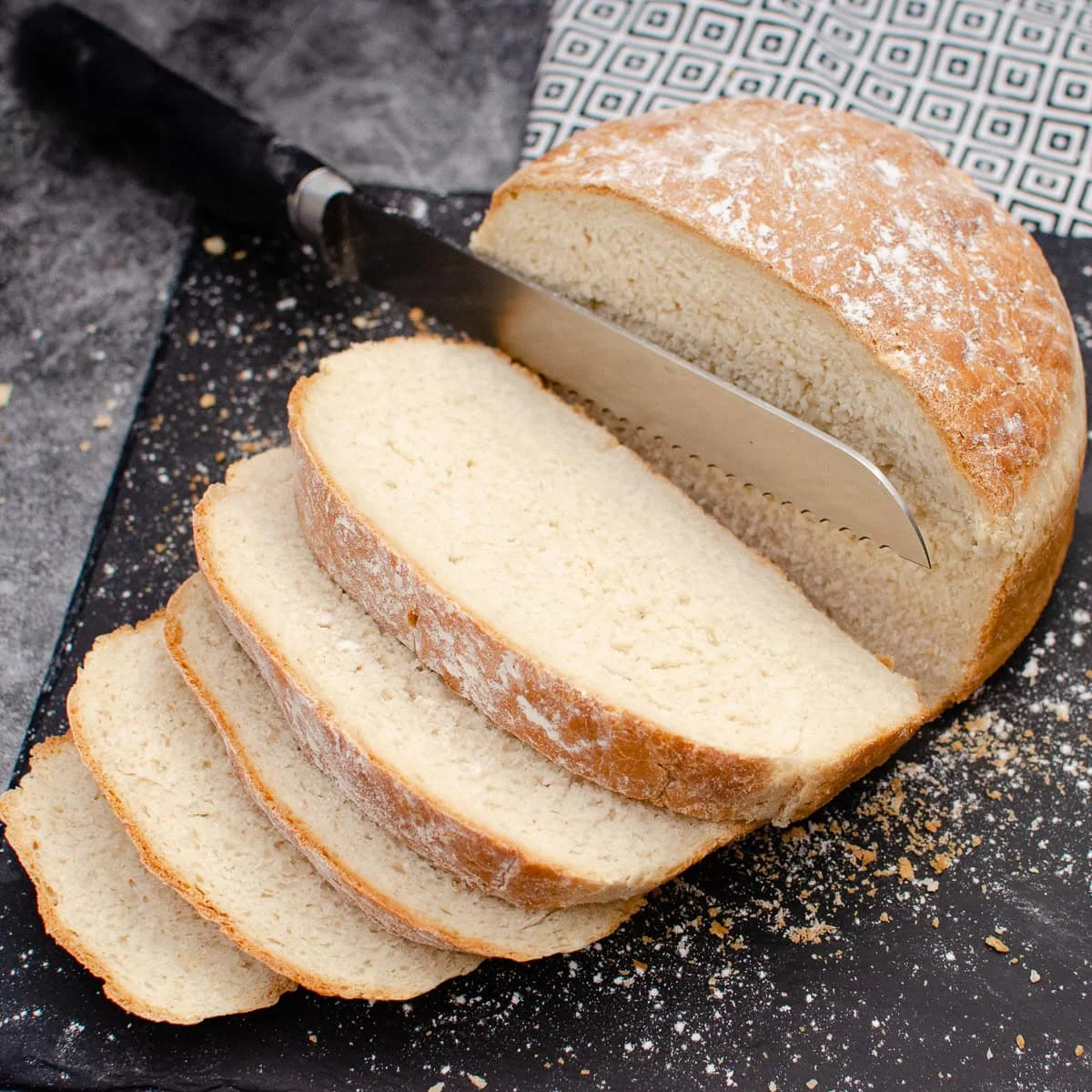
This traditional British-style white cob is a round loaf with a soft crumb and crusty exterior, made from a handful of store-cupboard ingredients. Knead it by hand or with a stand mixer, then choose an oven bake or a pressure-cooker method.
Ingredients
- 500 gramsstrong white flour
- 1 1/2 tspsalt
- 1 1/2 tspsugar
- 7 gramsinstant yeast
- 300 mlwarm water
- 2 tbspolive oil
Instructions
- 1
Mix by hand
Add the flour, salt, sugar, instant yeast, warm water and olive oil to a large mixing bowl. Mix by hand; the dough will feel messy and very wet at first, but keep mixing until it comes together. Do not add more flour.
- 2
Knead the dough
Turn the dough out onto a floured board and knead for 10 minutes, until smooth and elastic. Continue with either the oven or pressure-cooker method.
- 3
Use a mixer
For the stand-mixer method, put the flour, salt, sugar, instant yeast, warm water and olive oil into the mixer bowl. Fit the dough hook and start at a slow speed, using a silicone spatula to scrape any ingredients from the sides back into the mixture.
- 4
Knead in mixer
Once the dough has come together, increase the mixer to medium speed and mix for about 2 minutes. Transfer it to a floured worktop and shape it into a ball by hand, then continue with either cooking method.
- 5
Proof the dough
For the oven method, put the dough in an oiled round cake tin, cover with cling film and leave to rise for about 1–3 hours, until doubled in size. Leave it longer if needed.
- 6
Heat the oven
Preheat the oven to 200°C fan or 220°C conventional (425°F/Gas 7). Once the dough has doubled, put the tin on the middle shelf of the preheated oven.
- 7
Bake the loaf
Bake for 30 minutes, then transfer the loaf to a wire rack to cool. Once cooled, sprinkle with flour, slice and serve.
- 8
Proof in cooker
For the pressure-cooker method, line the pressure-cook pot with parchment paper and add the kneaded dough. Put on the lid with the pressure valve closed and use the yoghurt setting for 40 minutes. If your cooker does not have a yoghurt setting, cover the pot with a damp tea towel and leave the dough for 1–3 hours.
- 9
Cook in cooker
Once the dough has proofed, set the pressure cooker to its cake setting and cook for 40 minutes with the pressure valve closed.
- 10
Brown the crust
To brown the crust, preheat the oven to 180°C fan or 200°C conventional (400°F/Gas 6). Transfer the bread to a baking tray and bake for 10 minutes.
What is a white cob loaf?
A cob is a traditional round British loaf, often made with a simple white dough and baked until its crust is firm and golden. This version uses strong white flour, yeast, water, salt, sugar and olive oil for a straightforward homemade loaf.
The dough can be mixed and kneaded by hand or in a stand mixer, and the recipe gives both oven and pressure-cooker options. It works well sliced for breakfast or lunch, or served alongside dinner.
Nutrition and macros by portion
The nutrition label shows one serving as written: 350 calories, 10g protein, 62g carbs, 6g fat.
| Portion | Adjustment | kcal | Protein | Carbs | Fat |
|---|---|---|---|---|---|
| Lighter | Thinner bread slices | 245 kcal | 7g | 43g | 4g |
| This serving | As written | 350 kcal | 10g | 62g | 6g |
| Hungry | Larger, thicker slices | 525 kcal | 15g | 93g | 9g |
Most of the carbohydrates come from the strong white flour, while the olive oil provides most of the fat and the flour contributes some protein. Pair a slice with eggs, beans or another protein-rich filling and add vegetables for a more balanced plate.
Choosing and measuring the ingredients
Strong white flour: Its higher gluten-forming potential helps the dough develop an elastic structure that can hold its shape as it rises.
Yeast and water: Instant yeast is mixed directly with the other ingredients. Use warm, not hot, water so it can be mixed into the dough without overheating the yeast.
Salt, sugar and oil: These are mixed into the dough with the flour and water. Measure them carefully, as the quantities are small compared with the flour.
Kneading the dough
By hand: The dough may seem very wet and sticky at the start, but keep mixing until it comes together. The recipe specifically says not to add extra flour at this stage.
With a mixer: Begin slowly with the dough hook, scraping down the sides with a silicone spatula as needed. Once the dough comes together, mix at medium speed for about 2 minutes.
Knowing when it is ready to rise
After kneading, the dough should feel smooth and elastic. Shape it into a ball before setting it aside to proof.
For the oven method, look for the dough to double in size in its oiled cake tin; the stated rise time is about 1–3 hours, but it may need longer. For the pressure-cooker method, use the yoghurt setting for 40 minutes or allow 1–3 hours under a damp tea towel if that setting is unavailable.
Baking and crust
Oven bake: Heat the oven to 200°C fan or 220°C conventional and bake the risen loaf on the middle shelf for 30 minutes. Let it cool on a wire rack before adding the optional flour dusting.
Pressure cook: The loaf cooks for 40 minutes on the cake setting with the pressure valve closed. An additional 10 minutes in a hot oven is an optional way to brown the crust.
Serving the loaf
Let the bread cool before slicing so the crumb has time to settle. Serve it in soft slices with an English breakfast, cut thicker for doorstep sandwiches, or offer it as a dinner side.
For a simple meal, pair a slice with eggs or soup; for a sandwich, add a protein-rich filling and salad vegetables.
Recipe notes & tips
- Weigh the flour for the most consistent dough.
- Resist adding extra flour when the dough feels sticky at first.
- Use a floured board for kneading, as directed, without working extra flour into the dough.
- Allow more rising time if the dough has not doubled after 1–3 hours.
- Cool the loaf on a wire rack before slicing.
- Use the optional oven step after pressure cooking if you want a more browned crust.
Variations
- Mixer method: Use a stand mixer and dough hook instead of kneading by hand.
- Pressure-cooker method: Proof and cook the dough in a pressure cooker using the yoghurt and cake settings.
- Extra crust colour: Bake the pressure-cooked loaf in a hot oven for 10 minutes.
- Flour finish: Dust the cooled loaf with flour as directed for a traditional-looking finish.
Common mistakes to avoid
- Adding flour too soon: The dough starts out wet, so keep mixing rather than adding more flour.
- Under-kneading by hand: Knead for the full 10 minutes until the dough is smooth and elastic.
- Rushing the rise: Wait for the dough to double, extending the 1–3 hour rise if needed.
- Slicing while hot: Cool the loaf on a wire rack first so it is easier to slice.
- Skipping the cooker browning step: The oven finish is optional, but use it if you want a browned crust.
How to store
Once completely cool, store the loaf in a bread bag or airtight container at room temperature and use within a few days. Refresh slices briefly in a toaster or warm oven.
Frequently asked questions
Can I knead this bread by hand?
Yes. Mix the ingredients in a bowl, then knead on a floured board for 10 minutes, until the dough is smooth and elastic.
Can I use a stand mixer?
Yes. Use a dough hook, start at a slow speed and scrape the sides as needed. Once the dough comes together, mix at medium speed for about 2 minutes.
How long should the dough rise?
For the oven method, allow about 1–3 hours and check that it has doubled in size. Leave it longer if it has not risen enough.
Can I make this in a pressure cooker?
Yes. Proof it on the yoghurt setting for 40 minutes, then cook on the cake setting for 40 minutes with the pressure valve closed. Without a yoghurt setting, proof it for 1–3 hours under a damp tea towel.
How do I get a browner crust from the pressure cooker?
After pressure cooking, transfer the loaf to a baking tray and bake it for 10 minutes at 180°C fan or 200°C conventional.
When should I slice the loaf?
Wait until it has cooled on a wire rack. The recipe also suggests dusting it with flour once cooled.
Cook it from the original
This recipe comes from flawlessfood.co.uk. Their page has the author’s own photos, notes and tips — the best place to cook it from.
Open the recipe on flawlessfood.co.uk