
Thai Panang curry - Instant Pot
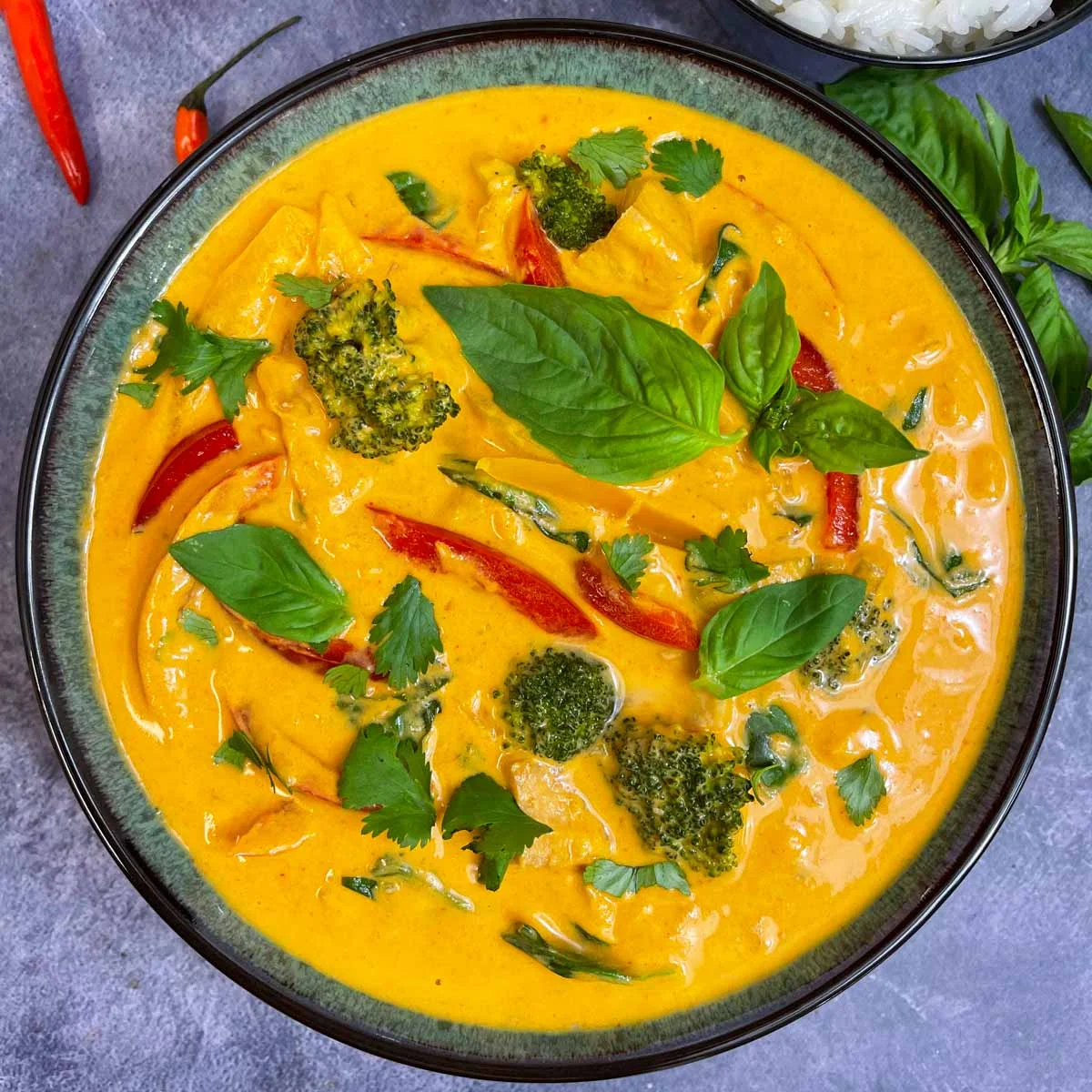
This Thai-inspired Panang curry pairs coconut milk and curry paste with broccoli, peppers and tofu for a creamy, mildly spicy meal. Make it in an Instant Pot or on the hob, then finish with peanut butter, lime and Thai basil.
Ingredients
- 15 ml (1 tablespoon)oil
- 2 clovesgarlic, minced
- 1 smallonion, finely chopped
- 2–3 tablespoons (30–45 ml)Panang curry paste (or Thai curry paste)
- 400 ml (1 can, 14 oz)full-fat coconut milk
- 120 ml (½ cup)water (or vegetable stock)
- About 90 g (1 cup)broccoli florets
- 2 smallcoloured bell peppers, yellow and red, thinly sliced
- About 150 g (1 cup)extra-firm tofu, cubed and baked
- ½ teaspoonbrown sugar (optional)
- to tastesalt
- 15 ml (1 tablespoon)soy sauce (or tamari for a gluten-free version)
- 30 g (2 tablespoons)creamy peanut butter
- Juice of ½ limelime
- About 10 g (½ cup)Thai basil leaves
Instructions
- 1
Soften aromatics
For the Instant Pot method, select Sauté and add the oil. Once hot, add the minced garlic and onion and cook for about 2 minutes, until the onion softens.
- 2
Fry the paste
Add the Panang curry paste, or red curry paste, and sauté for 1 minute.
- 3
Add coconut milk
Stir in the coconut milk and 120 ml (½ cup) water.
- 4
Pressure cook
Close the lid and set the Instant Pot to Manual or Pressure Cook on low pressure for 1 minute. If low pressure is unavailable, set the cooking time to 0 minutes.
- 5
Release pressure
When the pot beeps, let the pressure release naturally for 5 minutes, then carefully release the remaining pressure manually.
- 6
Cook the vegetables
Stir in the broccoli, sliced peppers, baked tofu, salt and brown sugar, if using. Switch to Sauté and simmer for 3–4 minutes, taking care not to overcook the vegetables.
- 7
Finish the curry
Mix in the peanut butter, soy sauce, lime juice and roughly torn basil leaves. The curry will thicken as it cools.
- 8
Serve it hot
Serve the vegetarian Panang curry hot with steamed jasmine rice.
- 9
Soften aromatics
For the hob method, heat the oil in a pan over medium-high heat. Add the minced garlic and onion and sauté for about 2 minutes, until the onion softens.
- 10
Fry the paste
Add the Panang curry paste and sauté for 1 minute.
- 11
Simmer coconut milk
Stir in the coconut milk and 120 ml (½ cup) water. Bring to the boil, then simmer over medium-low heat for 4–5 minutes.
- 12
Add vegetables
Stir in the broccoli, sliced peppers, baked tofu, salt and brown sugar, if using.
- 13
Cook until tender
Cover the pan and cook over medium heat for 4–5 minutes, until the vegetables are fork-tender. Avoid overcooking them. Adjust the curry’s consistency at this stage with water if desired.
- 14
Finish the curry
Mix in the peanut butter, soy sauce, lime juice and roughly torn basil leaves. The curry will thicken as it cools.
What is Panang curry?
Panang curry is a Thai curry known for its rich coconut base and aromatic curry paste. This version brings those flavours together with vegetables and tofu, using either an Instant Pot or a pan on the hob.
Coconut milk softens the paste’s spice, while peanut butter adds another creamy note. Lime juice and Thai basil go in at the end to keep their fresh flavours distinct.
Nutrition and macros by portion
The nutrition label shows one serving as written: 146 calories, 8g protein, 9g carbs, 9g fat.
| Portion | Adjustment | kcal | Protein | Carbs | Fat |
|---|---|---|---|---|---|
| Lighter | Use less coconut milk | 102 kcal | 6g | 6g | 6g |
| This serving | As written | 146 kcal | 8g | 9g | 9g |
| Hungry | Serve with extra rice | 219 kcal | 12g | 14g | 14g |
The coconut milk and oil provide much of the fat, while the tofu contributes protein. The vegetables, curry paste and optional sugar contribute carbohydrates; serve with a moderate portion of jasmine rice and add extra vegetables to balance the plate.
Choosing the curry paste
Paste: Panang curry paste gives the dish its characteristic flavour; Thai curry paste is offered as an alternative. Start with 2 tablespoons if you prefer a milder result, or use up to 3 tablespoons for more intensity.
Aromatics: Cook the garlic and onion until the onion softens, then sauté the paste for a minute. This order helps the paste blend into the curry base.
Getting the texture right
Coconut base: The coconut milk and water form the sauce, and the peanut butter helps give it a creamy finish. Expect the curry to thicken a little as it cools.
Consistency: If making it on the hob, adjust the thickness with water after the vegetables cook. Add it gradually so the sauce does not become too thin.
Cooking the vegetables
Vegetables: Broccoli and thinly sliced peppers cook quickly, so add them after the pressure-cooking stage in the Instant Pot method. On the hob, cover the pan for 4–5 minutes and check that the vegetables are fork-tender.
Tofu: The recipe uses baked, cubed tofu, which is stirred in with the vegetables. Since it is already baked, it only needs to heat through in the curry.
Instant Pot timing
Pressure: Cook the coconut milk and water mixture for 1 minute on low pressure, or set the timer to 0 minutes if the pot does not offer low pressure. Allow 5 minutes of natural release before releasing the remaining pressure manually.
Finish: Add the quick-cooking vegetables only after releasing the pressure, then use the Sauté setting for 3–4 minutes. This keeps them from spending the whole cooking time under pressure.
Finishing with lime and basil
Fresh finish: Stir in the lime juice and roughly torn Thai basil after cooking the vegetables. The recipe adds these alongside the peanut butter and soy sauce, just before serving.
Seasoning: Salt is listed to taste, and the brown sugar is optional. Taste the finished curry and adjust the salt to suit.
What to serve with it
Rice: Steamed jasmine rice is the suggested accompaniment and makes a simple base for the creamy sauce.
Serving: Spoon the curry over rice while hot. If serving family-style, keep the curry in a warm dish so everyone can take their preferred share of sauce and vegetables.
Recipe notes & tips
- Have the vegetables sliced and the tofu cubed before starting, as both methods move quickly once the sauce is ready.
- Sauté the curry paste for the full minute before adding the coconut milk.
- Use baked tofu as listed so it is ready to add straight to the curry.
- Keep the Instant Pot vegetables to a 3–4 minute sauté to avoid overcooking them.
- Add the lime juice and basil at the end of cooking for a fresh finish.
- If the hob version seems too thick, thin it with a little water after the vegetables are tender.
Variations
- Use tamari: Replace the soy sauce with tamari for the gluten-free alternative in the recipe.
- Swap the paste: Use Thai curry paste instead of Panang curry paste as suggested.
- Adjust the heat: Use 2 tablespoons of curry paste for a milder curry or 3 for a stronger one.
- Skip the sugar: Leave out the optional brown sugar without changing the cooking method.
- Change the vegetables: Use other quick-cooking vegetables in place of the listed broccoli and peppers.
- Make it on the hob: Follow the stovetop method when you do not want to use an Instant Pot.
Common mistakes to avoid
- Overcooking the vegetables: Keep to the stated cooking times and stop when they are fork-tender.
- Adding vegetables before pressure cooking: Stir them in after the pressure release so they do not cook for the full pressure cycle.
- Skipping the paste sauté: Fry it for 1 minute with the aromatics before adding the coconut milk.
- Releasing pressure immediately: Allow 5 minutes of natural pressure release, then manually release what remains.
- Making the sauce too thin: Add water gradually when adjusting the hob version’s consistency.
- Adding the basil too early: Stir it in at the end with the lime juice and peanut butter.
How to store
Refrigerate leftover curry in an airtight container and eat within 3 days. Reheat gently in a pan or microwave until piping hot, stirring well; add a splash of water if the sauce has thickened.
Frequently asked questions
Can I make this curry without an Instant Pot?
Yes. Use the hob method: simmer the coconut milk and water for 4–5 minutes, then cover and cook the vegetables and tofu for another 4–5 minutes.
What if my Instant Pot has no low-pressure setting?
Set the pressure-cooking time to 0 minutes, as the method specifies. Then allow 5 minutes of natural pressure release before manually releasing the rest.
How do I keep the vegetables from going soft?
For the Instant Pot method, add them after releasing the pressure and sauté for just 3–4 minutes. On the hob, cook them covered for 4–5 minutes and check for fork tenderness.
Can I use a different curry paste?
The ingredient list allows Thai curry paste, and the method also mentions red curry paste. The flavour will vary depending on the paste you choose.
Why has the curry thickened as it cools?
That is expected: the recipe notes that the curry thickens as it cools. Stir in a little water when reheating if you prefer a looser sauce.
What should I serve with Panang curry?
The recipe suggests serving it hot with steamed jasmine rice.
Cook it from the original
This recipe comes from indianveggiedelight.com. Their page has the author’s own photos, notes and tips — the best place to cook it from.
Open the recipe on indianveggiedelight.com