
Flatbread FAST
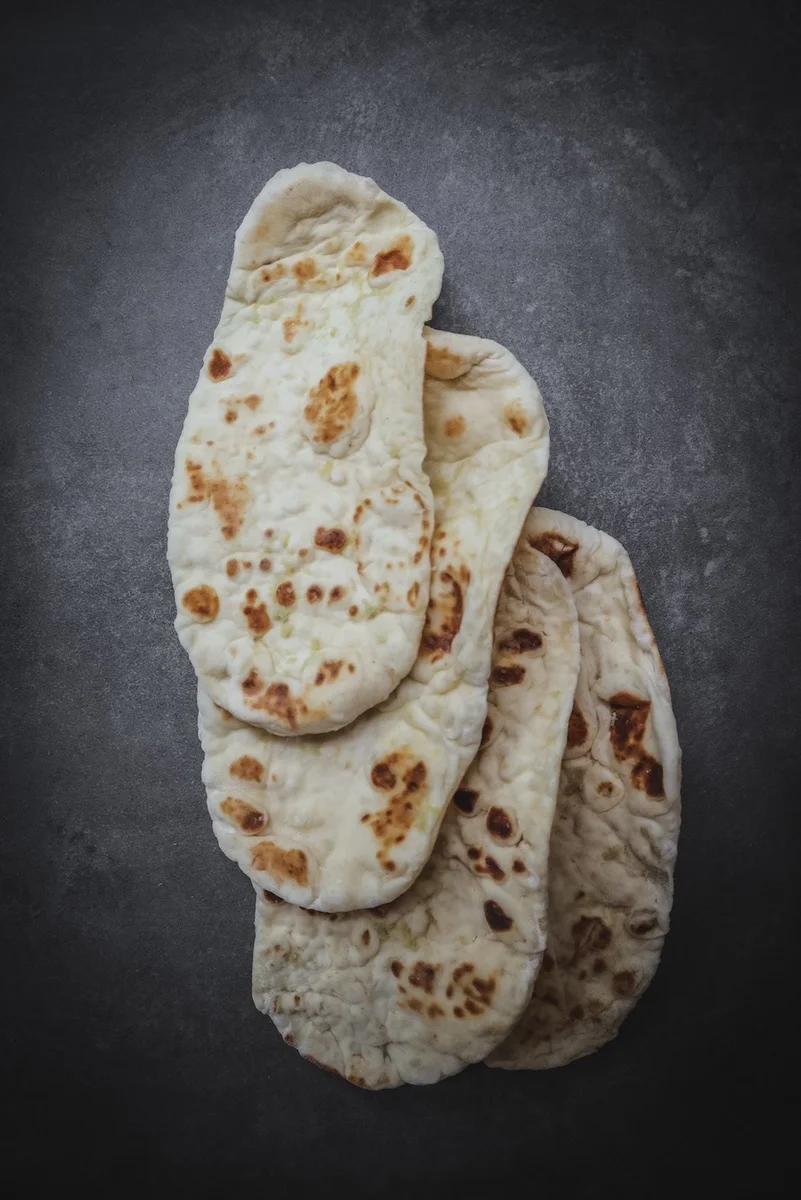
These quick flatbreads use self-raising flour and full-fat yoghurt for a soft, pliable dough without yeast. Cook them in a hot, dry pan or on a grill, then finish with garlic butter and parsley.
Ingredients
- 270 gself-raising flour
- 270 gfull-fat double cream yoghurt
- 1 tablespoonmelted butter or ghee
- 1 teaspoonsalt
- 2 tablespoonsmelted butter
- 1garlic clove, minced
- 2 teaspoonsparsley, optional
Instructions
- 1
Mix and rest
Mix the flour, yoghurt, 1 tablespoon of melted butter or ghee, and salt into a dough. Knead for 5 minutes, then leave to rest for 30 to 60 minutes.
- 2
Divide the dough
Divide the dough into 6 to 8 balls and dust them with flour.
- 3
Roll the flatbreads
Dust the workbench with flour and roll each ball into a rectangle about 22 cm × 12 cm. If you made 8 balls, the flatbreads will be slightly smaller.
- 4
Cook until bubbling
Cook the flatbreads in a hot, dry pan or on a Weber grill for 2 to 3 minutes per side. When bubbles begin to appear, flip each flatbread and cook the other side.
- 5
Brush and finish
When the flatbreads are cooked, brush them with the 2 tablespoons of melted butter and minced garlic, then sprinkle with parsley.
What are these flatbreads?
Flatbread is a broad family of breads made as thin rounds or ovals and cooked on a hot surface. This quick version uses self-raising flour and yoghurt instead of a yeast dough, so it needs no proving.
The method is simple and adaptable: roll the dough into rectangles, cook them until they bubble, and finish with garlic butter and parsley.
Nutrition and macros by portion
The nutrition label shows one serving as written: 275 calories, 6g protein, 34g carbs, 10g fat.
| Portion | Adjustment | kcal | Protein | Carbs | Fat |
|---|---|---|---|---|---|
| Lighter | Use less garlic butter | 193 kcal | 4g | 24g | 7g |
| This serving | As written | 275 kcal | 6g | 34g | 10g |
| Hungry | Make eight smaller flatbreads | 413 kcal | 9g | 51g | 15g |
The flour provides most of the carbohydrates, while the yoghurt and flour contribute some protein. The butter and full-fat yoghurt supply much of the fat; serve a flatbread with vegetables and a protein-rich accompaniment to round out the plate.
The dough ingredients
Self-raising flour: its raising agents help the breads puff slightly as they cook. Measure it carefully so the dough does not become too dry.
Yoghurt: full-fat double cream yoghurt brings moisture and richness. The dough should come together into a workable mass after mixing.
Butter and salt: the tablespoon of butter or ghee goes into the dough, while the additional melted butter is used for the finish. Salt seasons the dough itself.
Resting and rolling
Rest: leave the kneaded dough for 30 to 60 minutes as directed. This gives it time to relax, making it easier to roll.
Shape: flour the workbench and roll the portions into rectangles about 22 cm × 12 cm. Use a light dusting of flour to prevent sticking without working too much extra flour into the dough.
How to tell when they are done
Bubbles: watch the surface as the first side cooks; bubbles are the cue to turn the flatbread. Cook the other side for the same 2 to 3 minutes.
Heat: use a hot, dry pan or grill so the breads cook directly on the surface. If they darken too quickly before bubbles form, lower the heat slightly.
Garlic butter finish
Butter: brush the flatbreads while they are still hot so the melted butter coats the surface. This is the second butter quantity, separate from the butter or ghee mixed into the dough.
Garlic and parsley: spread the minced garlic with the butter and add the optional parsley just before serving. For a milder garlic flavour, let the garlic sit in the melted butter briefly before brushing.
Serving ideas
Serve the flatbreads warm alongside curry, soup, or a stew, or use them to scoop up dips. They also work as a simple accompaniment to grilled vegetables or meat.
For a more balanced plate, pair them with a protein-rich dish and vegetables rather than serving them as the whole meal.
Recipe notes & tips
- Keep a little flour nearby for dusting the workbench and dough.
- Roll the portions to a similar thickness so they cook at roughly the same pace.
- Cook the flatbreads in batches if they do not fit comfortably in the pan.
- Use the bubbles on the surface as your cue to turn each bread.
- Brush with the garlic butter while the flatbreads are hot.
Variations
- Herb finish: swap the parsley for another finely chopped soft herb.
- Ghee dough: use ghee instead of the tablespoon of butter in the dough.
- Plain finish: leave off the garlic and parsley and brush with melted butter alone.
- Dipping breads: make 8 smaller flatbreads for serving with dips.
- Grilled version: cook the flatbreads on a Weber grill for the same 2 to 3 minutes per side.
Common mistakes to avoid
- Adding too much flour: use only enough for dusting so the dough does not turn dry.
- Skipping the rest: leave the dough for 30 to 60 minutes to make it easier to roll.
- Rolling unevenly: aim for a consistent thickness so the breads cook evenly.
- Flipping too soon: wait for bubbles to appear before turning the flatbread.
- Overcooking: keep an eye on the breads and use the stated 2 to 3 minutes per side as a guide.
How to store
Cool any leftovers and store them in an airtight container in the fridge for up to 3 days. Reheat briefly in a dry pan or on a grill until warmed through.
Frequently asked questions
Can I make 6 or 8 flatbreads?
Yes. The method allows for 6 to 8 dough balls; making 8 gives you slightly smaller flatbreads.
How long should the dough rest?
Rest it for 30 to 60 minutes after kneading for 5 minutes.
Can I cook these without a Weber grill?
Yes. Cook them in a hot, dry pan for 2 to 3 minutes per side instead.
When should I flip a flatbread?
Flip it when bubbles begin to appear on the cooking surface, then cook the other side for 2 to 3 minutes.
Is the parsley essential?
No, it is optional. You can omit it and still finish the breads with the melted butter and garlic.
Can I use ghee?
Yes. The recipe gives ghee as an alternative to the tablespoon of melted butter mixed into the dough.
Cook it from the original
This recipe comes from freshkitchen.co.za. Their page has the author’s own photos, notes and tips — the best place to cook it from.
Open the recipe on freshkitchen.co.za