
Chicken with Lemon Sauce
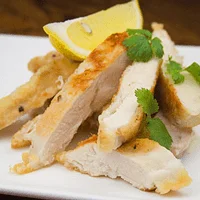
This Chinese takeaway-style chicken pairs golden, lightly coated breast fillets with a glossy lemon sauce. It is a good choice when you want a sweet-sharp main that comes together in about 35 minutes, including a short marinade.
Ingredients
- 4 smallchicken breast fillets
- 5 ml (1 tsp)sesame oil
- 15 ml (1 tbsp)dry sherry
- 1egg white, lightly beaten
- 30 ml (2 tbsp)cornflour
- 15 ml (1 tbsp)vegetable oil
- to tastesalt and pepper
- 45 ml (3 tbsp)fresh lemon juice
- 30 ml (2 tbsp)lime cordial
- 45 ml (3 tbsp)caster sugar
- 10 ml (2 tsp)cornflour
- 90 ml (6 tbsp)water
- to garnishcoriander leaves
- to garnishlemon wedges
Instructions
- 1
Marinate the chicken
Arrange the chicken breasts in one layer in a shallow bowl. Mix the sesame oil and sherry with 2.5 ml (½ tsp) salt and 1.5 ml (¼ tsp) pepper, then pour over the chicken. Cover and leave to marinate for 15 minutes.
- 2
Coat and fry
Mix the egg white with 30 ml (2 tbsp) cornflour and add it to the chicken. Turn the fillets with tongs until coated all over. Heat the vegetable oil in a non-stick frying pan or wok and fry the chicken for about 15 minutes, until golden brown on both sides.
- 3
Make the sauce
Meanwhile, combine the lemon juice, lime cordial, caster sugar, 10 ml (2 tsp) cornflour and water in a small pan. Add the recipe’s stated 1.5 ml (¼ tsp) pepper and salt. Bring to the boil over a low heat, stirring constantly, until smooth and slightly thickened.
- 4
Serve the chicken
Cut the chicken into pieces and arrange it on a warm serving plate. Pour over the sauce and garnish with coriander leaves and lemon wedges. Serve immediately.
What is chicken with lemon sauce?
This is a Chinese takeaway-style dish of chicken served with a bright, sweet-and-sour lemon sauce. Lemon chicken is familiar from Chinese restaurant and takeaway menus, though recipes and preparations vary.
Here, small chicken breast fillets are coated with egg white and cornflour, then pan-fried before being covered in a sauce made with lemon juice and lime cordial. The combination gives the sauce its citrus tang and sweetness without a separate deep-frying step.
Nutrition and macros by portion
The nutrition label shows one serving as written: 309 calories, 27g protein, 20g carbs, 12g fat.
| Portion | Adjustment | kcal | Protein | Carbs | Fat |
|---|---|---|---|---|---|
| Lighter | Less sugar, more vegetables | 216 kcal | 19g | 14g | 8g |
| This serving | As written | 309 kcal | 27g | 20g | 12g |
| Hungry | Add a larger rice portion | 464 kcal | 40g | 30g | 17g |
The chicken supplies most of the protein, while the cornflour and sugar contribute carbohydrates. The cooking oil and sesame oil provide fat; serve with vegetables alongside rice or noodles to make a more rounded plate.
The chicken and marinade
Breast fillets: Small fillets cook more evenly and are easier to coat and fry whole. If they vary in thickness, keep an eye on the thinner pieces as they may cook sooner.
Marinade: Sesame oil and dry sherry season the chicken before it is coated. Give it the full 15 minutes while you prepare the sauce ingredients.
Getting an even coating
Egg white: Beat it lightly before mixing it with the first measure of cornflour. Turning the chicken with tongs helps spread the mixture over the fillets without handling them too much.
Pan-frying: Use a non-stick pan or wok and leave space around the fillets. Turn them so both sides become golden; the recipe gives about 15 minutes, but check that the thickest part is cooked through.
A smooth, lightly thickened sauce
Cornflour: The second measure is mixed with the other sauce ingredients, then thickens as the mixture heats. Stir constantly as it comes to the boil to help keep the sauce smooth.
Consistency: The method calls for the sauce to thicken slightly, rather than become a stiff glaze. Take it off the heat once it is smooth and lightly coats a spoon.
Balancing sweet and sharp
Lemon juice: Fresh juice brings a direct citrus sharpness to the sauce. Lime cordial adds sweetness as well as another citrus note, while caster sugar rounds out the flavour.
Taste: The sauce is intended to be sweet and tangy. If you taste it before serving, remember that the chicken and its marinade also contribute seasoning.
Serving the dish
Warm plate: Arrange the cut chicken on a warmed serving plate so it stays hot when the sauce is added. Pour the sauce over just before serving.
Garnishes: Coriander leaves and lemon wedges add freshness and let diners add extra citrus at the table. Rice or plain noodles make a simple accompaniment for the sauce.
Recipe notes & tips
- Prepare the sauce ingredients while the chicken marinates so they are ready to go.
- Use tongs to turn the fillets in the egg-white and cornflour coating.
- Keep the heat moderate so the coating can brown without scorching.
- Stir the sauce continuously as it heats and thickens.
- Cut into the thickest fillet to check that it is cooked through before serving.
- Warm the serving plate shortly before arranging the chicken on it.
Variations
- Extra lemon: Serve with additional lemon wedges for a sharper citrus finish.
- More vegetables: Add quickly cooked greens or stir-fried vegetables alongside the chicken.
- Rice accompaniment: Serve with plain steamed rice to catch the sauce.
- Noodle accompaniment: Pair with plain noodles for a different base.
- Citrus balance: Adjust the amount of lemon wedges at the table to suit individual tastes.
Common mistakes to avoid
- Crowded pan: The fillets can cook unevenly; fry in batches if they do not fit in one layer.
- Uneven coating: Turn each fillet thoroughly with tongs so the egg-white mixture covers it.
- Unstirred sauce: Cornflour can form lumps; keep stirring as the sauce heats.
- Over-reduced sauce: It should thicken only slightly; remove it from the heat once smooth and lightly thickened.
- Skipping the doneness check: Cooking time can vary with fillet size; check the thickest piece before serving.
How to store
Refrigerate leftovers in a covered container within two hours and use within 2 days. Reheat the chicken and sauce until piping hot, adding a small splash of water if the sauce has thickened in the fridge.
Frequently asked questions
Can I use chicken thighs instead of breast?
Yes, but choose boneless thighs and adjust the cooking time to suit their size. Check that the thickest piece is cooked through before serving.
Can I make the sauce ahead?
You can mix the sauce ingredients in advance and keep them covered in the fridge. Heat it while the chicken cooks, stirring constantly until it thickens slightly.
How can I tell when the chicken is cooked?
Check the thickest part of a fillet; it should be cooked through with no raw centre. The recipe’s approximate frying time is 15 minutes, but fillet size and pan heat affect timing.
Can I use bottled lemon juice?
Fresh lemon juice is specified and gives the sauce a bright flavour. Bottled juice can be used if needed, though the result may taste different.
What can I serve with lemon chicken?
Plain steamed rice or noodles work well with the sauce. Add vegetables on the side for freshness and contrast.
Cook it from the original
This recipe comes from greedygourmet.com. Their page has the author’s own photos, notes and tips — the best place to cook it from.
Open the recipe on greedygourmet.com