
Pork Pochero Recipe
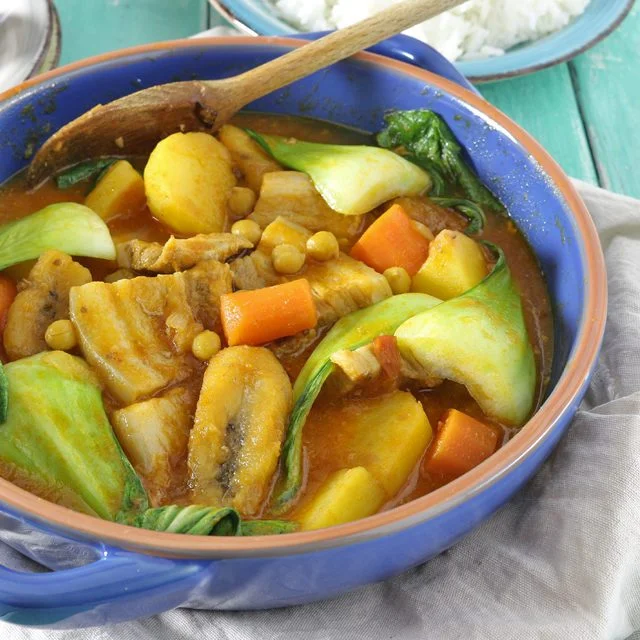
Pork pochero is a Filipino tomato-based stew made hearty with pork belly, chickpeas and vegetables, with ripe plantain giving it a distinctive sweet note. It is a comforting one-pot meal to serve hot with rice.
Ingredients
- 900 g (2 pounds)pork belly, cut into cubes
- 30–45 ml (2–3 tablespoons)oil
- 2ripe plantain bananas, each cut into 3 pieces
- 1 smallcarrot, cut into chunks
- 1 large or 2 mediumpotato, cut into quarters
- 2 clovesgarlic, minced
- 1 mediumonion, chopped
- 2 mediumtomatoes, cut into chunks
- 15 ml (1 tablespoon)tomato paste
- 30 ml (2 tablespoons)fish sauce
- 0.6 ml (1/8 teaspoon)ground pepper
- 240 ml (1 cup)canned chickpeas (garbanzos)
- 480–720 ml (2–3 cups)pork broth or water
- 1 bunchpak choi, base trimmed
Instructions
- 1
Boil the pork
Boil the pork belly in water until tender. When it is ready, separate the meat from the broth and set both aside for cooking.
- 2
Fry the vegetables
Heat the oil in a deep pan or pot. Fry the potatoes, carrot and plantain until their edges are lightly browned, then lift them out and transfer them to a plate.
- 3
Cook the aromatics
Using the same oil, sauté the garlic, onion and tomatoes until softened.
- 4
Season the pork
Add the pork belly and tomato paste. Season with the fish sauce and ground pepper.
- 5
Return the vegetables
Add the fried potatoes, carrot and plantain back to the pot, along with the chickpeas.
- 6
Simmer the stew
Pour in the pork broth or water. Simmer until the potatoes and carrot are cooked and the broth has thickened into a sauce.
- 7
Wilt the pak choi
Add the pak choi and turn off the heat. Cover the pot for 3 minutes to cook the greens.
- 8
Serve the pochero
Serve hot with rice.
What is pork pochero?
Pochero is a Filipino stew with Spanish colonial-era culinary roots, commonly made with meat, vegetables and a savoury broth. This version builds its tomato base from fresh tomatoes and tomato paste, then adds chickpeas and pork belly.
Plantain is the ingredient that makes this take stand out: it brings a ripe, gently sweet contrast to the rich pork and savoury sauce. The recipe fries the vegetables first, helping them keep their shape as they simmer.
Nutrition and macros by portion
The nutrition label shows one serving as written: 1417 calories, 30g protein, 35g carbs, 129g fat.
| Portion | Adjustment | kcal | Protein | Carbs | Fat |
|---|---|---|---|---|---|
| Lighter | Use less pork belly | 992 kcal | 21g | 25g | 90g |
| This serving | As written | 1417 kcal | 30g | 35g | 129g |
| Hungry | Add more rice | 2126 kcal | 45g | 53g | 194g |
The pork belly supplies most of the fat and a substantial share of the protein, while the potato, plantain and chickpeas contribute carbohydrates; the chickpeas also add some protein. Serve it with a moderate portion of rice and extra vegetables if you want a more balanced plate.
Choosing the pork and plantain
Pork belly: boiling it first makes it tender and provides broth for the stew. Cut it into even cubes so the pieces cook at a similar rate.
Plantain: choose ripe fruit for the sweet flavour described in the recipe. Cut each one into three pieces and fry gently so the edges brown without the pieces falling apart.
Why fry the vegetables first?
Potato and carrot: frying them until their edges are lightly browned gives them a head start before they go back into the broth. Remove them as soon as they colour; they will finish cooking in the stew.
Plantain: frying it in the same oil adds colour and helps it hold together. Use a plate to keep the fried ingredients separate from the pan while you cook the aromatics.
Building the tomato base
Aromatics: sauté the garlic, onion and tomatoes until limp, as the method directs. This softens them before the pork and tomato paste are added.
Seasoning: fish sauce and ground pepper season the pork and tomato mixture. The broth then loosens the base into a sauce that thickens as it simmers.
Checking the simmer
Vegetables: simmer until the potatoes and carrot are cooked through. The recipe gives a visual finish rather than a set simmering time, so check the vegetables for tenderness.
Sauce: look for broth that has reduced to a thicker, coating consistency. Add the broth or water in the stated range, using less for a thicker result and more for a looser stew.
Finishing with pak choi
Pak choi: add it at the end and switch off the heat, then cover the pot for 3 minutes. This brief covered rest cooks the greens without simmering them throughout the whole stew.
Serve the pochero hot with rice, which is also a natural accompaniment for the savoury tomato sauce.
Recipe notes & tips
- Cut the pork belly into even cubes so the pieces become tender at a similar pace.
- Fry the potato, carrot and plantain in batches if needed to give them room to brown.
- Keep the fried ingredients on a plate while you soften the garlic, onion and tomatoes in the same oil.
- Begin with the lower amount of broth or water if you prefer a thicker sauce.
- Add the pak choi only at the end, then leave the covered pot off the heat for 3 minutes.
Variations
- Use pork broth: use the cooking broth from the pork for a fuller savoury base.
- Choose water: replace the broth with water for a milder sauce.
- Adjust the plantain: use fewer pieces for a less pronounced sweet note.
- Add more chickpeas: increase the chickpeas for a heartier stew.
- Serve with rice: spoon the stew and sauce over rice for a more substantial meal.
Common mistakes to avoid
- Crowding the pan: the vegetables may soften instead of browning; fry them in batches.
- Overcooking the plantain: it can break up in the stew; remove it once its edges are lightly browned.
- Adding pak choi too early: it may become overly soft; add it after the stew has simmered and cover for just 3 minutes.
- Using too much liquid: the sauce may stay thin; start with less broth or water and add more if needed.
- Skipping the vegetable check: potato and carrot need to be cooked through; simmer until tender before finishing the dish.
How to store
Refrigerate leftovers in a covered container within 2 hours and use within 3–4 days. Reheat until steaming hot, adding a splash of water or broth if the sauce has thickened.
Frequently asked questions
Can I use water instead of pork broth?
Yes. The recipe allows either pork broth or water; broth gives the sauce a more savoury flavour.
How ripe should the plantains be?
Use ripe plantain, as specified, for the characteristic sweet contrast. Fry the pieces until the edges are lightly browned so they can go into the stew without being cooked to mush.
Can I prepare the pork ahead?
Yes. Boil the pork belly until tender, then keep the meat and broth separately in the refrigerator until you are ready to make the stew.
How do I know when the stew is ready?
The potatoes and carrot should be tender, and the broth should have thickened into a sauce. Add the pak choi at the end and cover for 3 minutes.
What should I serve with pork pochero?
Serve it hot with rice, as the recipe suggests. Rice works well with the tomato sauce.
Cook it from the original
This recipe comes from foxyfolksy.com. Their page has the author’s own photos, notes and tips — the best place to cook it from.
Open the recipe on foxyfolksy.com