
Stovetop Skillet Chicken with Artichokes
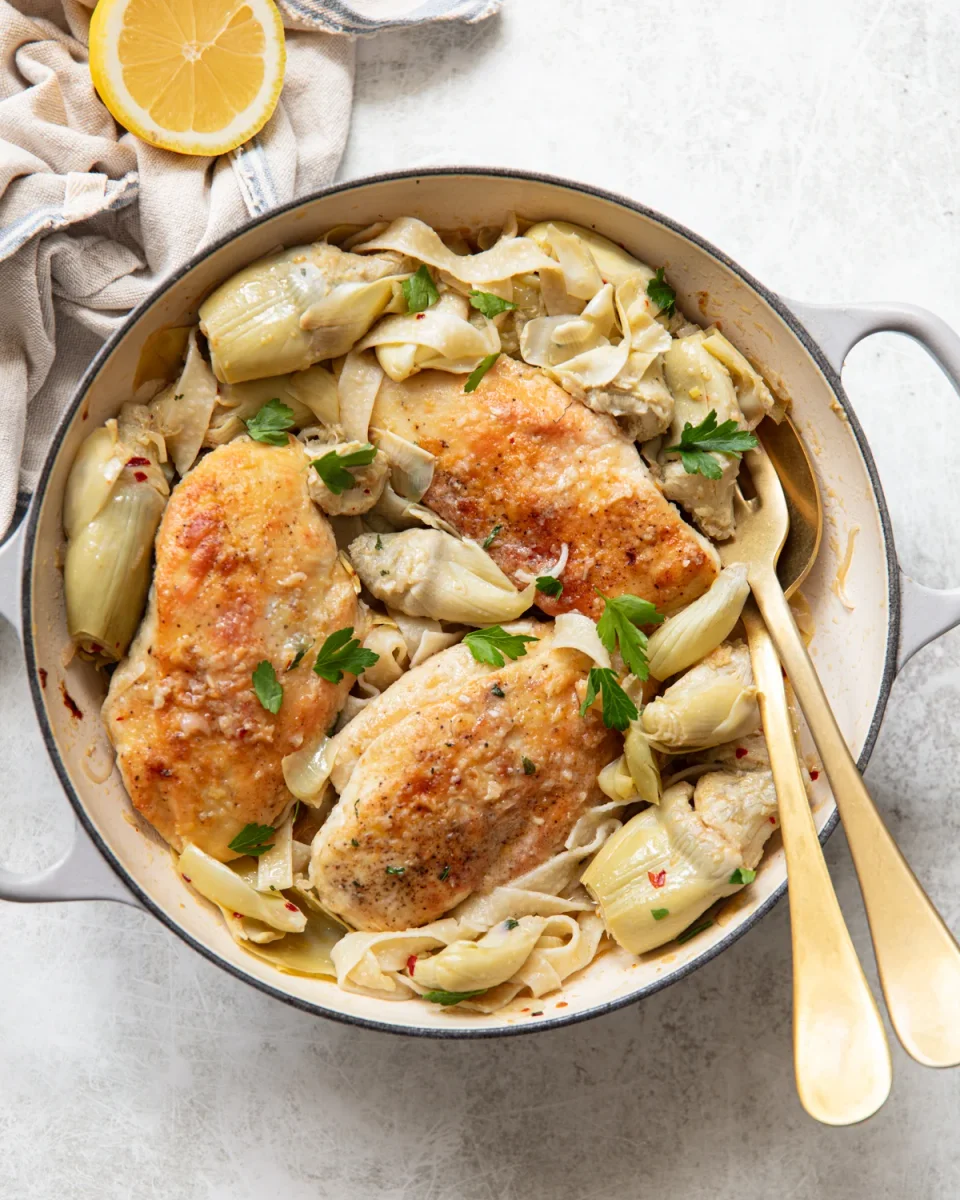
Golden-seared chicken breasts simmer with artichoke hearts in a white wine and tarragon pan sauce. This one-pan Mediterranean-inspired dinner is ready in 30 minutes and feels special without requiring much fuss.
Ingredients
- 4 (about 680 g / 1½ lb)boneless, skinless chicken breasts
- to tastekosher salt and freshly ground black pepper
- about 40 g (⅓ cup)plain flour
- 45 ml (3 tablespoons)extra-virgin olive oil
- about 25 g (¼ cup), slicedshallot (or onion)
- 60 ml (¼ cup)dry white wine (or 30 ml / 2 tablespoons fresh lemon juice)
- 2 × 397 g (14 oz) cans, drained well, lightly squeezed and patted dryartichoke hearts packed in water
- 2 cloves, thinly slicedgarlic
- 1.25 ml (¼ teaspoon)crushed red pepper
- 180 ml (¾ cup)chicken broth
- 28 g (2 tablespoons), cut into piecesbutter
- 10 ml (2 teaspoons), choppedfresh tarragon (or dried tarragon, or fresh parsley)
Instructions
- 1
Season and coat
Season both sides of the chicken generously with salt and pepper. Spread the flour on a plate, dredge each breast on both sides, then pat off any excess.
- 2
Brown the chicken
Heat a large, heavy skillet or sauté pan, ideally 30 cm (12 inches), over medium-high heat until a drop of water sizzles on contact. Add the olive oil, then the chicken. Cook for 5 minutes until golden brown, turn and cook for 2 minutes more; the second side need not brown as much. Transfer the chicken to a plate.
- 3
Sear the artichokes
Stir the shallot and white wine into the pan, scraping up the browned bits (or use 30 ml / 2 tablespoons lemon juice instead of wine). Add the drained artichokes and cook for 1–2 minutes, stirring once or twice, until lightly seared.
- 4
Simmer the chicken
Stir in the garlic, crushed red pepper and ½ teaspoon salt, cooking for a few seconds until fragrant. Return the chicken to the pan, along with any juices from the plate. Sprinkle with tarragon, pour in the broth and bring to a simmer. Reduce the heat to medium and cook for about 5 minutes, until the chicken is cooked through.
- 5
Finish the sauce
Take the pan off the heat and add the butter. Turn the chicken in the sauce and gently shake the pan until the butter melts into it. Serve with the pan sauce, over pasta or with a side of your choice.
What is chicken with artichokes?
This is a skillet supper built around seared chicken and artichoke hearts, finished in a savoury pan sauce. Artichokes have long featured in Mediterranean cooking, where their earthy, slightly tangy flavour pairs naturally with herbs, olive oil and wine.
Here, a quick sear and a short simmer make the dish weeknight-friendly. Flour on the chicken helps it brown and gives the broth and butter a little body.
Nutrition and macros by portion
The nutrition label shows one serving as written: 295 calories, 26g protein, 12g carbs, 14g fat.
| Portion | Adjustment | kcal | Protein | Carbs | Fat |
|---|---|---|---|---|---|
| Lighter | Use less butter | 207 kcal | 18g | 8g | 10g |
| This serving | As written | 295 kcal | 26g | 12g | 14g |
| Hungry | Add a larger pasta portion | 443 kcal | 39g | 18g | 21g |
The chicken supplies most of the protein, while the flour and artichokes contribute much of the carbohydrate. Olive oil and butter account for much of the fat, with the chicken adding some as well. Serve with a generous portion of vegetables alongside pasta or another side to balance the plate.
Choose the chicken and artichokes
Chicken breasts: Use boneless, skinless pieces of roughly similar thickness so they cook at a similar pace. If one is much thicker, its centre may need longer to cook through.
Artichokes: Drain, lightly squeeze and pat the hearts dry before they go into the pan. Removing excess moisture helps them sear instead of releasing water into the sauce.
Build a golden base
Hot pan: Wait until a drop of water sizzles before adding the oil and chicken. Leave the breasts undisturbed for the first 5 minutes so their coating has time to brown.
Fond: After removing the chicken, scrape the browned bits into the shallot and wine. They add flavour to the sauce; avoid letting them scorch while the pan heats.
Finish the sauce gently
Simmer: Return the chicken with its plate juices and cook it in the broth for about 5 minutes, checking that the thickest part is cooked through. The breasts should remain tender rather than simmering hard.
Butter: Add it after taking the pan off the heat, then move the chicken gently through the sauce. This melts the butter in without letting the sauce boil vigorously.
Wine, lemon and herbs
White wine: Use a dry wine and let it mingle with the shallots and pan juices before the broth goes in. For the listed alternative, use 30 ml (2 tablespoons) fresh lemon juice.
Tarragon: Its anise-like aroma suits the chicken and artichokes. Fresh parsley is the stated substitute if you prefer a milder, greener finish.
What to serve alongside
Pasta: Spoon the sauce and artichokes over pasta so none of the buttery pan juices go to waste. Rice or another favourite side also works, as the recipe suggests.
Vegetables: A simple green vegetable or salad can round out the plate and bring freshness alongside the rich sauce.
Recipe notes & tips
- Pat the artichoke hearts thoroughly dry so they can sear rather than steam.
- Use a large skillet so the chicken has room to brown.
- Shake off excess flour before the chicken goes into the pan to avoid a pasty coating.
- Keep the heat at a gentle simmer once the chicken is back in the sauce.
- Add the butter off the heat and swirl it in gently for a smooth finish.
Variations
- Use lemon: Replace the white wine with 30 ml (2 tablespoons) fresh lemon juice as listed.
- Swap the herb: Use fresh parsley in place of the tarragon for a milder flavour.
- Try dried tarragon: Use it instead of fresh tarragon if that is what you have.
- Add pasta: Serve the chicken and sauce over your favourite pasta for a more substantial meal.
Common mistakes to avoid
- Wet artichokes: Excess liquid stops them from searing; drain, squeeze lightly and pat them dry.
- Crowded skillet: Chicken can steam instead of browning; use a large pan and avoid squeezing in extra pieces.
- Too much flour: A thick coating can turn pasty; pat away the excess after dredging.
- Hard simmer: Vigorous bubbling can toughen the chicken; lower the heat to medium once the broth simmers.
- Boiling the butter: The sauce can become less smooth; take the pan off the heat before stirring in the butter.
How to store
Refrigerate leftovers in a covered container for up to 3 days. Reheat gently in a covered pan over low heat with a splash of broth or water, until hot throughout.
Frequently asked questions
Can I use marinated artichoke hearts?
The ingredient list calls for artichoke hearts packed in water. Marinated hearts can work, but drain and pat them dry well, and expect their seasoning and oil to change the sauce's flavour.
Can I make this without white wine?
Yes. The listed alternative is 30 ml (2 tablespoons) of fresh lemon juice.
How can I tell when the chicken is cooked?
Check the thickest part of a breast; it should be cooked through with no raw-looking centre. Similar-sized breasts help them finish at the same time.
Can I use chicken thighs instead?
The recipe is written for boneless, skinless breasts, so thighs may need a different cooking time. Check that they are cooked through before serving.
What can I serve with the chicken?
The recipe suggests pasta or your favourite side. Rice, or a green vegetable alongside, are also practical choices.
Cook it from the original
This recipe comes from familystylefood.com. Their page has the author’s own photos, notes and tips — the best place to cook it from.
Open the recipe on familystylefood.com